How Much Does a Typical Kitchen Remodel Cost?
Planning a kitchen remodel can feel overwhelming, especially when you’re unsure how much to budget. You’re not alone—many homeowners struggle to balance their dream design with realistic costs. So, how much does a typical kitchen remodel cost?
A typical kitchen remodel in 2024 will likely cost you between $20,000 and $50,000, depending on your kitchen’s size, material choices, and appliance upgrades. Larger kitchens or those with custom cabinetry and luxury countertops raise expenses, while labor covers everything from plumbing to finishing touches.
You should also budget for permits and unexpected costs. If you want to get a clearer idea of where your money goes and how to save, there’s more to investigate here.
Key Takeaways
- Typical kitchen remodel costs in 2024 range from $20,000 to $50,000 depending on size, materials, and project scope.
- High-end cabinetry, premium countertops, and custom details significantly increase remodeling expenses.
- Labor costs include plumbing, electrical, cabinetry, flooring, and finishing, varying by kitchen size and complexity.
- Appliance upgrades vary from hundreds to thousands, with energy-efficient models costing more upfront but saving long-term.
- Budget 10-20% contingency for unexpected issues like water damage or structural repairs during remodeling.
What’s the Average Kitchen Remodel Cost in 2024?
Wondering how much a kitchen remodel will set you back in 2024? On average, you can expect to spend between $20,000 and $50,000, depending on the scope and quality of materials.
Expect to spend $20,000 to $50,000 on a kitchen remodel in 2024, depending on scope and materials.
Upgrading kitchen lighting is often a smart investment, as it improves both functionality and ambiance without breaking the bank.
Don’t forget to factor in appliance warranties when budgeting. New appliances may come with extended warranties that protect your investment and save you money on repairs down the line.
Keep in mind, choosing energy-efficient lighting and appliances can lower utility costs. While customizing your space, prioritize elements that add value and improve daily use.
This approach helps you stay within budget and avoid unnecessary expenses. By balancing quality kitchen lighting with reliable appliance warranties, you guarantee your remodel is both stylish and practical.
Ultimately, knowing these costs upfront helps you plan a kitchen remodel that fits your needs and wallet.
How Your Kitchen Size Affects Remodeling Costs
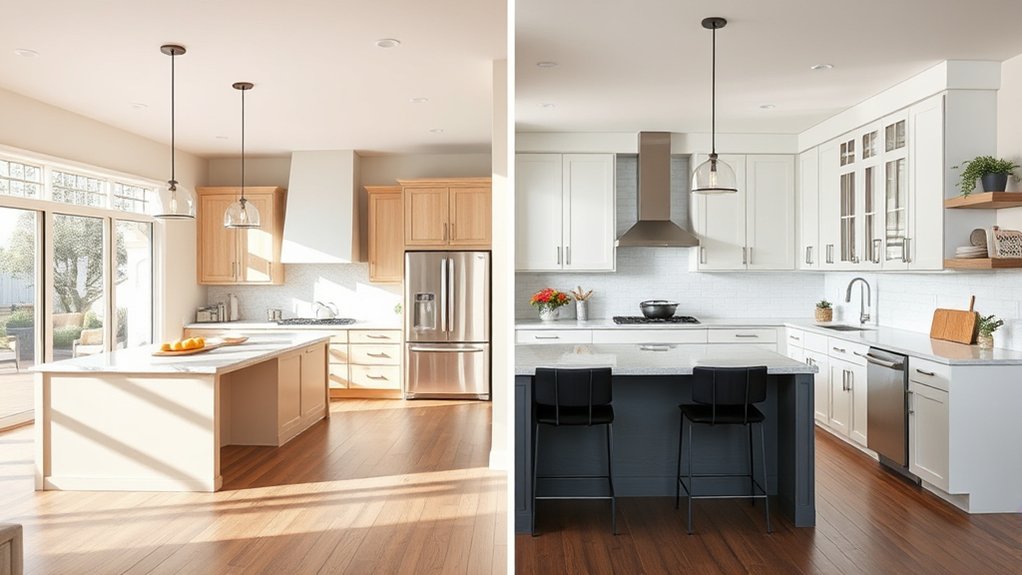
Because your kitchen’s size directly impacts the amount of materials and labor required, it plays a major role in your remodeling costs. A larger kitchen means you’ll need more cabinets, countertops, and flooring, which quickly drives up expenses.
Plus, bigger spaces often require additional kitchen lighting fixtures to guarantee the area stays bright and functional, adding to the overall price.
On the other hand, smaller kitchens might seem cheaper to remodel, but tight spaces can increase labor costs since installers have less room to work efficiently.
Also, appliance maintenance becomes vital in any kitchen size. You’ll want to make sure your appliances fit well and function properly in the redesigned space to avoid costly repairs later.
Ultimately, knowing your kitchen’s dimensions helps you budget realistically. You can balance the size of your renovation with practical considerations like appliance placement and lighting needs.
That way, you can make informed decisions without surprises.
What Materials Increase Kitchen Remodel Costs Most?
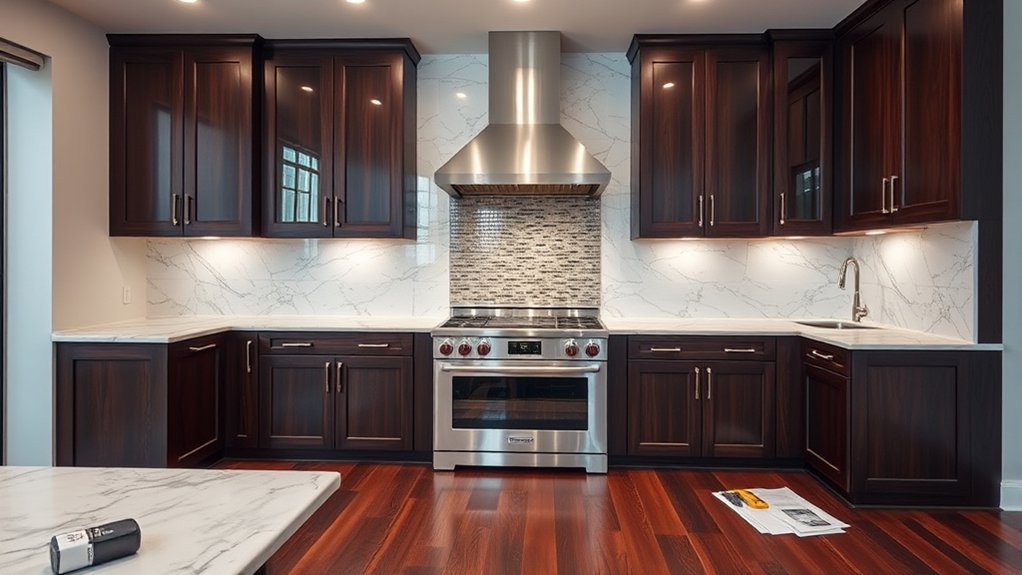
High-end cabinetry can quickly drive up the cost of a kitchen remodel. Premium countertop materials, such as granite or quartz, can also add significantly to the final price. Understanding how these choices affect your budget can help you plan more effectively.
High-End Cabinetry Choices
Although high-end cabinetry can transform your kitchen’s look, it can also significantly impact your remodeling budget. Cabinet styles range from sleek modern designs to classic raised panels, and each option affects the cost differently.
Material durability also plays a major role. Solid hardwoods like maple or cherry cost more, but they last longer and resist wear better than cheaper alternatives.
Custom cabinets, crafted to fit your exact space and preferences, cost more than semi-custom or stock options. Intricate details such as dovetail joints and soft-close hinges also add to the expense, while improving functionality and longevity.
Premium Countertop Materials
If you want your kitchen to stand out, choosing the right countertop material plays a huge role—and it can quickly drive up your remodeling costs. Premium materials like quartz, granite, and marble offer exceptional countertop durability, but they come with a higher price tag.
Quartz resists stains and scratches, making it a long-lasting choice, while granite’s natural stone patterns add unique material textures that raise your kitchen’s look. Marble impresses with its elegant veining but requires more upkeep.
Other luxury options, like concrete or soapstone, also bring distinctive textures and durability but vary in cost. When selecting your countertop, balance your style preferences with how much wear and tear it will endure to guarantee your investment lasts and keeps your kitchen beautiful.
How Appliance Upgrades Affect Kitchen Remodel Costs
When you upgrade your kitchen appliances, the models you choose can have a big impact on your remodeling budget. It’s also worth considering energy-efficient options. They may cost more upfront, but they can help lower your utility bills over time. And don’t forget to include installation and ongoing maintenance costs in your overall budget.
Appliance Types And Prices
Choosing the right appliances can considerably impact your kitchen remodel budget. When selecting appliances, you’ll want to balance style, functionality, and price to complement your kitchen decor.
Standard models like basic refrigerators or ranges might cost a few hundred dollars, while high-end brands with advanced features can run into thousands.
Don’t overlook the value of appliance warranties; extended coverage can save you money on repairs and replacements down the line.
You should also consider the finish, whether it’s stainless steel, matte black, or custom panels, to guarantee your appliances blend seamlessly with your kitchen’s overall design.
Energy Efficiency Impact
How much can upgrading to energy-efficient appliances affect your kitchen remodel costs? Choosing smart appliances often increases your upfront expenses, but they can save you money in the long run by reducing energy use.
These devices adjust their operation based on your habits, cutting unnecessary power consumption. Likewise, installing eco-friendly fixtures, like low-flow faucets and LED lighting, might add to your initial budget but lowers utility bills over time.
While these upgrades might raise your remodel’s price tag, they improve your kitchen’s sustainability and appeal. You’ll enjoy a modern, efficient space that not only benefits the environment but also boosts your home’s value.
Prioritizing energy efficiency balances cost with long-term savings, making your kitchen remodel a smart investment.
Installation And Maintenance Costs
Upgrading your kitchen appliances can substantially impact both installation and maintenance costs during your remodel. Choosing appliances with smart technology may increase upfront expenses, but they often reduce long-term maintenance and energy costs by optimizing performance and alerting you to issues early.
Moreover, opting for sustainable materials in appliances and fixtures can raise installation costs slightly due to specialized handling or fittings. However, these materials typically offer better durability and eco-friendliness, lowering repair frequency and costs over time.
When planning your remodel, consider how appliance upgrades influence not only the initial installation but also ongoing maintenance. Investing in modern, sustainable, and smart appliances can save you money and hassle down the road, making your kitchen more efficient and easier to maintain in the long run.
What Kitchen Remodel Labor Costs Include
While the materials you select play a big role in your kitchen remodel, labor costs often make up a significant portion of your budget. Labor expenses typically cover the time and expertise needed to transform your kitchen layout, whether that involves moving walls, installing new cabinetry, or updating plumbing and electrical systems.
Skilled professionals handle these tasks to ensure everything meets safety and functionality standards. Labor costs also include appliance installation, and the complexity can vary based on the brands you choose.
High-end or custom appliances may require specialized installation, which can add to your labor expenses. Beyond installation, labor also covers flooring, tiling, painting, and finishing touches that complete your remodel.
Understanding what labor costs include helps you budget accurately and avoid surprises as the project progresses.
Kitchen Remodel Permits and Inspection Costs Explained
Before you start your kitchen remodel, make sure you obtain the right permits. The requirements can vary depending on the work involved, so check with your local building department first.
You’ll also need to budget for inspection fees. Approval timelines may affect your project schedule, so plan ahead and allow extra time for inspections and permits. Understanding the process and costs can help you avoid unexpected delays and expenses.
Permit Types Needed
Because kitchen remodels often involve electrical, plumbing, and structural changes, you’ll need several permits to keep your project compliant with local regulations. Skipping these can lead to costly fines or delays.
Here are four common permit types you should consider:
- Electrical Permit – Needed if you’re upgrading kitchen lighting or adding new outlets.
- Plumbing Permit – Required for any changes to sinks, dishwashers, or water lines.
- Building Permit – Covers structural modifications like removing walls or adding windows.
- Mechanical Permit – Necessary if you install or update ventilation systems.
Securing these permits ensures your remodel meets safety standards, protecting your investment. Remember, understanding permit requirements can help you avoid unexpected costs that might interfere with your appliance financing plans.
Typical Inspection Fees
When you apply for the necessary permits, you’ll also encounter inspection fees that vary depending on your location and the scope of your kitchen remodel. These fees cover mandatory checks to guarantee your work meets safety and building codes.
For example, if you’re installing new kitchen lighting, an electrical inspection will confirm proper wiring and compliance. Likewise, plumbing or structural changes will require their specific inspections.
Keep in mind, inspection fees aren’t optional. They’re required to finalize permits and maintain appliance warranties. Skipping them could void coverage on new appliances.
Budgeting for these costs upfront helps avoid surprises later. While fees differ widely, typical inspection costs range from $100 to $500 each, so plan accordingly to keep your remodel on track and code-compliant.
Timeline for Approvals
Although the timeline for approvals varies by location and project complexity, you can generally expect the process to take several weeks. Getting permits and inspections lined up guarantees your kitchen remodel meets safety standards, especially when upgrading appliance efficiency or altering kitchen decor.
Here’s what to expect:
- Submit detailed plans showing layout changes, appliance placements, and design updates.
- Wait for the building department’s initial review, which can take 1-3 weeks.
- Address any required revisions or additional documentation promptly.
- Schedule inspections during and after construction to verify compliance.
Planning for these steps helps avoid costly delays and guarantees your remodel stays on track, blending new kitchen decor with efficient appliances seamlessly.
How to Budget for Unexpected Kitchen Remodel Expenses
You’ll want to set aside a contingency fund to handle unexpected kitchen remodel expenses that often pop up during the project. Unexpected costs like hidden water damage, electrical issues, or structural repairs can quickly push your budget beyond initial estimates.
Effective contingency planning means allocating about 10-20% of your total budget specifically for these surprises. This safety net guarantees you won’t have to cut corners or delay the project when unforeseen problems arise.
Keep detailed records of all expenses and regularly update your budget to reflect any changes. Communicate openly with your contractor to identify potential risks early, which helps reduce costly surprises.
When Is a Minor Update Better Than a Full Kitchen Remodel?
Deciding between a minor update and a full kitchen remodel depends largely on your goals, budget, and the current condition of your space. Sometimes, a small refresh can breathe new life into your kitchen without the cost and hassle of a full remodel.
Choosing between a minor update and full remodel hinges on your goals, budget, and kitchen’s condition.
Consider a minor update when:
- Your kitchen layout works well, and you don’t need to move plumbing or electrical fixtures.
- You want to improve kitchen decor by updating cabinet finishes, lighting, or countertops rather than replacing everything.
- You need better storage solutions, like adding organizers, pull-out shelves, or new hardware.
- You’re aiming to increase your home’s appeal quickly and affordably before selling.
If your kitchen functions fine but looks dated or lacks efficient storage, a minor update is often the smarter choice. It saves time, money, and stress while still enhancing your space’s style and usability.
How to Save Money Without Sacrificing Quality
Minor updates can help you stretch your budget while still invigorating your kitchen’s look, but even full remodels don’t have to break the bank. Focus on choosing quality appliance brands that offer durability without premium price tags.
You can also refresh your kitchen decor with affordable materials like peel-and-stick backsplashes or open shelving. These options add style without costly installs.
Consider where your money goes: prioritize appliances and cabinetry, then save on finishes and hardware. Here’s a quick guide:
| Priority Area | Money-Saving Tip |
|---|---|
| Appliances | Choose mid-range brands with warranties |
| Cabinetry | Opt for refacing instead of replacement |
| Kitchen Decor | Use paint and accessories for updates |
| Hardware & Fixtures | Buy standard styles in bulk |
Planning Your Remodel Timeline and Budget
Before diving into your kitchen remodel, create a clear timeline and budget to keep the project on track and avoid surprises. Planning ahead helps you balance design trends with material durability, ensuring your remodel stays stylish and lasts long.
Here’s how to plan effectively:
- Set realistic deadlines – Factor in ordering materials, contractor schedules, and unexpected delays.
- Prioritize spending – Allocate more budget to durable materials that align with current design trends for long-term value.
- Include contingency funds – Reserve 10-15% of your budget for unforeseen expenses like repairs or upgrades.
- Break down costs – List expenses for cabinets, appliances, labor, and permits to monitor your spending closely.
Frequently Asked Questions
How Long Does a Typical Kitchen Remodel Take to Complete?
A typical kitchen remodel takes about six to eight weeks to complete. When you’re timeline planning, you’ll want to factor in ordering materials, demolition, installation, and unexpected delays.
Budget considerations also affect your schedule. Higher-end finishes might extend your timeline. Staying organized and communicating with your contractor helps keep things on track.
With good planning, you’ll minimize surprises and enjoy your new kitchen sooner than you think.
What Are the Latest Kitchen Design Trends in 2024?
Smart sophistication and sleek simplicity steal the spotlight in 2024 kitchen trends. You’ll love minimalist cabinetry that creates clean, clutter-free corners while smart appliances streamline your cooking sessions with seamless tech.
These trends not only boost beauty but bring brilliant functionality to your space. Blending bold innovation with bare basics, your kitchen will feel fresh, functional, and future-ready.
Welcome these elements to uplift everyday experiences effortlessly.
Can I Live in My Home During a Kitchen Remodel?
Yes, you can live in your home during a kitchen remodel, but it depends on the renovation timeline and the project’s scope. If the remodel is extensive, you might want to contemplate temporary living arrangements to avoid disruptions, dust, and noise.
For smaller updates, you can usually manage by setting up a temporary kitchen space. Planning ahead helps you stay comfortable and maintain your routine throughout the renovation timeline.
How Do I Choose the Right Contractor for My Remodel?
You should know that 30% of remodels face delays due to poor contractor choices. To avoid this, focus on contractor qualifications—check licenses, insurance, and past work.
Discuss your kitchen budgeting upfront to guarantee they can work within your limits. Ask for references and read reviews to confirm reliability.
What Are Eco-Friendly Options for Kitchen Remodeling?
You can choose eco-friendly options by using sustainable materials like bamboo or reclaimed wood for cabinets and flooring. Opt for energy-efficient appliances to reduce your kitchen’s carbon footprint and save on utility bills.
Installing LED lighting and low-flow faucets also helps conserve energy and water. By focusing on these choices, you’ll create a greener kitchen that’s both stylish and environmentally responsible.
Conclusion
When you plan your kitchen remodel, you balance size with style, choose materials with care, and upgrade appliances wisely. You factor in labor, budget for surprises, and decide when a small update beats a full overhaul.
You save smartly without cutting corners and map out your timeline clearly. By doing all this, you turn your kitchen from a dream into a vibrant, functional space where memories are made and meals come to life.
Understanding how much a typical kitchen remodel costs helps you plan confidently and create a space that fits your vision and budget.