How to Sharpen Kitchen Knives in 5 Easy Steps
Dull kitchen knives can make cooking feel frustrating, slow, and even unsafe. You’re not alone—many home cooks struggle to keep their blades sharp and ready for everyday meals.
In this guide, we’ll show you how to sharpen kitchen knives in five easy steps. You’ll learn how to choose the right tools, maintain the correct angle, and create a smoother, sharper edge.
To sharpen your kitchen knives in five easy steps, first set up a clean, stable workspace with good lighting. Gather the right tools like a whetstone or honing rod suited for your blade type.
Hold the knife at a consistent 15–20 degree angle and sharpen evenly on both sides, applying light pressure.
Hone the edge with a steel for a smooth finish.
Finally, test sharpness and store knives properly to maintain their edge. Keep going to uncover helpful tips for safer, sharper results.
Key Takeaways
- Clean and dry your knife, then stabilize your workspace with a non-slip mat for safety and control.
- Choose appropriate sharpening tools like coarse and fine whetstones or a honing rod based on your knife’s material.
- Maintain a consistent 15–20 degree angle while drawing the blade evenly across the sharpening tool on a stable surface.
- Hone the knife edge using a honing steel, drawing the blade from heel to tip with 5–10 alternating strokes per side.
- Test sharpness by slicing paper or tomato, then store knives properly and sharpen regularly to maintain the edge.
Prepare Your Knife and Workspace

Before you begin sharpening, make sure your knife is clean and dry to prevent slipping. This step is vital for knife safety because a wet or greasy blade can easily slip and cause injury.
Ensure your knife is clean and dry before sharpening to avoid slips and ensure safe handling.
Set up your workspace in a well-lit, clutter-free area where you can focus without distractions. Lay down a damp cloth or non-slip mat to keep your sharpening tools steady.
You’ll also want to review your cutting techniques to understand the blade’s edge and angle better. Knowing how you typically hold and use your knife can help you sharpen it more effectively.
Position your knife so you have good control over it, reducing the risk of accidents. Remember, a safe sharpening process depends on a stable, prepared environment and a clean knife.
Taking these precautions not only protects you but guarantees the sharpening goes smoothly and your knife performs well in future cutting tasks.
Gather the Right Sharpening Tools

Although sharpening can be done with various tools, choosing the right ones will make the process faster and more effective. First, consider your knife materials—different steels and coatings respond better to specific sharpeners.
For example, high-carbon steel knives often benefit from whetstones, while stainless steel may work well with ceramic rods. Avoid falling for sharpening myths like “all knives need the same sharpener” or “electric sharpeners are always best.”
These misconceptions can lead you to use tools that damage your blades or don’t sharpen effectively. A good starter set includes a coarse and fine whetstone, a honing rod, and a non-slip base for safety.
If you prefer convenience, manual pull-through sharpeners can be handy, but check if they suit your knife’s material. By selecting tools tailored to your knives, you save time and maintain their edge longer, ensuring your kitchen prep is smooth every time.
How to Sharpen Your Knife Easily

Wondering how to sharpen your knife without hassle? Start by focusing on knife safety—always work on a stable surface and keep your fingers clear of the blade’s path.
Sharpen knives safely by working on stable surfaces and keeping fingers away from the blade’s path.
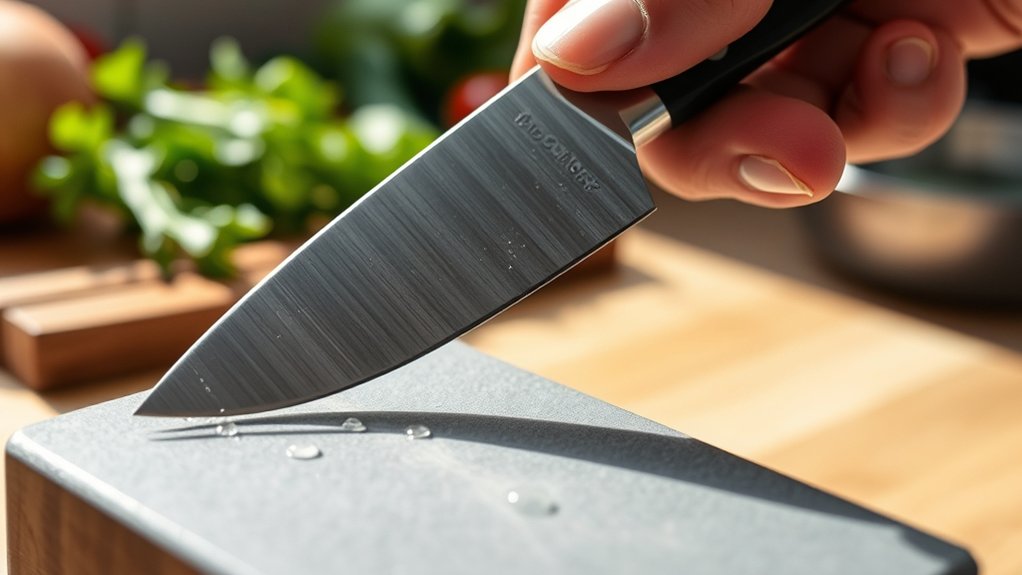
Next, pay attention to sharpening angles. Maintaining a consistent angle, usually between 15 to 20 degrees, is key for a sharp edge.
Here’s a simple method you can follow:
- Secure your sharpening tool firmly on a flat surface.
- Hold the knife at the correct sharpening angle.
- Draw the blade across the sharpener evenly, applying light pressure.
- Repeat on the other side, maintaining the same angle.
Hone Your Kitchen Knife Edge
Once you’ve sharpened your knife, you’ll want to hone the edge regularly to keep it aligned and razor-sharp. Honing is an essential part of knife maintenance that helps straighten the blade’s edge, which can bend or roll with use.
Use a honing steel by holding it vertically on a stable surface. Place your knife at a 15–20 degree angle against the steel and draw the blade down and across the steel from heel to tip, alternating sides. Repeat this 5 to 10 times per side.
Honing doesn’t remove metal like sharpening does, so it’s a safer and quicker way to maintain your knife between sharpenings. Always practice sharpening safety by keeping your fingers clear of the blade path and working slowly.
Regular honing extends the time between full sharpenings, ensuring your kitchen knife performs well and stays safe to use in your daily cooking.
Check and Keep Your Knives Sharp
Honing keeps your knife edge aligned, but it won’t fix a dull blade. To maintain sharpness, regularly check your knives by slicing through a piece of paper or tomato.
If the blade tears or struggles, it’s time to sharpen. Keeping your knives sharp not only improves performance but also amplifies knife safety by reducing slips and accidents.
To keep your knives sharp and safe:
- Sharpen blades every few months depending on use.
- Use proper storage solutions like magnetic strips or knife blocks to protect edges.
- Clean knives immediately after use to prevent corrosion.
- Avoid cutting on hard surfaces like glass or stone.
Frequently Asked Questions
Can I Sharpen Serrated Knives Using These Methods?
You can sharpen serrated knives, but the methods differ from those used for regular blades. For serrated knife maintenance, use a sharpening rod or a tapered diamond tool designed for serrations.
Sharpening tool choices matter because standard sharpeners can damage the teeth. Focus on each serration individually, running the tool through carefully.
With the right tools and technique, you’ll keep your serrated knives sharp and effective without risking damage.
How Often Should I Sharpen My Kitchen Knives?
You should sharpen your kitchen knives every few months, depending on how often you use them. Regular knife maintenance helps keep your blades effective and safe.
If you cook frequently, sharpening every one to two months might be necessary. Using proper sharpening techniques not only restores the edge but also prolongs the knife’s life.
Keep an eye on dullness and don’t wait until the blade feels completely blunt to sharpen it.
What Types of Steel Are Best for Kitchen Knives?
You’ll find Japanese steel excellent for kitchen knives because it’s hard, sharp, and holds an edge well. Damascus steel is also a great choice since it combines durability with beautiful patterns, offering both performance and style.
When choosing, consider how often you cook and what tasks you do most. Both steels sharpen nicely, but Japanese steel usually allows for a finer, sharper edge, perfect if you want precision in your cuts.
Is It Safe to Sharpen Knives at Home?
Sharpening knives at home is like taming a wild beast—it’s safe if you handle it right. You’ve got to respect knife safety, using the proper sharpening tools and steady hands.
Always keep your fingers clear of the blade’s path, and work slowly to avoid slips. With the right care, you’ll transform dull edges into razor-sharp blades without risking cuts or accidents in your kitchen.
Can Dull Knives Be Dangerous in the Kitchen?
Yes, dull knives can be dangerous in the kitchen. When you use a dull blade, you have to apply more force, increasing the chance of slipping and causing injury.
For your knife safety, always keep your knives sharp to reduce dull knife risks. Sharp knives cut more cleanly and predictably, helping you maintain control and avoid accidents while preparing food.
Don’t underestimate the importance of a sharp blade for a safer kitchen experience.
Conclusion
Now that you know how to sharpen kitchen knives in five easy steps, you’ll save time and effort in the kitchen. Did you know that a dull knife can require up to 10 times more force to cut than a sharp one?
Keeping your knives sharp not only makes cooking safer but also more enjoyable. So, sharpen your skills and your blades regularly to make every meal prep smoother and quicker!