How to Clean Kitchen Sink in 3 Easy Steps
A spotless kitchen sink can be surprisingly difficult to maintain. Between food residue, water spots, and buildup around the drain, many people struggle to keep it looking fresh—and you’re not alone.
The good news is that learning how to clean a kitchen sink can be quick and simple with the right products.
Start by gathering gentle cleaners like baking soda or mild dish soap along with soft sponges and brushes to prevent scratches. Rinse your sink to remove debris, then scrub thoroughly, focusing on faucets, handles, and the drain area.
Finally, rinse well with warm water, disinfect using an eco-friendly spray, and wipe dry with a microfiber cloth to prevent spots.
Keep up with regular maintenance to guarantee your sink stays spotless and gleaming.
There’s more to find out about easy, effective sink care.
Key Takeaways
- Rinse the sink to remove loose debris before applying any cleaner.
- Scrub the sink and faucet gently using a mild cleaner and a soft sponge.
- Check and clear the drain to prevent clogs and buildup.
- Rinse thoroughly with warm water to remove all cleaning residues.
- Disinfect with an eco-friendly spray, then wipe dry with a microfiber cloth.
Get Your Sink Cleaning Supplies Ready
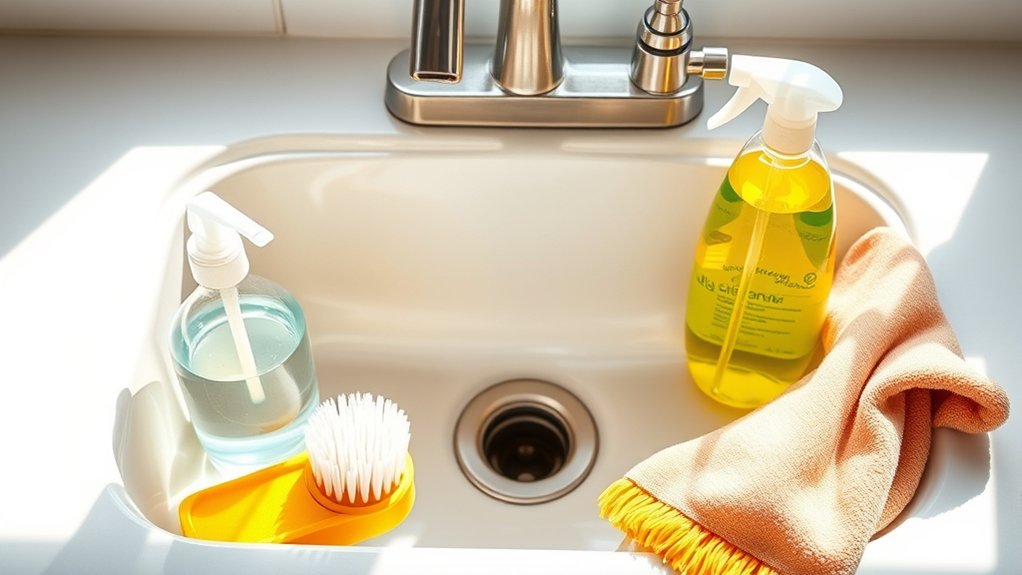
Before you start scrubbing, gather all the supplies you’ll need to clean your kitchen sink efficiently. Choosing cleaning products wisely makes a big difference.
Opt for a gentle but effective cleaner like baking soda or a mild dish soap to avoid damaging your sink’s surface. You might also want a disinfectant spray for extra sanitation.
Don’t forget a soft sponge or cloth to prevent scratches and a small brush for hard-to-reach areas.
Next, focus on organizing supplies. Keep everything within reach to streamline your cleaning process.
Arrange your cleaners, brushes, and cloths in a way that lets you grab what you need without interrupting your flow.
Using a small container or caddy can help keep items tidy and accessible. By choosing the right products and organizing supplies beforehand, you’ll save time and make cleaning your kitchen sink a hassle-free task.
Ready your tools, and you’re set for the next step!
Clean and Scrub Your Kitchen Sink Step-by-Step
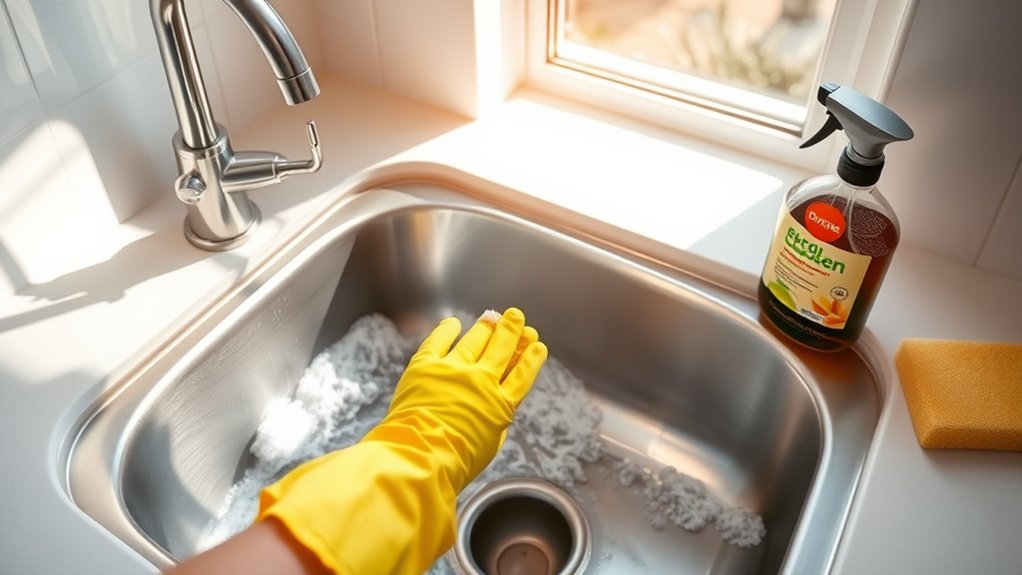
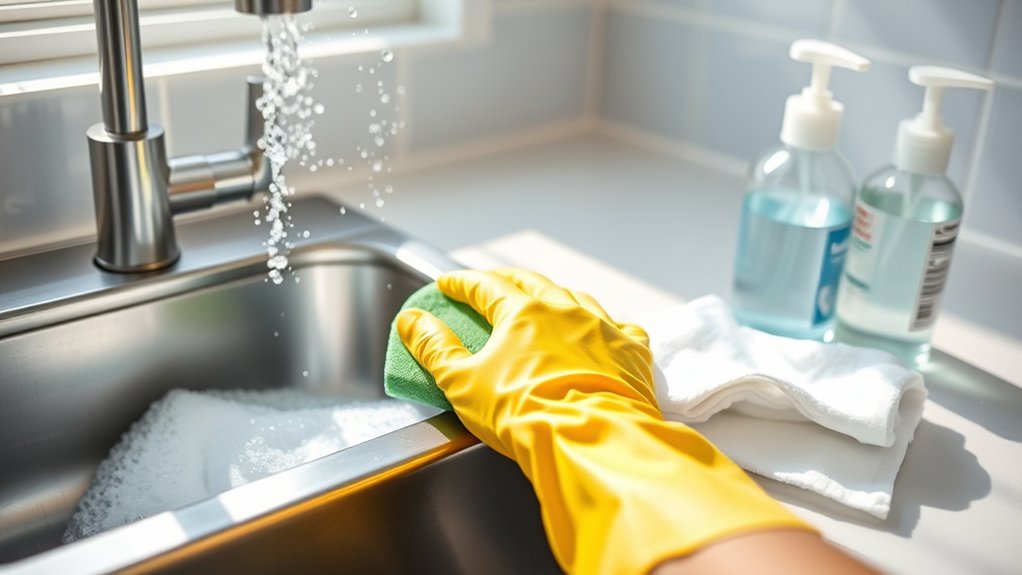
Although it might seem straightforward, cleaning and scrubbing your kitchen sink requires a methodical approach to get it truly spotless. Start by rinsing the sink to remove loose debris.
Next, apply a gentle cleaner and use a soft sponge to scrub every corner, paying close attention to faucet maintenance by wiping around the base and handles. This prevents buildup and prolongs faucet life.
Don’t forget to check the drain for any signs of clogging. Address drain clog removal promptly by using a plunger or a natural cleaner to keep water flowing smoothly.
Here’s a quick guide to streamline your scrubbing:
| Step | Action | Tip |
|---|---|---|
| 1 | Rinse sink thoroughly | Remove food particles |
| 2 | Scrub with cleaner | Focus on faucet areas |
| 3 | Clear and check drain | Prevent drain clog buildup |
Follow these steps for a sparkling, well-maintained kitchen sink.
Rinse, Disinfect, and Keep Your Sink Sparkling
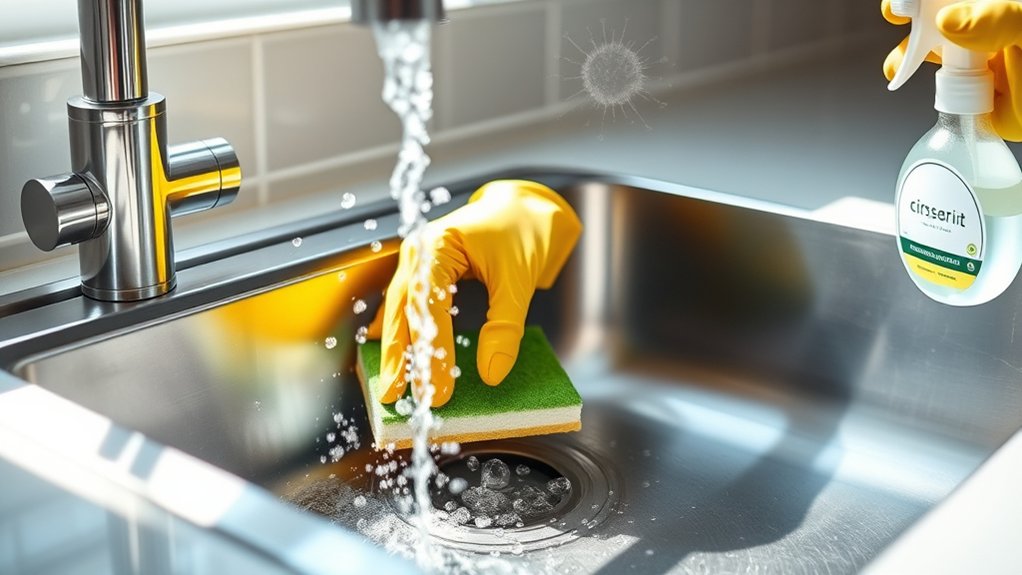
Once you’ve thoroughly scrubbed your sink, rinse it with warm water to wash away any remaining cleaner and debris. This step is essential for stainless steel sinks, as leftover residue can dull their shine.
Next, disinfect your sink using an eco friendly cleaner to kill germs without harming the environment. Spray the cleaner evenly, let it sit for a few minutes, then rinse well with warm water.
Avoid harsh chemicals that can damage the stainless steel surface or leave harmful residues. To keep your sink sparkling daily, wipe it down with a microfiber cloth after each use to prevent water spots and buildup.
Regularly applying a small amount of olive oil or a stainless steel polish can restore shine and protect against stains. By rinsing properly, disinfecting safely, and maintaining your sink with eco friendly products, you’ll enjoy a clean, hygienic, and gleaming kitchen centerpiece every day.
Frequently Asked Questions
Can I Use Bleach to Clean My Kitchen Sink?
Yes, you can use bleach to clean your kitchen sink, but you need to follow bleach safety tips. Always dilute bleach with water and never mix it with other cleaners to avoid harmful fumes.
Wear gloves to protect your skin and guarantee good ventilation. If you prefer, try alternative cleans like vinegar and baking soda. They’re effective and safer for regular use.
These options help you keep your sink sparkling without harsh chemicals.
How Often Should I Deep Clean My Kitchen Sink?
“An ounce of prevention is worth a pound of cure.” You should deep clean your kitchen sink at least once a week to keep it sparkling and hygienic.
Use dish soap and a soft sponge to scrub stainless steel sinks, removing grease and grime. For tougher stains, a mixture of baking soda and vinegar works wonders.
Regular deep cleaning prevents buildup and keeps your sink looking brand new. Don’t skip it!
What Causes Sink Odors and How to Prevent Them?
Sink odors come from odor-causing bacteria that thrive in your drain buildup. When food particles and grease accumulate, they create a perfect environment for bacteria to grow, leading to unpleasant smells.
To prevent this, you should regularly rinse your sink with hot water, use a mixture of baking soda and vinegar to break down buildup, and avoid letting food scraps sit in the drain. Keeping your sink dry when not in use also helps stop odors.
Are Natural Cleaning Products Effective for Sinks?
Natural cleaning products can be surprisingly successful for sinks. You’ll find eco-friendly solutions, like vinegar and baking soda, effectively eliminate grime and odors without harsh chemicals.
While commercial cleaning agents offer powerful performance, they often contain additives you might want to avoid. By choosing natural options, you’re protecting your pipes and the planet.
This keeps your sink sparkling clean with safer, sustainable substances you can feel good about using every day.
How Do I Unclog a Slow-Draining Kitchen Sink?
To unclog a slow-draining kitchen sink, start by removing any visible debris from the drain. Use plumbing tools like a plunger or a drain snake to clear deeper blockages.
For regular drain maintenance, pour a mixture of baking soda and vinegar down the drain, followed by hot water, to keep it flowing smoothly. Avoid harsh chemicals because they can damage pipes.
Consistent upkeep with these tools and methods helps prevent future clogs.
Conclusion
Now that you’ve gathered your supplies, scrubbed every corner, and rinsed thoroughly, you’re ready to enjoy a spotless sink. You’ve cleaned with care, disinfected with diligence, and maintained it with ease.
You’ll save time, prevent odors, and keep your kitchen inviting. Remember, cleaning your kitchen sink isn’t just about looks—it’s about health, hygiene, and happiness.
So keep it shining, keep it fresh, and keep it yours every single day!