How to Get Rid of Gnats in Your Kitchen Fast
Gnats in the kitchen can be frustrating, especially when they keep buzzing around your fruit bowl, sink, or houseplants. You’re not alone—many people struggle to get rid of gnats quickly and keep them from coming back.
To get rid of gnats fast, eliminate their food and moisture sources by sealing fruit, cleaning spills, and drying out plant soil. Set traps with apple cider vinegar and dish soap near drains or fruit bowls to catch adults quickly.
Clean drains daily and fix leaks to disrupt their breeding. Use natural repellents like peppermint oil for extra protection. Acting quickly and consistently stops their lifecycle.
Keep going to uncover more thorough ways to banish gnats for good.
Key Takeaways
- Remove all overripe fruit, food scraps, and spills to eliminate gnat food sources quickly.
- Clean drains daily with boiling water, baking soda, and vinegar to destroy breeding sites.
- Set apple cider vinegar traps with dish soap near sinks and fruit bowls to catch adult gnats.
- Dry out potted plant soil and fix leaks to reduce moisture that attracts gnats.
- Wipe kitchen surfaces regularly and ventilate the area to lower humidity and disrupt gnat habitats.
Identify Gnats in Your Kitchen
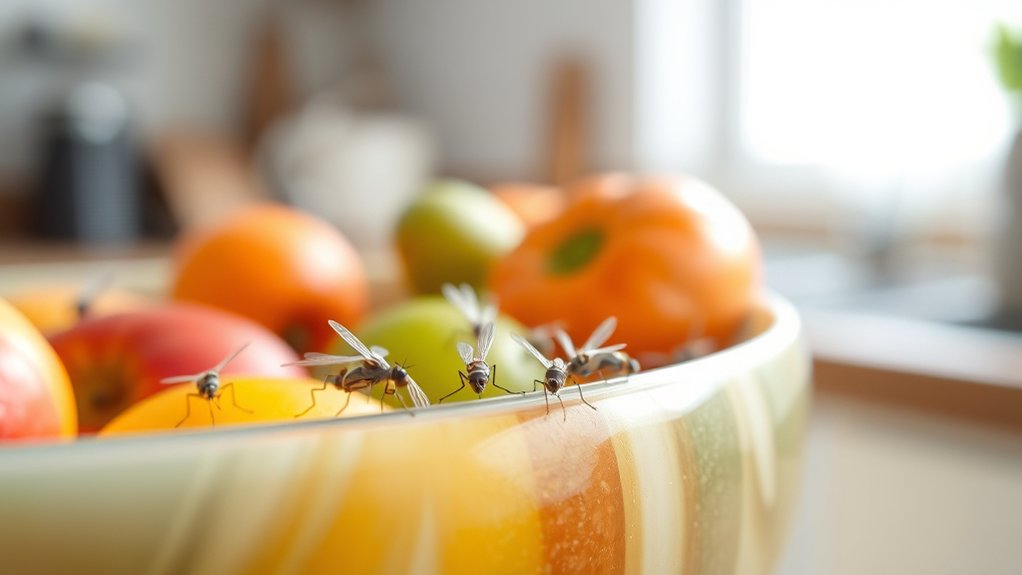
Before you can get rid of gnats in your kitchen, you need to know what they look like. Gnats are tiny, delicate insects, usually about 1/8 inch long, with slender bodies and long legs. Their wings are clear or slightly smoky, and they often cluster near sinks, drains, or overripe fruit.
To tackle them effectively, start with gnat species identification. Common kitchen gnats include fungus gnats, fruit flies, and drain flies, each with subtle differences in appearance and behavior.
Understanding the gnat lifecycle is essential. It goes from egg to larva, pupa, then adult in about a week. This quick cycle means you’ll need to act fast to interrupt their breeding.
Understand What Attracts Gnats
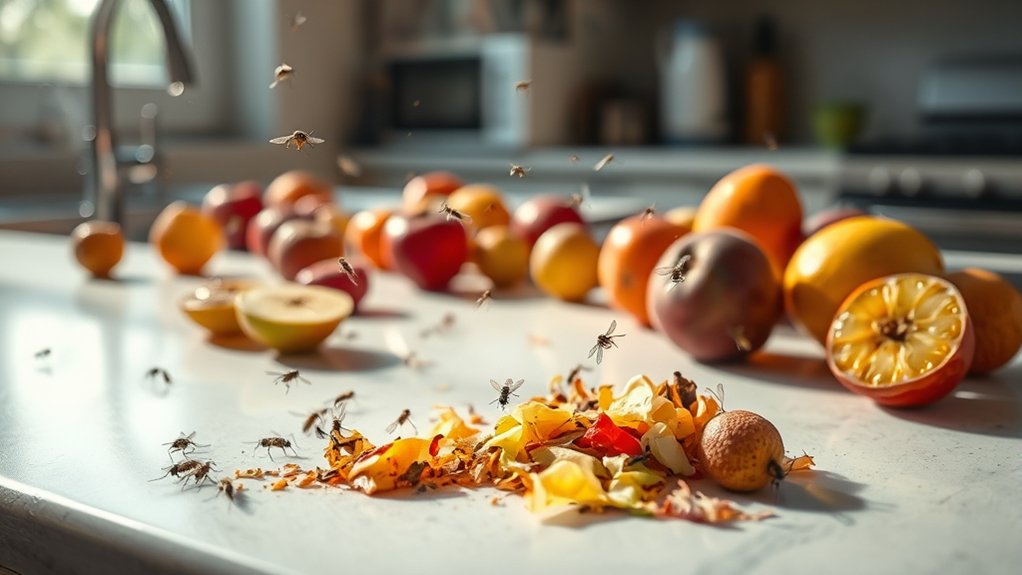
You’ll want to understand what draws gnats into your kitchen in the first place. They’re often attracted to common food sources, such as overripe fruit, spilled sugar, and damp organic matter. Warm, moist areas also provide the perfect breeding grounds, allowing these pests to multiply quickly.
Common Gnat Food Sources
Since gnats thrive on certain food sources, identifying what attracts them is key to keeping your kitchen gnat-free. You’ll want to remove or manage these common gnat food sources to cut off their supply.
Here are three main culprits you should watch out for:
- Fruit scraps left out or in the trash can quickly attract gnats looking for fermenting sugars.
- Compost bins that aren’t sealed properly become a buffet for gnats searching for decomposing organic material.
- Drains and spills where food or sugary liquids linger provide easy access to nourishment for gnats.
Ideal Breeding Conditions
Although gnats can be pesky at any time, they especially thrive in warm, moist environments that provide ideal breeding conditions. To get rid of gnats fast, you need to understand what attracts them.
Breeding sites like damp soil, overripe fruit, and clogged drains offer perfect spots for gnat larvae to develop. Environmental factors such as humidity, temperature, and organic matter buildup play a significant role in their population growth.
If your kitchen stays warm and moist, gnats will keep multiplying. By eliminating these breeding sites and controlling environmental factors like fixing leaks, cleaning spills promptly, and removing decaying food, you’ll disrupt their life cycle.
Once you remove what attracts them, you’ll notice fewer gnats buzzing around your kitchen in no time.
Remove Food and Moisture Sources
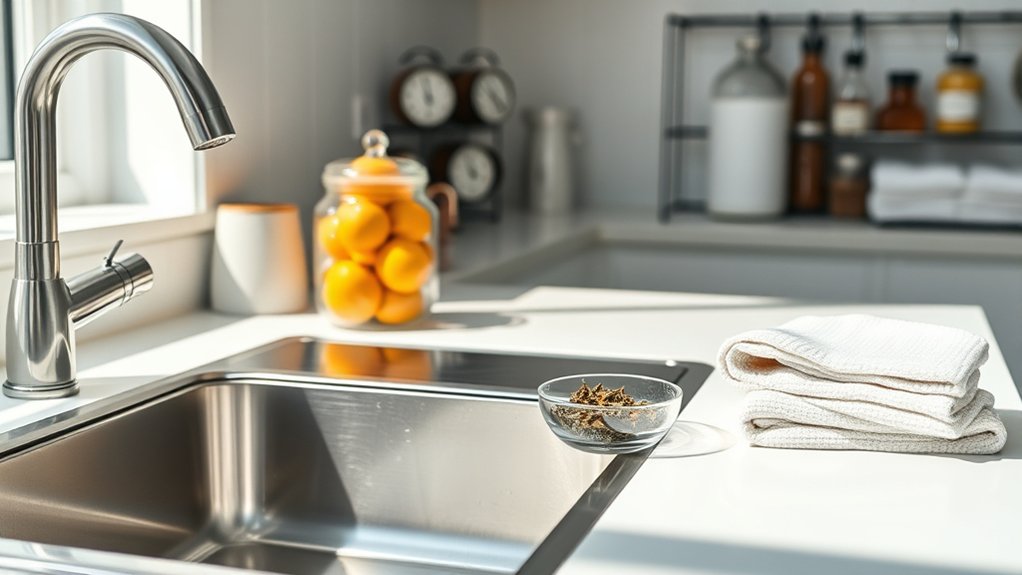
Because gnats thrive on food particles and damp environments, removing these sources is essential to getting rid of them. Start by improving your food storage habits and controlling moisture around your kitchen.
Gnats thrive on food and moisture, so removing these sources is key to eliminating them.
When you eliminate their feeding and breeding grounds, gnats won’t stick around.
Focus on these key steps:
- Seal food properly: Store fruits, vegetables, and leftovers in airtight containers or the fridge to cut off their food supply.
- Clean thoroughly: Wipe down counters, sweep floors, and empty trash regularly to remove crumbs and spills.
- Control moisture: Fix leaks, dry sinks and drains, and avoid leaving wet sponges or cloths out, as gnats are attracted to damp spots.
Set Up DIY Gnat Traps
After removing food and moisture sources, you’ll want to attract and trap any remaining gnats to clear your kitchen completely. Setting up DIY gnat traps is an effective and affordable way to do this.
You can create traps using simple household ingredients that lure gnats in and keep them from flying around.
Here’s a quick guide to DIY solutions and their trap effectiveness:
| Trap Type | Ingredients | Trap Effectiveness |
|---|---|---|
| Apple Cider Vinegar | Vinegar + dish soap | High |
| Fruit Trap | Overripe fruit + jar | Medium |
| Wine Trap | Red wine + container | High |
Place these traps near gnat hotspots like fruit bowls or drains.
The vinegar or wine scent draws gnats, while dish soap breaks surface tension and traps them. Regularly replace traps for best results, and watch your kitchen become gnat-free fast!
Use Natural Repellents to Keep Gnats Away
If you want to prevent gnats from returning, try using natural repellents that keep these pests at bay without harsh chemicals. Essential oils and herbal sprays are effective, safe options that also freshen your kitchen.
You can easily apply them yourself and avoid any toxic residues.
Here are some natural repellents you should consider:
- Essential oils: Scents like peppermint, eucalyptus, and lavender repel gnats. Mix a few drops with water in a spray bottle and spritz around your kitchen.
- Herbal sprays: Boil herbs such as basil, thyme, or rosemary to create a concentrated spray that deters gnats when applied to surfaces.
- Plant pots: Keep potted herbs like mint or basil near your sink or fruit bowls to naturally discourage gnats from settling.
Using these natural repellents regularly helps create an environment gnats avoid, cutting down their chances of invading your kitchen again.
Clean Kitchen Drains to Stop Gnats
Natural repellents can keep gnats at bay, but tackling their breeding grounds is just as important. One common source of gnats in your kitchen is clogged or dirty drains. These spots trap organic matter and moisture, creating a perfect environment for gnats to breed.
To stop these garden pests indoors, start by pouring boiling water down your kitchen drains daily for a week. This helps flush away food debris and kills larvae hiding in the pipes.
Next, scrub the drain with a mixture of baking soda and vinegar to break down buildup and reduce indoor humidity around the drain. Let it fizz for 10 minutes, then rinse with hot water.
You can also use a drain brush to remove any stubborn grime. Keeping your drains clean removes the moist, organic environment gnats love, cutting off their breeding cycle and helping you reclaim your kitchen fast.
Prevent Gnats From Coming Back
To keep gnats from returning, maintain a clean and dry kitchen environment. Gnats reproduce quickly, so interrupting their lifecycle is essential for effective pest control.
Focus on eliminating breeding grounds by removing sources of moisture and food.
Here’s how you can prevent gnats from coming back:
- Dispose of overripe fruits and vegetables promptly to cut off food sources for gnats.
- Fix leaky faucets and dry sinks regularly to eliminate moisture that supports the gnat lifecycle.
- Clean garbage bins and compost containers often to avoid attracting gnats with decaying organic matter.
Maintain a Gnat-Free Kitchen Long Term
How can you guarantee your kitchen stays gnat-free over time? Understanding the gnat lifecycle is key. Gnats breed quickly, so interrupting their cycle early prevents infestations.
Regularly clean surfaces, dispose of overripe fruit, and empty trash to remove breeding sites. Combine these habits with effective pest control methods, like natural traps or safe insecticides, to keep adults from laying eggs.
Maintain dry conditions since gnats thrive in moisture. Fix leaky pipes and avoid leaving standing water in sinks.
Monitor your kitchen weekly for any signs of gnats, acting fast if you spot them. Use screens on windows and doors to block entry points.
When to Call a Pro for Gnat Problems
Although many gnat problems can be managed with home remedies, there are times when you should call a professional. If gnats keep coming back despite your efforts, it might signal a deeper infestation that requires expert pest control.
Professionals have access to specialized chemical treatments that are more effective and safer than over-the-counter options.
Consider calling a pro if you notice:
- Persistent gnats thriving in hidden areas like drains or behind appliances
- Rapidly increasing gnat populations despite your cleaning and traps
- Signs of damage to food or plants caused by gnats
A pest control expert can inspect your kitchen thoroughly, identify breeding sites, and apply targeted chemical treatments to eliminate gnats fast and prevent their return.
Don’t hesitate to seek professional help if your gnat issue feels out of control. It’s the quickest way to reclaim your kitchen and keep it gnat-free.
Tips for Quick Gnat Removal Success
If you’re not ready to call a professional just yet, there are several effective steps you can take right away to reduce gnats quickly. Understanding gnat behavior helps: they’re attracted to moisture and decaying organic matter.
Start by eliminating breeding grounds. Clean your drains, remove overripe fruit, and wipe down kitchen surfaces regularly. Since the gnat lifecycle is short, targeting larvae early is essential.
Use apple cider vinegar traps to catch adults and prevent them from laying eggs. You can also dry out soil in potted plants, as dampness encourages gnat larvae.
Keep your kitchen well-ventilated to reduce humidity, which discourages gnat activity. By acting quickly and consistently, you interrupt the gnat lifecycle and stop new generations from emerging.
Frequently Asked Questions
Can Gnats Bite or Harm Humans?
Gnats don’t bite or harm you directly, but their behavior can still annoy you. They’re mostly just attracted to moisture and food, buzzing around your kitchen.
While they don’t feed on your blood or cause bites, their presence might trigger allergic reactions or irritation if you’re sensitive. Understanding gnat behavior helps you stay calm, knowing they’re more of a nuisance than a real threat to your health or well-being.
Are Gnats Attracted to Pets or Their Food?
Gnats flock to pet food like moths to a flame because it’s one of their prime attractant sources. If you leave pet food out too long, you’re practically rolling out the red carpet for them.
You should clean up spills and store pet food in airtight containers to keep gnats at bay. Remember, controlling attractant sources like pet food helps you stop gnats before they even think about making your space their home.
Do Electronic Bug Zappers Work on Gnats?
Electronic zappers can catch some gnats, but they’re not the most effective solution because gnat behavior differs from other insects. Gnats are attracted to moisture and fermenting food rather than just light.
Since electronic zappers rely on light to lure bugs, gnats might not always respond well. You’ll get better results by removing breeding sites and using traps designed for gnats rather than relying solely on electronic zappers to control them.
Can Gnats Infest Other Areas Besides the Kitchen?
Absolutely, gnats can take over more than just your kitchen. They’ll invade every nook like they own the place!
You might find them swarming around your indoor plants, turning them into a gnats’ personal buffet. Don’t forget drains and sinks; those damp spots are perfect breeding grounds.
If you ignore these areas, gnats will multiply faster than you can swat, making your whole home feel like a gnat convention!
How Long Does a Typical Gnat Infestation Last?
A typical gnat infestation can last anywhere from one to three weeks, depending on the gnats’ lifecycle and how quickly you act. Since gnats reproduce rapidly, the infestation’s duration depends on how fast you eliminate breeding sites like damp areas or decaying food.
If you don’t address the source promptly, the infestation can linger longer. With proper cleaning and traps, you can break the lifecycle and end it sooner.
Conclusion
Getting rid of gnats in your kitchen is easier than you think. Like a detective hunting clues, you just need to spot what’s attracting them and act fast.
Remove food and moisture, set up traps, and use natural repellents to keep them away. With a little effort and consistent cleaning, you’ll keep your kitchen gnat-free long term.
If they persist, don’t hesitate to call a pro. You’ve got this, and these steps can help you get rid of gnats in your kitchen fast.