How Deep Are Kitchen Counters?
Cramped prep space or counters that feel awkward to use can make cooking frustrating. You’re not alone—many people struggle to balance workspace, storage, and easy movement in the kitchen. Understanding how deep kitchen counters are can help you choose a layout that fits your needs.
Kitchen counters are typically 24 inches deep, giving you enough workspace and storage without crowding your kitchen. If you want more surface area for prep or appliances, you might choose deeper counters, but that could reduce cabinet space below.
Shallower counters create a sleek look but limit room for tasks. Your choice affects kitchen flow, ergonomics, and style. Keep exploring to find out how counter depth shapes your entire kitchen layout and function.
Key Takeaways
- Standard kitchen counters are typically 24 inches deep from the front edge to the wall.
- Kitchen islands usually have a deeper counter depth, ranging from 36 to 48 inches.
- Shallow counters around 18 inches create a compact workspace but limit storage capacity.
- Deeper counters provide extra surface area but may reduce under-counter cabinet space.
- Counter depth choice depends on kitchen layout, appliance size, and ergonomic considerations.
What Is the Standard Depth of Kitchen Counters?
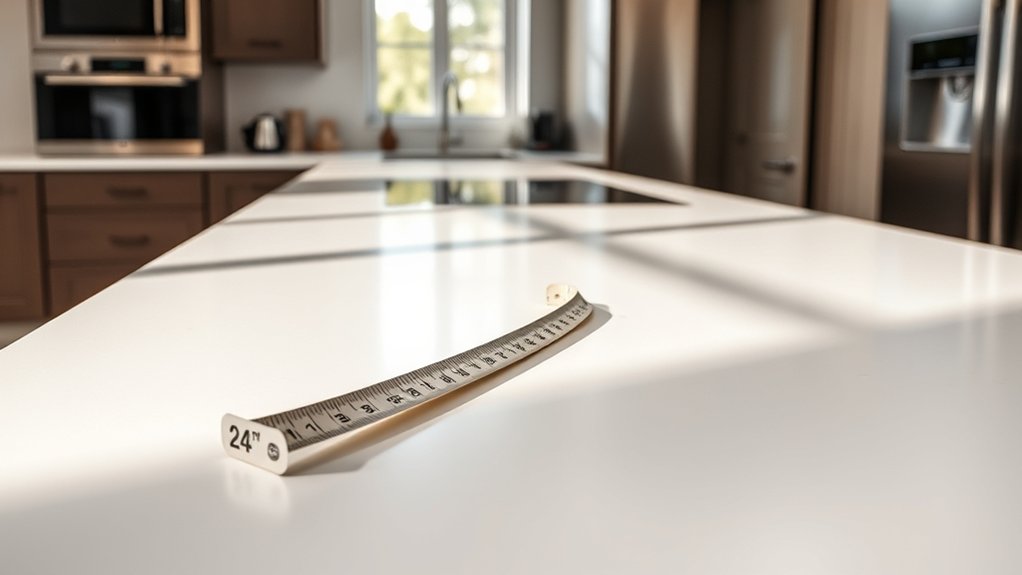
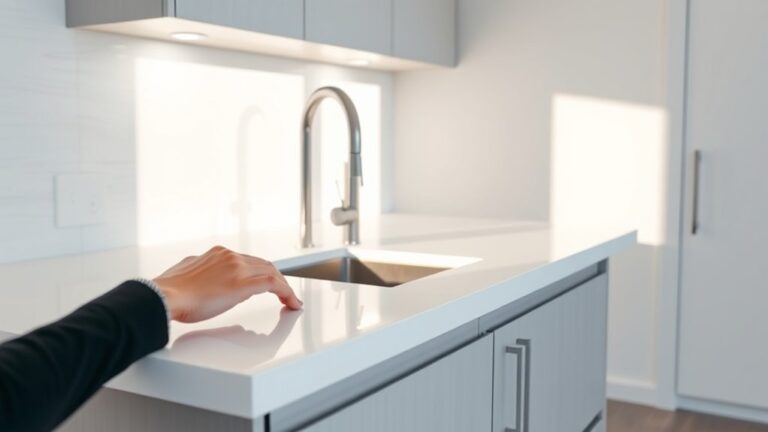
The standard depth of kitchen counters typically measures 24 inches from the front edge to the wall. This size balances usability and space efficiency, ensuring you have enough room to prep food without overcrowding your kitchen.
When you consider counter height alongside depth, it’s usually around 36 inches, designed to fit most people comfortably whether you’re chopping veggies or rolling dough.
You’ll want to think about material durability too, as the counter surface endures daily wear and tear. Materials like granite, quartz, and solid wood offer excellent durability, supporting your kitchen tasks without easily showing scratches or stains.
Why Counter Depth Matters for Kitchen Function and Workflow
Although it might seem like a minor detail, counter depth plays a crucial role in how efficiently you move and work in your kitchen. When your counter depth complements the counter height, you avoid awkward reaches and cramped spaces, making food prep and cooking smoother.
If the counters are too deep, you might find yourself stretching to access items, slowing down your workflow. On the other hand, counters that are too shallow limit your workspace, forcing you to juggle tasks or clutter your surfaces.
Material durability also factors into your counter’s functionality. Deeper counters may require sturdier materials to support heavier loads without warping or damage over time.
Choosing the right depth ensures you get the balance between ample workspace and lasting strength. Ultimately, the right counter depth lets you work comfortably and efficiently, making your kitchen a more enjoyable and productive space.
Typical Counter Depths by Kitchen Counter Type
Choosing the right counter depth means understanding how different kitchen counters vary in size and purpose. Standard base counters usually measure 24 inches deep, balancing counter height and workspace efficiently.
If you prefer more room for prep, you might consider deeper counters, but keep material durability in mind. Thicker slabs often last longer.
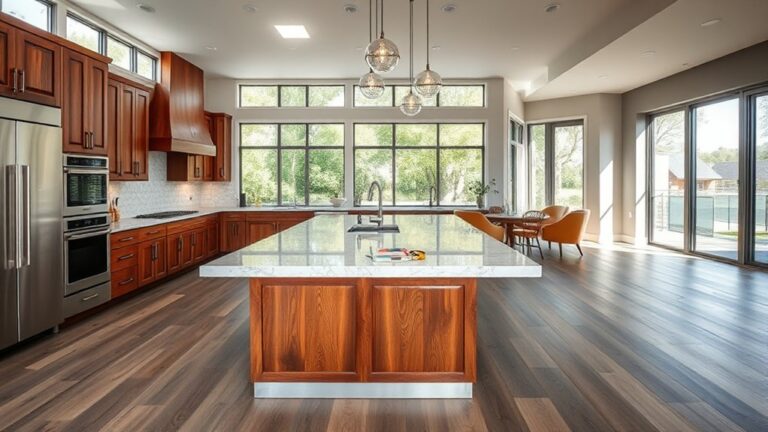
For kitchen islands, depths range widely depending on use, from 36 to 48 inches. This allows room for seating or extra work area.
Wall-mounted counters tend to be shallower, around 18 to 20 inches, optimizing space without sacrificing usability. Here’s a quick guide to typical depths by counter type:
| Counter Type | Typical Depth (inches) |
|---|---|
| Standard Base | 24 |
| Kitchen Island | 36-48 |
| Wall-mounted | 18-20 |
| Bar Counter | 12-15 |
| Utility/Laundry | 24-30 |
Choosing the right depth will help guarantee your counter height feels comfortable and the material durability fits your kitchen’s demands.
How Appliance Size Affects Kitchen Counter Depth
When you plan your kitchen layout, considering appliance sizes plays a crucial role in determining counter depth. Large appliances like ovens, refrigerators, and dishwashers often require deeper counters to guarantee a seamless fit and proper functionality.
If your appliances protrude too far, they can disrupt the workflow and make your counter feel cramped. Matching counter depth to appliance size also influences counter height, helping maintain ergonomic comfort while you work.
Additionally, appliance depth impacts backsplash design. A deeper appliance might need a taller or extended backsplash to protect the wall from spills and splashes effectively.
Conversely, shallower appliances allow for a more standard backsplash height without compromising style or function. By carefully coordinating appliance size with counter depth, you assure your kitchen remains both practical and visually balanced.
Ultimately, this approach helps you create a space that’s efficient, comfortable, and stylish.
How to Accurately Measure Your Space for Counter Depth
Before installing your kitchen counters, you’ll need to measure your space accurately to guarantee the right counter depth. Start by measuring from the wall to the edge where you want the counter to end. Use a tape measure and note this distance precisely.
Don’t forget to check the counter height as well, since it affects usability and comfort. Standard counter height is usually around 36 inches, but you can adjust it to fit your needs.
Next, consider the material durability when selecting your counter depth. Thicker materials like granite or quartz may require slightly deeper measurements to ensure proper support and installation.
Also, measure around appliances and cabinets to avoid obstructions. Double-check your measurements to avoid costly mistakes.
Accurate measuring ensures your counters fit perfectly, maintain comfort, and maximize space. Keeping these steps in mind helps you create a functional, durable kitchen that meets your design goals.
Customizing Counter Depth to Fit Your Cooking and Prep Needs
Standard counter depths work well in most kitchens, but a deeper surface can give you more room for cooking and meal prep. Consider how much space you need for chopping, mixing, or placing appliances before choosing a custom depth. By tailoring your counters to your habits, you can create a kitchen that feels both comfortable and functional.
Standard Counter Depth Options
Although standard counter depths might seem fixed, you can customize them to better suit your cooking and prep habits. Typically, kitchen counters range from 24 to 25 inches deep, aligning with standard counter height of 36 inches for ergonomic comfort.
Choosing the right depth depends on your workspace needs and available kitchen area. When selecting materials, consider material durability to guarantee your countertop withstands daily wear, heat, and moisture.
Laminate offers affordability but less durability, while granite or quartz provide long-lasting surfaces ideal for heavy use. Remember, adjusting depth affects how you reach across the counter, so balance material choice and depth with your cooking style.
Customizing within standard depths keeps your kitchen functional and comfortable without major renovations.
Benefits of Deeper Counters
When you customize your kitchen counters to be deeper, you gain extra workspace that makes meal prep and cooking more efficient. This added surface allows you to spread out ingredients, appliances, and utensils without feeling cramped.
You can easily accommodate larger cutting boards or multiple mixing bowls, streamlining your workflow. Deeper counters also offer flexibility in choosing the right counter height, ensuring comfort whether you’re chopping veggies or rolling dough.
Plus, selecting materials with high durability becomes even more beneficial, as the larger surface will endure more wear and tear. Investing in a deeper countertop improves functionality and supports your cooking style, making your kitchen a more enjoyable and practical space to create meals.
Custom Depth Considerations
Since every kitchen has unique dimensions and cooking habits, tailoring your counter depth guarantees your workspace fits your specific needs. When customizing, consider how counter height affects your comfort; a deeper counter paired with the right height can reduce strain during prep.
You’ll also want to think about material durability, especially if you use heavy appliances or do intense chopping and cooking. Durable materials like quartz or granite hold up better on deeper surfaces, preventing damage over time.
Don’t forget to assess your kitchen layout to guarantee deeper counters won’t obstruct movement or cabinet doors. By balancing counter height and choosing materials that withstand your cooking style, you create a functional, comfortable space tailored just for you.
How Counter Depth Influences Storage and Cabinet Options
When choosing between standard and custom counter depths, you’re also deciding how much flexibility you’ll have with storage and cabinets. Custom depths allow for tailored cabinet designs that make the most of your available space, while standard depths typically offer a wider selection of ready-made options. Understanding the difference can help you choose the best fit for your kitchen’s layout and storage needs.
Standard vs. Custom Depth
Although choosing between standard and custom counter depths might seem minor, it can significantly impact your kitchen’s storage capacity and cabinet design. Standard depths, usually 24 inches, fit most cabinets and coordinate well with typical counter heights and backsplash designs.
Custom depths offer more flexibility but may require tailored cabinets.
Here’s how depth affects storage:
- Standard depth maximizes under-counter cabinet space with consistent sizing.
- Custom depth can create extra surface area but may reduce cabinet storage below.
- Deeper counters might require adjusted backsplash heights to maintain aesthetic balance.
Keep in mind, your choice influences more than storage. It also affects how your counters relate to the rest of your kitchen’s layout and style.
Impact on Cabinet Design
Choosing the right counter depth directly shapes your cabinet design and storage options. Deeper counters can extend cabinet space, improving storage, but may require sturdier materials to maintain durability.
Shallower counters offer a sleek, modern look that boosts aesthetic appeal but limits storage capacity. Your choice affects not only how much you can store, but also the cabinet style and hardware you select.
| Counter Depth | Storage Capacity | Design Impact |
|---|---|---|
| Standard (24″) | Moderate | Compatible with most cabinetry, with balanced durability |
| Deep (30″+) | High | Requires reinforced materials and expands storage |
| Shallow (18″) | Limited | Sleek look that prioritizes aesthetic appeal over space |
| Custom | Variable | Tailored balance of durability and visual style |
Shallow vs. Deep Kitchen Counters: Which Should You Choose?
Deciding between shallow and deep kitchen counters depends largely on how you use your space and what you value most. If you prioritize a sleek backsplash design or want to maintain a consistent counter height for comfort, shallow counters might work best. They keep your workspace compact and allow decorative backsplashes to shine without overwhelming the room.
Choosing shallow counters highlights sleek backsplashes and comfort, keeping your kitchen compact and stylish.
On the other hand, deep counters offer extra surface area, which is ideal if you cook frequently or need more prep space.
Consider these points to visualize your choice:
- Shallow counters create a cozy, open feel and make it easier to reach items at the back.
- Deep counters provide ample room for appliances, cutting boards, and multiple cooking tasks simultaneously.
- Your counter height should complement the depth to maintain ergonomic comfort and ensure the backsplash design remains visible and functional.
Ultimately, your kitchen’s function and style will guide whether shallow or deep counters suit you best.
Tips for Choosing the Right Counter Depth for Your Kitchen
Since your kitchen layout and daily habits play a big role, you’ll want to match your counter depth to how you use the space most. If you often prep meals or bake, deeper counters give you more workspace.
On the other hand, shallower counters can free up room in small kitchens, making movement easier.
Consider your color schemes too. Lighter colors on deeper counters can brighten the space, while darker tones might make a large countertop feel overwhelming.
Pairing your counter depth with smart lighting options, like under-cabinet LEDs, can improve visibility and highlight your chosen color scheme.
Also, think about appliance size and sink placement. Deeper counters can accommodate larger appliances comfortably.
In addition, don’t forget your storage needs. If you need extra cabinets or drawers, deeper counters can provide more underneath space.
How Counter Depth Shapes Your Kitchen Layout and Flow
Although counter depth might seem like a minor detail, it considerably influences your kitchen’s layout and flow. Choosing the right depth affects how you move, work, and interact in your space.
You’ll want to balance counter height with depth to keep everything ergonomic and efficient. Plus, material durability impacts how well your counters hold up under daily use, which ties into layout decisions.
Here are three ways counter depth shapes your kitchen:
- Workflow efficiency: Deeper counters give you more prep space but can crowd your work triangle if your kitchen is small.
- Visual balance: Matching counter height and depth creates a cohesive look, avoiding awkward gaps or cramped areas.
- Material wear: Heavier, durable materials suit deeper counters better, preventing sagging and maintaining longevity.
Frequently Asked Questions
What Materials Are Best for Kitchen Counter Durability?
For durability, you’ll want materials like quartz, granite, or solid surface countertops. These offer excellent resistance to scratches and stains while enhancing countertop aesthetics.
When choosing, use material selection guides to compare pros and cons, ensuring your choice matches your kitchen’s style and daily use. Quartz’s non-porous surface makes it especially low-maintenance.
You’ll get a durable, beautiful countertop that stands up to heavy cooking and looks great for years.
How Do I Maintain and Clean Different Countertop Surfaces?
You don’t have to worry about complicated upkeep; maintaining countertops is easier than you think. For granite or marble, use sealing techniques regularly to protect against stains.
Wipe spills quickly with mild soap and water. For laminate, avoid harsh chemicals and use gentle cleaners.
Stain removal is simple if you act fast; baking soda paste works wonders on stubborn spots. With consistent care, your surfaces will stay beautiful and durable for years.
Are There Eco-Friendly Options for Kitchen Counters?
Yes, you can definitely choose eco-friendly kitchen counters! Look for options made from recycled materials like glass, paper, or reclaimed wood. These not only reduce waste but also add unique style.
You might also consider biodegradable options such as bamboo or cork, which renew quickly and break down naturally. By picking these sustainable materials, you’re making a positive impact on the environment while keeping your kitchen stylish and functional.
What Is the Average Cost of Installing Kitchen Counters?
You can expect to pay between $2,000 and $5,000 on average to install kitchen counters, depending on the material and countertop thickness you choose. Thicker countertops often cost more but can offer better durability.
Also, consider the material lifespan. Granite and quartz usually last decades, justifying their higher price. If you want something budget-friendly, laminate is cheaper but might need replacing sooner.
Choose wisely based on your needs and budget.
Can I Install Kitchen Counters Myself or Should I Hire a Professional?
You can definitely install kitchen counters yourself if you’re handy, but don’t underestimate the challenge. Getting the countertop height just right and matching cabinet styles takes precision.
Mistakes can lead to costly fixes or uneven surfaces. If you want a flawless look and proper fit, hiring a professional is worth it.
They’ll save you time and guarantee your counters look great and function perfectly with your cabinets.
Conclusion
Think of your kitchen counters like a well-tuned orchestra—each depth plays an essential note in your cooking symphony. Too shallow, and you miss the rich harmonies of workspace; too deep, and the rhythm slows with clutter.
By choosing the right kitchen counter depth, you’re composing a kitchen that flows effortlessly, making every meal a masterpiece. So measure wisely, and let your counters set the perfect tone for your kitchen’s daily dance.