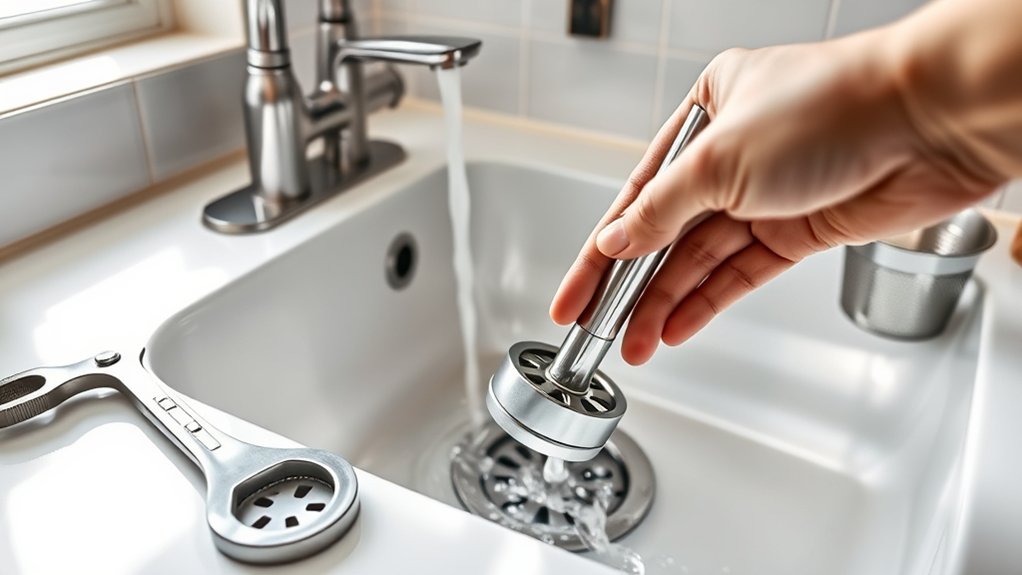
How to Unclog a Kitchen Sink in 5 Easy Steps
A clogged kitchen sink can bring meal prep and cleanup to a frustrating halt. You’re not alone—many people struggle with stubborn blockages and want a quick, effective solution. These simple tips can help you discover more effective ways to clear your sink.
To unclog your kitchen sink in five easy steps, avoid pouring boiling water down the drain and instead pour half a cup of baking soda followed by half a cup of vinegar. Let the fizz work for 15 minutes, then flush with hot water.
Use a plunger to create suction and dislodge minor blockages. For tougher clogs, try a drain snake to break up debris. Keep following these tips, and you’ll quickly master more effective ways to clear your sink.
Key Takeaways
- Pour half a cup of baking soda followed by half a cup of vinegar into the drain and let it fizz for 15 minutes.
- Flush the drain with hot water to clear loosened debris.
- Use a plunger to create suction and dislodge minor clogs.
- Insert a drain snake, turning clockwise to break up or retrieve stubborn blockages.
- Regularly avoid grease and food scraps, and use a drain strainer to prevent future clogs.
How to Clear Your Kitchen Sink Drain Quickly

Although a clogged kitchen sink can be frustrating, you can clear it quickly using a few simple methods. First, don’t fall for common plumbing myths, like pouring boiling water down the drain, which can damage your pipes instead of fixing the clog.
Instead, try eco friendly solutions like a mixture of baking soda and vinegar. Pour half a cup of baking soda followed by half a cup of vinegar into the drain, let it fizz for 15 minutes, then flush with hot water.
This natural approach breaks down grease and debris without harsh chemicals. You can also use a plunger to create suction and dislodge blockages effectively.
Essential Tools to Unclog Your Kitchen Sink

When you’re ready to tackle a clogged kitchen sink, having the right tools can make the job much easier and faster. Proper plumbing maintenance starts with selecting tools that fit the problem.
You’ll want to compare each tool’s use, ease, and effectiveness before diving in.
Here’s a quick tool comparison to guide you:
| Tool | Purpose |
|---|---|
| Plunger | Creates suction to dislodge clogs |
| Drain Snake | Reaches deep blockages inside pipes |
| Pipe Wrench | Loosens pipe connections for cleaning |
Each tool plays an essential role. Start with a plunger for minor clogs, then try a drain snake for persistent blockages.
Use a pipe wrench when you need to remove pipes for thorough cleaning. Having these tools ready will streamline your plumbing maintenance and save time.
How to Identify What’s Clogging Your Kitchen Sink
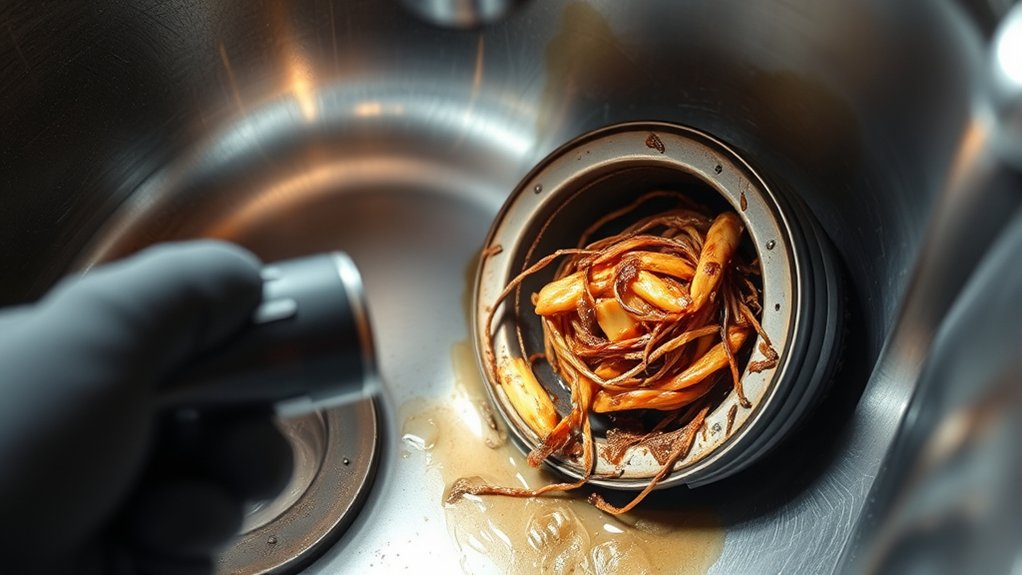
How can you tell what’s causing your kitchen sink to clog? Start by observing how the water drains. If it’s slow or pools around the drain, you likely have a buildup.
Kitchen grease is a common culprit—it cools and hardens, trapping food particles and debris. Soap scum also accumulates over time, mixing with grease and forming stubborn blockages.
You might notice a greasy residue near the drain or a faint, unpleasant odor, both signs of grease buildup. Check for visible debris in the strainer or drain opening; leftover food scraps can also contribute.
If your sink gurgles or water backs up in nearby fixtures, the blockage could be deeper in the pipes. Identifying the clog’s nature helps you decide the best approach to clear it effectively.
Avoid using harsh chemicals, as they can damage pipes and worsen buildup. Instead, focus on pinpointing grease or soap scum to target the problem accurately.
Using a Drain Snake to Remove Stubborn Kitchen Sink Blockages
If you’ve tried basic methods without success, using a drain snake can effectively reach and remove stubborn blockages deep within your kitchen sink pipes. Drain snake techniques are straightforward once you know the steps.
Here’s how to use a drain snake for stubborn blockage removal:
- Insert the snake’s end into the drain opening, pushing gently while turning the handle clockwise.
- Keep feeding the snake until you feel resistance. This is likely the clog.
- Rotate the snake to break up or hook the blockage, then slowly pull it out.
- Run hot water to flush remaining debris and check if the sink drains freely.
Using a drain snake saves you from harsh chemicals and often clears blockages other methods miss. With patience and these techniques, you’ll restore proper flow and keep your kitchen sink clog-free.
Simple Tips to Prevent Kitchen Sink Clogs in the Future
Although unclogging a kitchen sink can be straightforward, preventing blockages in the first place saves you time and hassle. To keep your sink running smoothly, start by avoiding pouring grease, coffee grounds, and food scraps down the drain. They’re common culprits in clog formation.
Use a drain strainer to catch debris before it enters the pipes. Regular plumbing maintenance, like flushing your drain with hot water weekly, helps dissolve buildup and keeps everything flowing.
You can also apply a mixture of baking soda and vinegar monthly as a natural cleaner to break down minor deposits. Remember, these simple household tips not only prevent clogs but extend your plumbing’s lifespan.
If you notice slow draining or odors, address them early to avoid major blockages. By following these practical steps, you’ll reduce the chances of facing stubborn sink clogs and enjoy a hassle-free kitchen plumbing system.
Frequently Asked Questions
Can Chemical Drain Cleaners Damage My Kitchen Pipes?
Yes, chemical drain cleaners can damage your kitchen pipes. The intense chemical reactions they cause can lead to pipe corrosion over time, especially if your pipes are older or made of metal.
Using these cleaners repeatedly may weaken the pipes, causing leaks or bursts. It’s better to avoid relying on harsh chemicals and try safer methods or call a plumber to protect your plumbing system and avoid costly repairs.
How Often Should I Clean My Kitchen Sink Drain?
You should clean your kitchen sink drain every one to two months to keep things running smoothly. Regular sink maintenance helps prevent buildup and odors.
Don’t forget to perform a drain inspection during your cleaning to spot any slow drainage or early clogs. Staying on top of these tasks saves you from bigger plumbing headaches later and keeps your kitchen fresh and functional.
Are There Natural Alternatives to Chemical Drain Cleaners?
Yes, you can use natural remedies as eco friendly solutions to unclog your kitchen sink. Try pouring a mixture of baking soda and vinegar down the drain, let it fizz for 15 minutes, then flush with hot water.
This combo breaks down buildup without harsh chemicals. You can also use a salt and boiling water mix to clear grime. These methods are safe for your pipes and better for the environment.
Can a Garbage Disposal Cause Kitchen Sink Clogs?
Yes, a garbage disposal can cause sink clogs if you’re not careful. When you put fibrous, starchy, or hard materials into the disposal, they can jam the blades or build up in the pipes, leading to blockages.
Also, running it without enough water can cause debris to get stuck. To prevent sink clogs, always grind food waste properly and flush with plenty of water after use.
When Should I Call a Professional Plumber for a Clog?
Think of your sink like a garden hose; if water won’t flow despite your best effort, it’s time to call a professional. You should reach out for a plumbing inspection when clogs persist or worsen, signaling hidden issues.
Also, don’t hesitate if you face leaks or backups needing emergency repair. Trusting an expert early can prevent costly damage and keep your kitchen running smoothly without frustration or mess.
Conclusion
Now that you know how to unclog a kitchen sink confidently, you can clear blockages quickly and effectively. With the right tools and timely techniques, even tough clogs become easier to handle.
Remember, regular rinsing and mindful maintenance can prevent future messes. By practicing these simple steps, you’ll reduce stress and keep your kitchen sink running smoothly for the long haul.