How to Remove Grease From Kitchen Cabinets in 5 Easy Steps
Greasy kitchen cabinets can make even a clean kitchen feel neglected—and many people struggle to remove stubborn buildup without damaging the finish. You’re not alone. The right tools and gentle techniques can make cleaning kitchen cabinets with grease much easier.
To remove grease from your kitchen cabinets, first gather soft sponges, mild detergent, gloves, and a vinegar-water solution. Dust and wipe away dirt gently to avoid scratches.
Spray the homemade degreaser on greasy spots and let it sit for 5-10 minutes.
Then, wipe cabinets with a damp microfiber cloth, rinsing often to avoid spreading grease. Maintain cleanliness with regular dusting and prompt cleaning to prevent buildup.
Keep going for tips on protecting your cabinets long-term.
Key Takeaways
- Dust cabinets with a microfiber cloth or vacuum to remove loose dirt before cleaning.
- Spray a homemade degreaser made of equal parts vinegar, water, and dish soap on greasy areas.
- Let the degreaser sit for 5-10 minutes to effectively break down grease.
- Wipe cabinets with a damp microfiber cloth, rinsing frequently to avoid spreading grease.
- Regularly clean and maintain cabinets with mild detergent and ensure proper kitchen ventilation.
Gather Supplies for Cleaning Greasy Cabinets
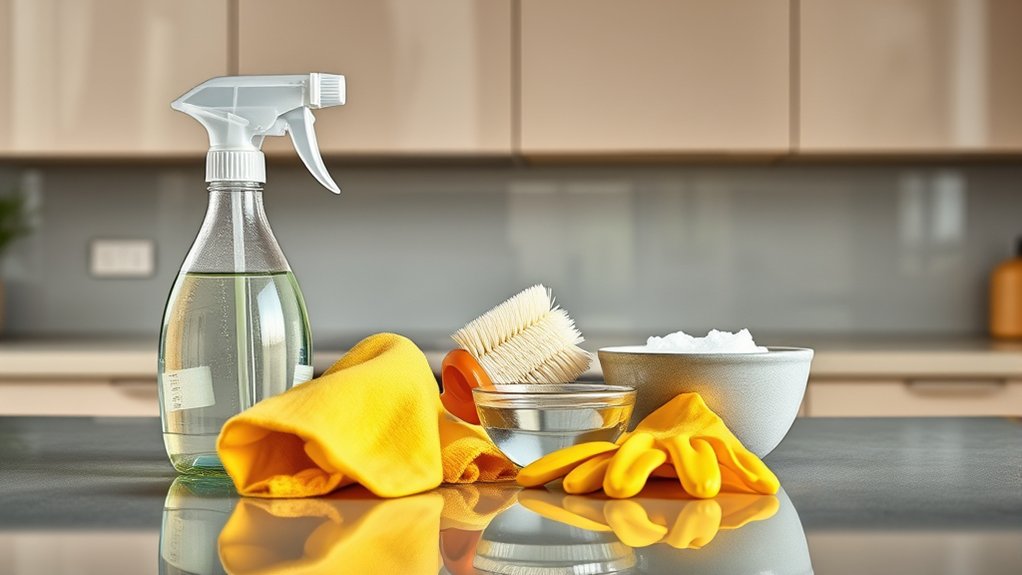
Before you start scrubbing, gather all the supplies you’ll need to clean greasy kitchen cabinets effectively. Knowing your cabinet material is crucial since wood, laminate, and painted surfaces require different cleaning approaches.
Grab a soft sponge or microfiber cloth to avoid scratching delicate finishes. You’ll also want a mild detergent or a gentle degreaser suitable for your cabinet type.
For tougher grease, a mixture of vinegar and water or baking soda paste works well, but test it on a small area first.
Don’t forget gloves to protect your hands and a bucket for mixing your cleaning solution. Having a spray bottle can help evenly apply liquids without soaking the cabinets.
Consider how often you clean. If your cooking habits produce a lot of grease, increasing cleaning frequency will prevent buildup and make each session easier.
Remove Dust and Dirt Before Cleaning
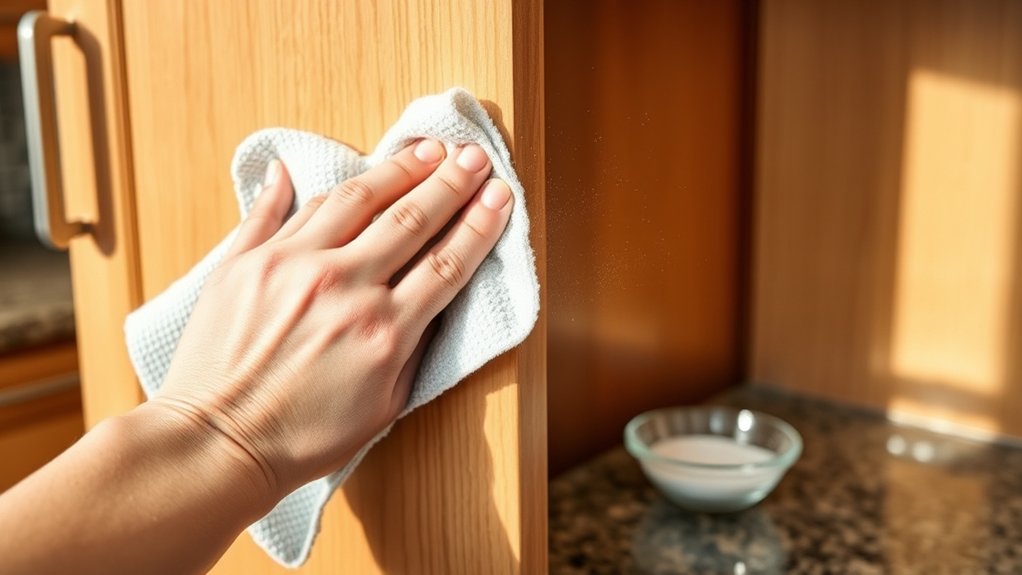
How do you tackle grease effectively if dust and dirt are still lingering on your cabinets? Before diving into grease removal, you need to clear away any surface dust and grime.
This step is essential because dust can trap grease, making it harder to clean and potentially scratching your cabinet material during scrubbing. Use a soft microfiber cloth or a vacuum with a brush attachment to gently remove dust and loose dirt.
Pay special attention to corners and edges where buildup collects most.
Your cabinet material plays a significant role in how you handle this step. For delicate finishes like wood veneer, avoid harsh brushing and opt for gentle wiping.
Regular cleaning frequency helps prevent excessive dust and grease buildup, so aim to dust your cabinets weekly and clean grease spots promptly.
Apply a Homemade Degreaser to Remove Grease

Why settle for harsh chemicals when you can make an effective degreaser right at home? Homemade solutions are not only gentle on your kitchen cabinets but also tough on kitchen grease.
To create your degreaser, mix equal parts white vinegar and water in a spray bottle. Add a tablespoon of liquid dish soap to boost its grease-cutting power. Shake well to combine.
Spray this mixture generously onto greasy cabinet surfaces, focusing on areas with stubborn buildup. Let it sit for 5 to 10 minutes to break down the grease effectively.
The vinegar’s acidity cuts through oily residues, while the dish soap lifts and dissolves grease, making it easier to remove.
This homemade degreaser is safe, affordable, and uses ingredients you likely already have. It’s a smart way to tackle kitchen grease without exposing yourself or your cabinets to harsh chemicals, keeping your kitchen fresh and clean naturally.
Wipe and Rinse Cabinets for a Spotless Finish
Once the degreaser has had time to work, wipe down your cabinets thoroughly to remove loosened grease and residue. Use a clean, damp microfiber cloth to gently wipe the surfaces, paying close attention to painted areas to avoid damage.
Rinse the cloth frequently in warm water so you don’t spread grease around. For stubborn spots, lightly dampen the cloth with plain water and wipe again.
Don’t forget the hardware. Knobs and handles can trap grease too. Use a soft brush or cloth dipped in warm, soapy water to clean these parts, then dry them immediately to prevent rust or tarnishing.
After wiping and rinsing, inspect your cabinets for any missed greasy patches. This careful approach leaves your cabinets spotless without harming the paint or hardware, creating a clean slate for your kitchen’s next look.
Maintain Your Cabinets to Prevent Grease Buildup
To keep your kitchen cabinets looking fresh and grease-free, adopt regular maintenance habits. First, ensure your kitchen ventilation is effective. Use exhaust fans or range hoods to reduce airborne grease particles that settle on cabinet surfaces.
Good ventilation helps prevent buildup and protects your cabinets over time.
Next, consider your cabinet material when choosing cleaning methods. Wood cabinets need gentle, non-abrasive cleaners, while laminate or metal cabinets can handle stronger solutions.
Wipe down your cabinets weekly with a soft cloth and mild detergent to remove grease before it hardens. Avoid letting spills sit, as they can damage the finish.
Lastly, inspect your cabinets periodically for signs of grease or damage. Promptly addressing spots keeps your kitchen hygienic and preserves your cabinets’ appearance.
Frequently Asked Questions
Can Grease Damage the Finish of My Kitchen Cabinets?
Yes, grease can damage the finish of your kitchen cabinets, especially if they’re made of wood or laminate. Over time, the oily residue can break down the protective layer, causing discoloration or peeling.
To protect your kitchen cabinet materials, follow grease removal tips like using gentle, non-abrasive cleaners and wiping spills promptly. Regular cleaning helps maintain the finish and keeps your cabinets looking fresh and new.
How Often Should I Deep Clean Greasy Kitchen Cabinets?
“An ounce of prevention is worth a pound of cure.” You should deep clean greasy kitchen cabinets every one to two months to keep buildup at bay. Pay special attention to cabinet hardware since grease tends to accumulate there.
Adjust your cleaning frequency based on how often you cook and the type of food you prepare. Regular maintenance not only preserves your cabinets’ finish but also keeps your kitchen looking fresh and inviting.
Are Commercial Degreasers Safer Than Homemade Solutions?
Commercial degreasers aren’t always safer than homemade solutions. Many commercial products contain harsh chemicals that require careful handling to ensure chemical safety.
Homemade solutions, often made with natural ingredients like vinegar and baking soda, can be gentler on surfaces and safer for your health. However, always test any cleaner first and wear gloves.
Choosing between them depends on your preference for natural ingredients, convenience, or cleaning strength.
Can I Use a Pressure Washer on Kitchen Cabinets?
Using a pressure washer on kitchen cabinets is like wielding a firehose in a flowerpot. It’s too intense and can cause serious cabinet damage. The high-pressure water can strip paint, warp wood, and ruin finishes.
Instead, stick to gentler methods like mild soap and warm water or commercial degreasers. You want to clean effectively without turning your cabinets into a soggy mess. Pressure washers are best left for outdoor surfaces.
What Causes Grease Buildup on Kitchen Cabinets?
Grease buildup on kitchen cabinets happens because cooking fumes carry tiny oil particles that settle on surfaces. When your kitchen ventilation isn’t strong enough, these particles don’t get filtered out and instead stick to your cabinets over time.
You’ll notice more grease if you fry or cook with oil often and don’t use an exhaust fan or open windows. Improving ventilation helps reduce this greasy layer from forming.
Conclusion
Just like wiping fog off a steamy mirror reveals a clear reflection, removing grease from your kitchen cabinets brings back their original shine.
Remember, a friend once ignored greasy buildup until the cabinets looked like a sticky mess. Don’t let that be you.
By following these simple steps, you’ll keep your kitchen fresh and inviting. Regular care is like oiling a bike chain; it keeps everything running smoothly and looking great for years to come.
With these tips on how to remove grease from kitchen cabinets, you can maintain a cleaner, fresher kitchen with ease.