7 Key Factors That Affect How Much a 10×10 Kitchen Remodel Should Cost
Planning a 10×10 kitchen remodel cost can feel overwhelming, especially when you’re trying to balance style, quality, and your budget. You’re not alone—many homeowners struggle to predict which upgrades will have the biggest impact on the final price.
When planning your 10×10 kitchen remodel, expect costs to rise with custom cabinets, high-end appliances, and durable countertops like granite or quartz. Flooring choices and structural changes, like moving walls or fixtures, also add expenses.
Don’t forget plumbing and electrical upgrades, which require skilled labor and increase your budget. Contractor fees and labor rates greatly influence the total cost, so managing those can save you money.
Keep exploring to uncover how each factor shapes your final price.
Key Takeaways
- Cabinet materials and design complexity significantly influence the overall remodel cost, with custom and solid wood options being the most expensive.
- Choice of countertop materials impacts price and maintenance, with granite and quartz costing more but offering durability and low upkeep.
- Flooring type affects expenses, as luxury materials like hardwood raise costs compared to budget-friendly vinyl or laminate options.
- Upgrading appliances to high-end, energy-efficient models increases initial costs but can reduce long-term utility bills.
- Contractor experience, location, and fee structures, such as flat, hourly, or percentage-based rates, greatly affect labor costs and the total project budget.
How Cabinet Choices Affect Your 10×10 Kitchen Remodel Cost
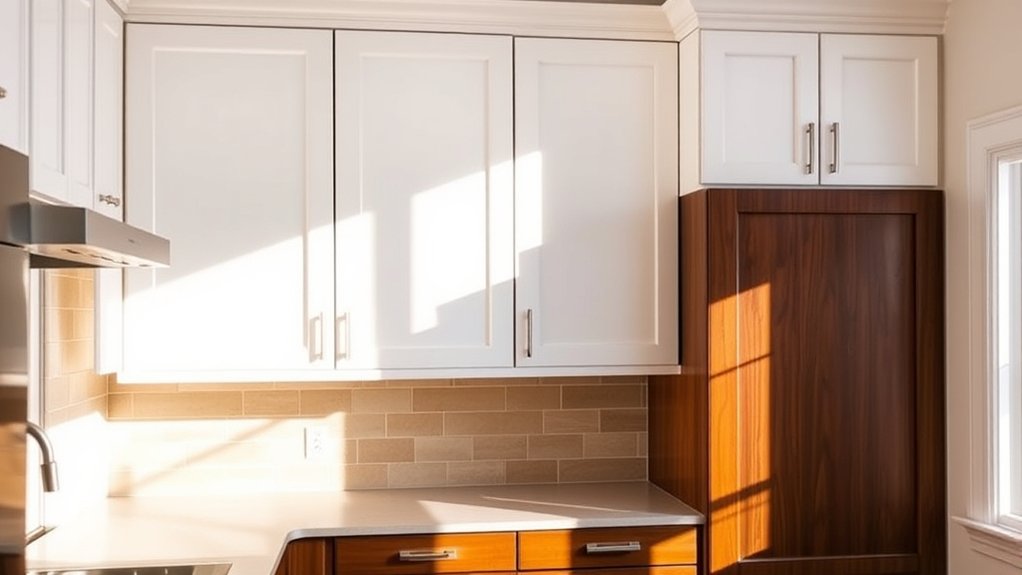
Because cabinets make up a substantial portion of your kitchen, your choices here will heavily influence the overall cost. When selecting cabinet styles, you’ll find options ranging from traditional raised panels to sleek, modern flat fronts. Each style impacts both the look and price, with more intricate designs generally costing more.
Cabinet materials also play a critical role. Solid wood cabinets offer durability and a classic appeal but come at a higher price. On the other hand, materials like MDF or plywood can be more budget-friendly while still providing a good finish. You might also consider laminate or thermofoil for a cost-effective, low-maintenance option.
Keep in mind that custom cabinets will markedly raise your remodel cost compared to semi-custom or stock cabinets. By balancing your preferred cabinet styles with suitable materials, you can better control your budget without compromising your kitchen’s aesthetic.
How Countertop Materials Affect Your Remodel Costs
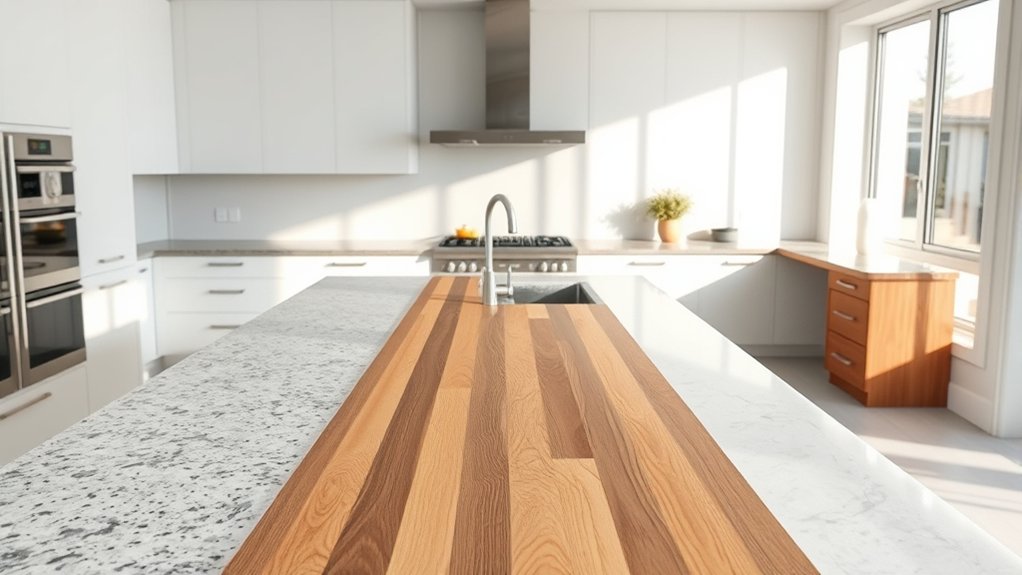
Choosing the right countertop material can considerably impact your 10×10 kitchen remodel costs. Materials vary widely in price, and your choice directly affects both the initial expense and long-term upkeep.
For example, granite and quartz offer excellent countertop durability but come with higher price tags. On the other hand, laminate or tile options are more budget-friendly but may require more frequent repairs or replacements.
You’ll also want to think about material maintenance. Some surfaces need regular sealing or special cleaners to keep them looking great, which adds to your ongoing costs.
Others, like solid surface countertops, offer a balance of durability and easy upkeep, making them a practical middle ground.
How Appliance Upgrades Affect Your 10×10 Kitchen Remodel Cost
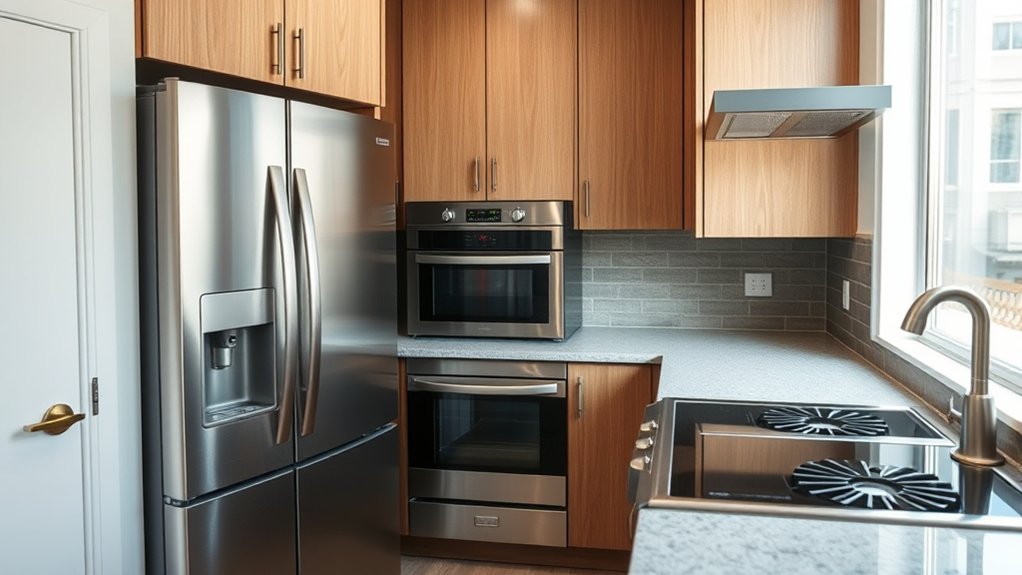
While upgrading appliances can significantly improve your kitchen’s functionality and style, it also plays a major role in your 10×10 remodel budget. When choosing new appliances, consider both appliance durability and brand selection, as these factors directly influence cost and long-term value.
High-end brands often come with premium prices but offer superior durability, energy efficiency, and advanced features. On the other hand, mid-range or budget brands might save you money upfront but may require earlier replacements or repairs, increasing overall expenses.
You should also think about the types of appliances you want to upgrade. Refrigerators, ovens, dishwashers, and microwaves all vary in price depending on size, technology, and finish.
Selecting energy-efficient models can reduce future utility bills, which is an investment worth weighing against initial costs. Ultimately, balancing your preferences with appliance durability and brand selection helps you control expenses without compromising quality in your kitchen remodel.
How Flooring Options Impact Your Remodel Expenses
Flooring choices can make a big difference in your 10×10 kitchen remodel expenses. Selecting luxury features like hardwood or natural stone can substantially raise your budget, but they also add timeless appeal and durability.
On the other hand, opting for mid-range materials like vinyl or laminate offers stylish looks at a lower cost. If you’re eco-conscious, consider eco friendly materials such as bamboo or cork, which combine sustainability with unique textures and colors.
These options might cost a bit more upfront but can save you money over time due to their durability and low maintenance. Keep in mind installation costs vary widely based on the flooring type and complexity.
How Plumbing and Electrical Work Affect Your Kitchen Remodel Costs
Two critical components that can profoundly influence your 10×10 kitchen remodel costs are plumbing and electrical work. Upgrading plumbing often involves rerouting pipes to accommodate new sinks or dishwashers, which can increase labor and material expenses.
If you’re adding a smart appliance, like a Wi-Fi-enabled refrigerator or oven, you’ll also need updated electrical wiring to support the technology safely and efficiently. This can add to your budget, especially if your current setup isn’t equipped for higher power demands.
Don’t overlook the impact of electrical work required for lighting and outlets, especially if you want to install under-cabinet lights or additional power sources for countertop appliances.
While cabinet hardware itself doesn’t affect plumbing or electrical costs directly, changes in these systems might influence how you position cabinets and hardware for maximum use and accessibility.
Planning carefully with your contractor ensures your plumbing and electrical upgrades align with your kitchen’s overall design, helping you avoid unexpected expenses.
How Layout and Structural Changes Influence Your Remodel Pricing
Changing your kitchen’s layout—such as removing walls to create an open-concept design—can quickly increase remodeling costs. Moving plumbing or upgrading the electrical system can add even more to the final price. Knowing what these changes involve makes it easier to plan your budget and avoid surprises.
Open Concept Versus Walls
Although open-concept kitchens have become popular for their spacious feel and social benefits, choosing between removing walls or keeping them considerably impacts your remodel costs.
If you opt for an open concept, you may face higher expenses due to structural reinforcements needed when removing load-bearing walls. This can involve adding beams or supports, which adds to labor and material costs.
On the other hand, maintaining wall separation keeps your layout simpler and often less costly since you avoid major structural work. However, walls limit natural light and interaction, so you’ll need to weigh your budget against the lifestyle benefits.
Ultimately, deciding between open concept and wall separation shapes not only your kitchen’s look but also your overall remodel pricing. Choose the option that fits your needs and budget best.
Plumbing Relocation Costs
If you decide to change your kitchen layout, moving plumbing fixtures like sinks or dishwashers can substantially increase your remodel costs. Relocating pipes often requires opening walls or floors, which adds labor and material expenses.
These structural changes can also affect your choice of backsplash materials since walls may need repairs or adjustments before installation. Keep in mind that shifting plumbing might limit your options for where to place kitchen lighting, as fixtures often depend on existing wiring and ceiling support.
Planning plumbing relocation early helps you avoid surprises and keeps your budget in check. By carefully considering these factors, you can balance functionality with style without overspending on your 10×10 kitchen remodel.
Electrical System Upgrades
How much will electrical system upgrades impact your 10×10 kitchen remodel costs? It depends largely on your layout and structural changes. When you alter the kitchen’s design, the electrical system often needs adjustments to support new lighting design and appliance selection.
Here are three key factors:
- Rewiring and Circuit Additions – Moving outlets or adding circuits for high-powered appliances can quickly raise costs.
- Lighting Design Complexity – Installing layered lighting, dimmers, or under-cabinet lights increases labor and materials expenses.
- Appliance-Specific Needs – Upgrading to smart or energy-intensive appliances may require dedicated outlets or upgraded panels.
Each of these influences the overall budget. Understanding how your choices affect electrical work helps you plan a remodel that fits both your style and wallet.
How Labor and Contractor Fees Impact Your 10×10 Kitchen Remodel Budget
Labor costs can vary widely based on the contractor’s experience and your location, which can have a big impact on your budget. Contractors may also use different fee structures, such as flat rates or percentage-based charges, so it’s important to understand how you’ll be billed. Knowing these details makes it easier to plan your 10×10 kitchen remodel expenses accurately.
Labor Cost Variations
Where does most of your kitchen remodel budget typically go? Labor costs often take a big chunk, and understanding their variations can help you manage your expenses better.
Skilled labor affects how your kitchen lighting and paint color turn out, impacting both look and function. Here are three key factors influencing labor costs:
- Experience level – More experienced workers charge higher rates but deliver quality work faster.
- Project complexity – Custom kitchen lighting or intricate paint color designs require more time and skill.
- Local labor rates – Costs fluctuate depending on your location and local demand for contractors.
Contractor Fee Structures
Labor costs can vary widely depending on who you hire and what they charge. Understanding contractor fee structures is just as important for managing your kitchen remodel budget.
Contractors might charge a flat fee, an hourly rate, or a percentage of the total project cost. Each method impacts how you plan for expenses like kitchen lighting installation or selecting paint colors.
| Fee Structure | Description | Impact on Budget |
|---|---|---|
| Flat Fee | Set price for entire project | Predictable, good for fixed scope |
| Hourly Rate | Paid by hours worked | Can fluctuate with delays |
| Percentage-Based | % of total project cost | Scales with material choices |
Knowing these options can help you negotiate better and avoid surprises.
Impact on Overall Budget
Although materials and design choices considerably influence your 10×10 kitchen remodel, contractor fees and labor costs often have the biggest impact on your overall budget.
Understanding this can help you make smarter decisions during budget planning and timeline management. Here’s how these fees affect your remodel:
- Labor costs fluctuate based on the complexity of the work and the contractor’s rates, directly influencing your budget’s size.
- Unexpected delays can increase labor expenses, so effective timeline management is vital to avoid extra charges.
- Transparent contractor fees help you anticipate costs and allocate funds accurately, preventing budget overruns.
Frequently Asked Questions
How Long Does a 10X10 Kitchen Remodel Typically Take?
A 10×10 kitchen remodel typically takes about 4 to 6 weeks. You’ll want to focus on budget planning early, as delays often come from unexpected costs or changes.
Material selection also impacts your timeline. Choosing readily available items speeds things up, while custom or back-ordered materials can add weeks.
Staying organized and communicating clearly with your contractor helps keep the project on track and guarantees your remodel finishes as scheduled.
What Permits Are Required for a Kitchen Remodel?
You’ll need to check local kitchen permit requirements before starting your remodel since over 50% of projects face delays due to missing permits. Typically, you’ll require permits for electrical, plumbing, and structural changes.
The remodel approval process involves submitting detailed plans to your city’s building department and waiting for approval. Skipping this step can lead to fines or costly rework, so it’s best to get everything approved upfront.
How Can I Finance My Kitchen Remodel Project?
You can finance your kitchen remodel by tapping into your home equity, which often offers lower interest rates. If you don’t have enough equity, personal loans are another option. They’re quicker to get but usually have higher rates.
You might also consider a credit card for smaller expenses, but be careful with interest. Comparing these options helps you pick the best fit for your budget and timeline.
What Are the Best Ways to Increase Kitchen Storage?
To increase kitchen storage, you should focus on smart storage solutions like pull-out shelves and lazy Susans. You’ll want to maximize cabinet organization by adding dividers, adjustable racks, or stacking shelves to use every inch efficiently.
Don’t forget vertical space. Install hooks or magnetic strips for utensils and knives. By combining these smart storage ideas with thoughtful cabinet organization, you’ll create a clutter-free kitchen that feels bigger and more functional.
How Do I Choose the Right Kitchen Lighting?
You might think kitchen lighting is just about brightness, but it’s actually about creating the right mood and functionality.
To choose the right kitchen lighting, focus on layering ambient lighting with task illumination. Ambient lighting sets the overall tone, making your kitchen inviting, while task illumination ensures you can prep and cook safely.
Combine ceiling fixtures with under-cabinet lights, so you get both warmth and precision where you require it most.
Conclusion
You might worry a 10×10 kitchen remodel will break the bank, but understanding these key factors helps you control costs without sacrificing quality. By choosing materials and upgrades that fit your budget, you can create a beautiful, functional space that feels worth every penny.
Remember, smart planning and working with the right professionals can make your 10×10 kitchen remodel achievable and enjoyable. A remodel doesn’t have to feel overwhelming or out of reach.