How Deep Should Kitchen Countertops Be?
Choosing the right kitchen countertop depth can be tricky. You want enough space to prep comfortably without making cabinets and appliances hard to reach—and you’re not alone. Many homeowners struggle to balance workspace, accessibility, style, and budget.
You should aim for kitchen countertops about 24 inches deep to balance workspace and accessibility. This depth fits most appliances and keeps everything within easy reach, supporting efficient cooking and cleaning.
If your kitchen layout or gadgets require it, you can go deeper for extra prep space, though that might affect ergonomics and cost.
Material choice and design also matter for durability and style. Exploring these factors will help you customize the perfect countertop depth for your kitchen.
Key Takeaways
- Standard kitchen countertop depth is typically 24 inches, balancing workspace and easy reach for most tasks and appliances.
- Deeper countertops, measuring 25–27 inches, offer extra prep space but may require custom cabinetry and affect kitchen flow.
- Shallower countertops, measuring 12–15 inches, work well in small kitchens or as bar extensions that maximize walking space.
- Countertop depth should support ergonomic comfort, with the height and reach suited to avoid strain during use.
- Material choice affects countertop depth options. Durable materials can support deeper surfaces, while thinner materials may favor shallower designs.
Why Kitchen Countertop Depth Matters
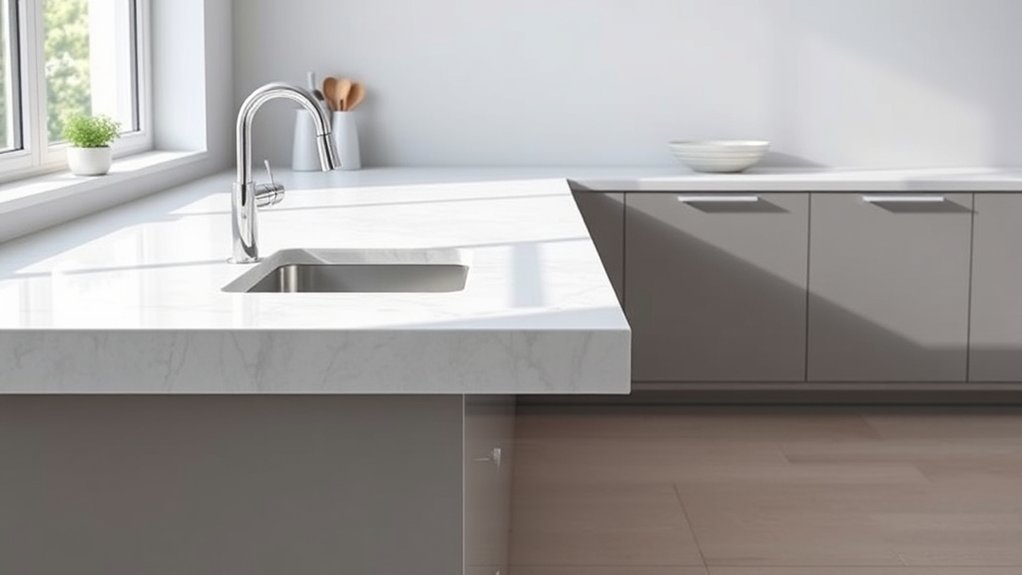
While you might overlook it at first, the depth of your kitchen countertops considerably impacts both functionality and comfort. When you choose the right depth, you make everyday tasks like chopping, mixing, and placing appliances more convenient.
It also influences how much workspace you have, letting you work efficiently without feeling cramped.
Countertop aesthetics play a vital role too. Deeper countertops can create a bold, substantial look, while shallower ones might make your kitchen feel more open and airy.
You can also improve the visual appeal by selecting decorative edges that complement your kitchen’s style, whether that’s sleek and modern or classic and detailed. These edges add personality and can make the depth feel intentional rather than awkward.
Ultimately, getting your countertop depth right balances practicality with design. It guarantees your kitchen looks great and works well for you every day, making cooking and cleaning more enjoyable.
What Are the Standard Kitchen Countertop Depths?
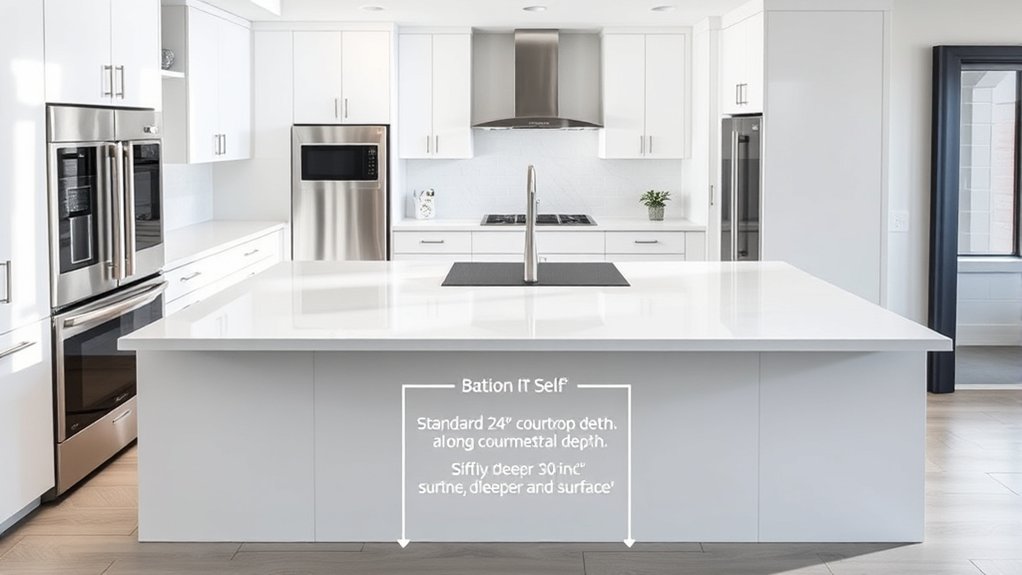
Choosing the right countertop depth starts with understanding the standard measurements used in kitchens. Typically, countertops are 24 inches deep, providing ample workspace while fitting comfortably in most kitchen layouts.
However, you might find variations like 25 or 27 inches, especially if you want extra room for appliances or prep areas.
As you decide, consider how color coordination and eco friendly materials will impact your kitchen’s overall vibe. A well-chosen depth enhances both function and style, creating a welcoming space that feels just right.
Here are some standard depths to guide you:
- 24 inches: The classic depth for most kitchens, balancing space and accessibility.
- 25-27 inches: Offers extra prep space, great for avid cooks.
- 12-15 inches: Used for countertop extensions or shallow bar areas.
- Custom depths: Tailored to fit unique kitchen designs or specific needs.
Knowing these options helps you create a kitchen that’s both beautiful and practical.
How Kitchen Layout Shapes Countertop Depth
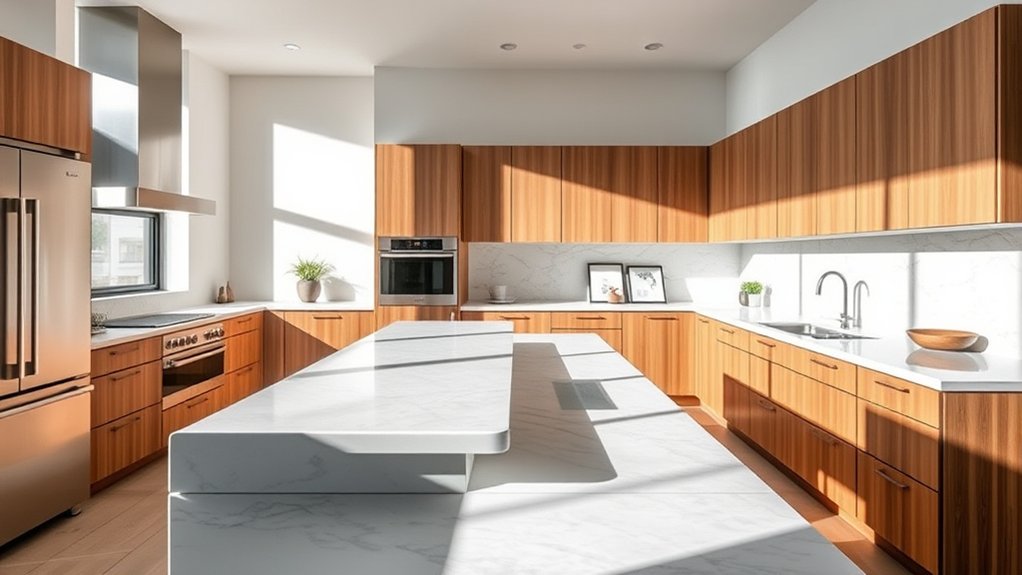
Because your kitchen layout determines how you move and work within the space, it directly influences the ideal countertop depth. If you have a galley or corridor-style kitchen, narrower countertops might be better to keep the walkway clear and maintain smooth traffic flow. In contrast, an L-shaped or U-shaped layout often allows for deeper countertops, giving you more prep space without crowding the room.
Consider countertop aesthetics, too. Deeper surfaces can create a bold, substantial look, especially with materials like granite or quartz that emphasize durability. Thicker countertops in open layouts can serve as a focal point, while slim profiles might suit compact spaces.
Ultimately, your kitchen’s shape influences how deep your countertops should be, blending function with style. When you match depth to layout, you optimize usability and highlight the durability and beauty of your chosen material.
How Countertop Depth Influences Kitchen Workflow Efficiency
The depth of your countertop can make a big difference in how smoothly your kitchen functions. It helps support an efficient work triangle between the sink, stove, and fridge, while giving you enough room to prep comfortably. With the right depth, everything stays within easy reach, so you can move around the kitchen more quickly and comfortably while cooking.
Maximizing Work Triangle Efficiency
Although countertop depth might seem like a minor detail, it plays a crucial role in maximizing your kitchen’s work triangle efficiency. The right depth guarantees you move smoothly between the sink, stove, and refrigerator, reducing unnecessary steps.
Choosing the right countertop material and color coordination can further improve your workflow by making tasks visually intuitive and surfaces easier to clean. When your countertops are too deep, you risk awkward reaches; too shallow, and you lose valuable prep space.
Here’s what to weigh for an efficient work triangle:
- Comfortable reach to appliances without strain
- Clear sightlines between key kitchen zones
- Ample surface for prepping meals
- Harmonious materials and colors that boost focus
Balancing these factors helps you enjoy a kitchen that’s both functional and inviting.
Enhancing Prep Space Accessibility
How does countertop depth impact the ease of meal preparation? When you choose the right depth, you improve your prep space accessibility, making every cooking step smoother.
Deeper countertops offer more room to spread out ingredients and tools, while shallower ones keep everything within easy reach. Your choice of countertop material affects durability and ease of cleaning, directly influencing workflow.
Design aesthetics also play a role, balancing function with style.
| Countertop Depth | Prep Space Accessibility | Ideal Countertop Material |
|---|---|---|
| 24 inches | Compact, limited space | Laminate, Quartz |
| 25-26 inches | Standard, efficient | Granite, Butcher Block |
| 27-30 inches | Spacious, versatile | Marble, Concrete |
| 31+ inches | Extra room, may hinder | Solid Surface, Stainless |
| Custom depth | Tailored to workflow | Mixed materials |
Choosing Countertop Depth Based on Appliance Sizes
When choosing your countertop depth, start by checking your appliances’ standard dimensions to make sure everything fits properly. Leave enough room for ovens and larger kitchen gadgets without crowding your workspace. Matching the countertop depth to your appliances will help keep your kitchen functional and efficient.
Standard Appliance Dimension Guide
Since your kitchen appliances come in various sizes, choosing the right countertop depth means understanding their standard dimensions. Most appliances follow common sizes, so matching your countertops guarantees a seamless fit and elevates your kitchen’s overall look.
Think about how decorative accents and color coordination can tie everything together once you pick the right depth.
Here’s a quick guide to standard appliance dimensions to help you decide:
- Refrigerators typically measure 30-36 inches wide and 28-34 inches deep.
- Dishwashers are usually 24 inches wide and 24 inches deep.
- Microwaves and small appliances vary but often fit comfortably on 12- to 24-inch deep counters.
- Standard base cabinets with countertops are usually 24 inches deep.
Knowing these sizes helps you avoid awkward gaps and maintain a stylish, cohesive design.
Counter Depth and Oven Fit
Although countertop depth might seem like a minor detail, it plays a crucial role in ensuring your oven fits perfectly and functions properly. When choosing your countertop depth, consider the standard dimensions of your oven, including its height and depth, to avoid awkward gaps or overhangs.
The counter height also matters. It should align with your oven’s controls for easy access and safety. Paying attention to the edge design of your countertop can help prevent damage from heat or spills near the oven area.
A deeper countertop might look spacious but could interfere with door clearance or ventilation. By matching your counter depth to appliance sizes, you’ll create a seamless, efficient kitchen layout that supports both style and function.
Accommodating Large Kitchen Gadgets
Matching your countertop depth to your oven’s size ensures a smooth fit, but you’ll also want to consider the space needed for larger kitchen gadgets. When choosing countertop depth, think about how appliances like stand mixers, food processors, and slow cookers will fit without crowding your workspace.
Opting for a deeper countertop offers extra room, preventing these gadgets from feeling cramped while allowing decorative edging to enhance your kitchen’s style. Also, prioritize durable materials that can withstand daily wear from heavy appliances.
- Feel confident knowing your gadgets have their own space
- Appreciate how decorative edging adds elegance and function
- Enjoy a clutter-free, efficient cooking environment
- Trust durable materials that hold up under pressure
Choosing the right depth keeps your kitchen both beautiful and practical.
Adjusting Countertop Depth for Ergonomic Comfort and Safety
When you adjust your kitchen countertop depth, you directly improve both comfort and safety during daily tasks. Matching countertop height with depth helps maintain an ergonomic design, reducing strain on your back and arms.
A countertop that’s too deep forces you to reach excessively, while one that’s too shallow limits workspace.
Consider these ergonomic factors:
| Countertop Depth | Impact on Comfort | Safety Considerations |
|---|---|---|
| 24 inches | Standard, easy reach | Minimal risk of overreaching |
| 30 inches | Extra workspace | Watch for strain if too tall |
| 36 inches | Deep workspace | Risk of leaning, poor posture |
Balancing countertop height with depth ensures you work comfortably and safely. Choose a depth that fits your height and kitchen tasks to maintain ergonomic design and prevent injuries.
Pros and Cons of Deeper vs. Standard Countertop Depths
Choosing between deeper and standard countertop depths affects your kitchen’s functionality and comfort in significant ways. Deeper countertops offer more workspace and can improve countertop aesthetics by creating a sleek, luxurious look.
However, they often come with higher material costs, which can impact budget considerations. Standard depths fit most kitchens well and usually cost less, but might feel cramped if you love cooking or prepping large meals.
Consider these points when deciding:
- Deeper counters provide extra room for appliances and prep work, boosting efficiency.
- Standard depths often suit smaller kitchens better, preserving space and flow.
- Deeper options may require custom cabinetry, increasing expenses and installation complexity.
- Standard depths keep your budget in check while maintaining classic proportions.
Creative Countertop Depth Solutions for Small Kitchens
Although small kitchens pose space challenges, you can still maximize functionality by exploring creative countertop depth solutions. Opt for shallower countertops to free up walking space without sacrificing prep area.
Consider customizing your countertop material to fit snugly against walls or appliances, enhancing flow and usability. You might also use tiered countertops, with one shallow section for prep and a deeper one for display or serving, balancing depth and efficiency.
Incorporate decorative accents like slim shelves or under-cabinet lighting along the edges of your countertops to create visual interest without taking up extra space. These accents can make your kitchen feel larger and more inviting.
Combining practical depth adjustments with stylish touches lets you tailor your countertops to your kitchen’s unique layout, ensuring every inch works for you. Thoughtful design choices in depth and decoration can transform a cramped kitchen into a functional, beautiful space.
How Material Choice Affects Kitchen Countertop Depth
Adjusting countertop depth to fit your kitchen’s layout often depends on the material you pick. Different materials offer varying levels of durability and aesthetic appeal, which influence how deep your countertops should be.
For example, thicker slabs of granite or quartz require more space, while thinner laminates allow for shallower depths without sacrificing strength. Your choice also impacts how the countertop complements your kitchen’s design and functionality.
Consider these factors when choosing your countertop material:
- The weight and thickness affect how deep the countertop can safely extend
- Durable materials like granite withstand deeper, heavier surfaces without damage
- Sleek, modern materials such as concrete create bold statements with customized depths
- Heat and scratch resistance influence practical depth decisions for cooking zones
Measuring, Planning, and Hiring Pros for Custom Countertop Depths
How do you guarantee your kitchen countertops fit perfectly and function well? Start by measuring your space accurately—note the depth of existing cabinets and any appliances nearby.
Use these measurements to plan your custom countertop depth, keeping in mind the countertop material you choose. Some materials require extra allowance for edge profiles or overhangs.
Plan your custom countertop depth carefully, accounting for material needs and any edge profiles or overhang allowances.
Consider color coordination too. Selecting a countertop color that complements your kitchen’s palette improves the overall aesthetic.
Once you have your measurements and color preferences, hire professionals experienced in custom countertops. Pros will ensure precise cuts, proper installation, and seamless integration with your kitchen layout.
They can advise on depth adjustments based on your workflow and countertop material durability. Trusting experts saves time and avoids costly mistakes, giving you countertops that not only look great but also feel just right every day.
Frequently Asked Questions
How Does Countertop Depth Impact Kitchen Resale Value?
You’ll find that countertop depth directly impacts kitchen resale value by influencing both functionality and aesthetic appeal. Choosing the right countertop material combined with an ergonomic design makes your kitchen more attractive to buyers.
Deeper countertops offer extra workspace, enhancing usability, while shallower ones can improve flow. Striking a balance guarantees your kitchen feels spacious and practical, which boosts its market appeal and can lead to a higher resale price.
Can Countertop Depth Affect Kitchen Lighting Placement?
Just like a painter adjusts their canvas size, you need to take into account countertop depth when planning lighting placement. If your countertops are too deep, they can create unwanted countertop shadows that dim your workspace.
What Maintenance Differences Exist With Varying Countertop Depths?
You’ll find that deeper countertops often require more frequent cleaning since they collect more dust and crumbs across their larger surface. Thicker countertop thickness can be easier to maintain because it’s more durable and less prone to chipping.
Also, edge profiles matter: rounded edges hide wear better and need less upkeep than sharp, intricate edges, which can trap dirt and require detailed cleaning. So, your countertop depth influences both cleaning effort and durability.
Are Deeper Countertops More Prone to Damage or Wear?
Think of your countertop like a well-loved book; the more pages you flip, the more wear it shows. Deeper countertops aren’t necessarily more prone to damage, but their increased surface area means you’ll likely use more of it, which can affect wear resistance over time.
To maintain countertop durability, choose materials designed to withstand heavy use. So, while depth adds space, it doesn’t automatically reduce your countertop’s lifespan if you care for it properly.
How Does Countertop Depth Influence Kitchen Cleaning Routines?
Countertop depth directly affects your cleaning accessibility. Deeper countertops can make it harder to reach the back, so you might miss crumbs or spills, increasing countertop clutter over time.
On the other hand, shallower surfaces allow quicker, more thorough cleaning but offer less space for appliances and prep. You’ll want to balance depth to keep clutter manageable and guarantee you can clean every corner without straining, making your kitchen maintenance smoother and more efficient.
Conclusion
Choosing the right kitchen countertop depth is like finding the perfect rhythm in a song—it keeps your workflow smooth and your space balanced. Whether you stick with standard depths or go deeper, consider your layout, appliances, and how you cook daily.
Don’t forget to measure carefully and get professional help when needed. With the right kitchen countertop depth, your kitchen won’t just look great—it’ll work beautifully for you every day.