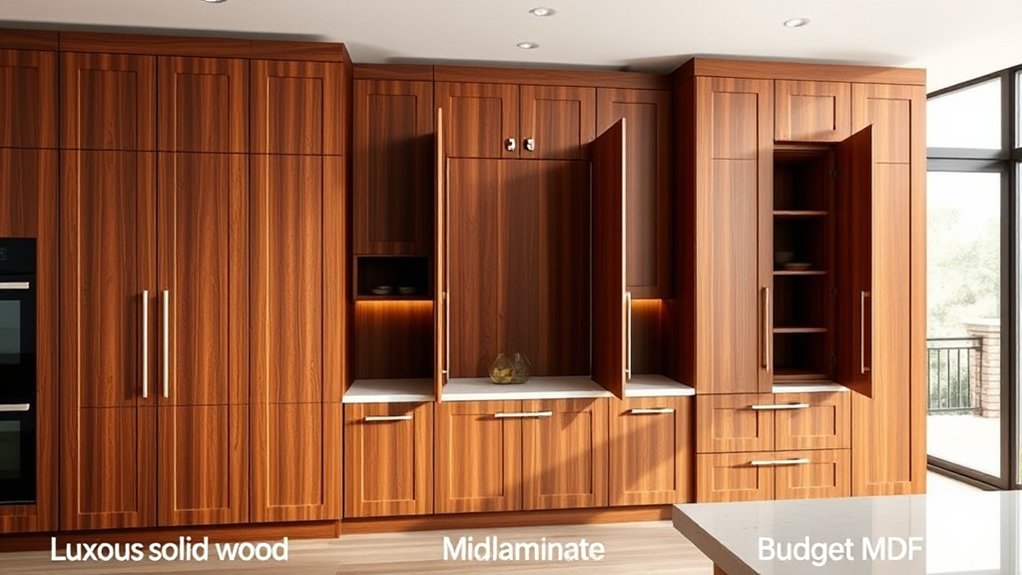
3 Key Factors That Do Determine How Much Kitchen Cabinets Cost
Choosing kitchen cabinets can feel overwhelming, especially when you’re trying to balance quality, style, and budget. You’re not alone—many homeowners struggle to estimate kitchen cabinet costs before making a decision.
You’ll find that your kitchen cabinet costs mainly depend on three key factors: the materials you pick, your kitchen’s size and layout, and how much you customize.
Solid wood cabinets last longer but cost more, while MDF saves money upfront. Bigger or more complex kitchens need more materials and labor. Custom details add style but increase the price.
These elements shape your budget, and exploring each can help you make smarter, cost-effective choices.
Key Takeaways
- Cabinet material choice significantly affects cost, durability, and kitchen aesthetics.
- Kitchen size and layout complexity directly impact the quantity of cabinets and labor expenses.
- Customization options like unique designs and upgraded hardware increase overall cabinet costs.
- Built-in appliances and specialized cabinet features raise design and installation prices.
- Balancing quality, size, and personalization helps manage remodeling budget effectively.
How Cabinet Materials Influence Your Remodeling Budget
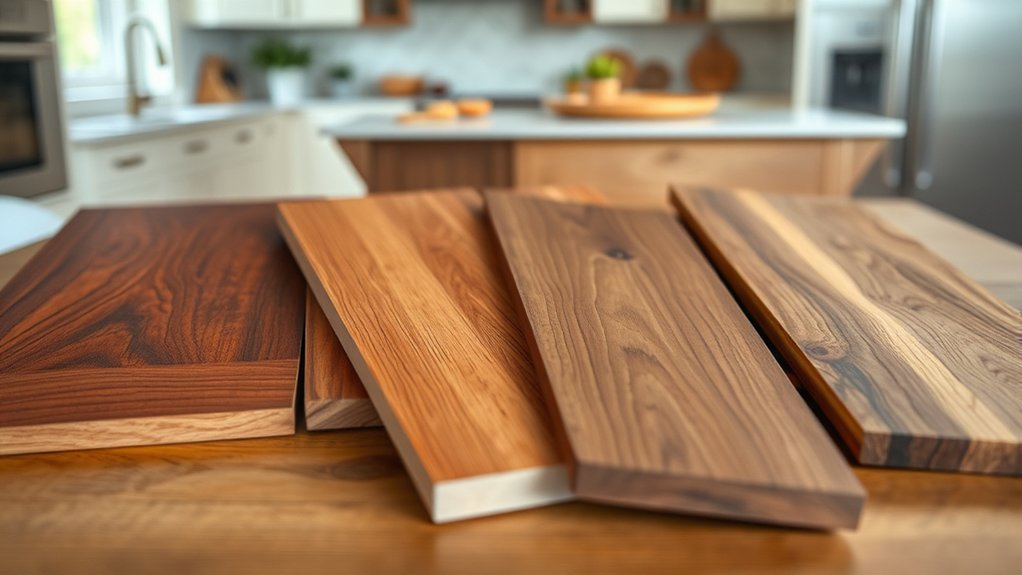
Because cabinet materials vary widely in quality and price, they play a major role in determining your remodeling budget. When you choose your cabinets, you’re not just picking how they’ll look. You’re also investing in their durability.
Solid wood offers excellent cabinet durability and timeless material aesthetics, but it comes with a higher price tag. MDF or particleboard can save you money upfront, but may not last as long, especially in humid kitchen environments.
Solid wood ensures lasting beauty and strength, while MDF or particleboard offer budget-friendly but less durable options.
You’ll want to consider how the material’s look complements your kitchen style. Natural wood grain adds warmth and character, while laminate or thermofoil provides sleek, modern aesthetics at a lower cost.
Balancing cabinet durability with material aesthetics can help you find options that fit your style without breaking the bank. Ultimately, your cabinet material choice directly impacts both the longevity and visual appeal of your kitchen remodel, so choose wisely.
How Kitchen Size and Layout Impact Cabinet Costs
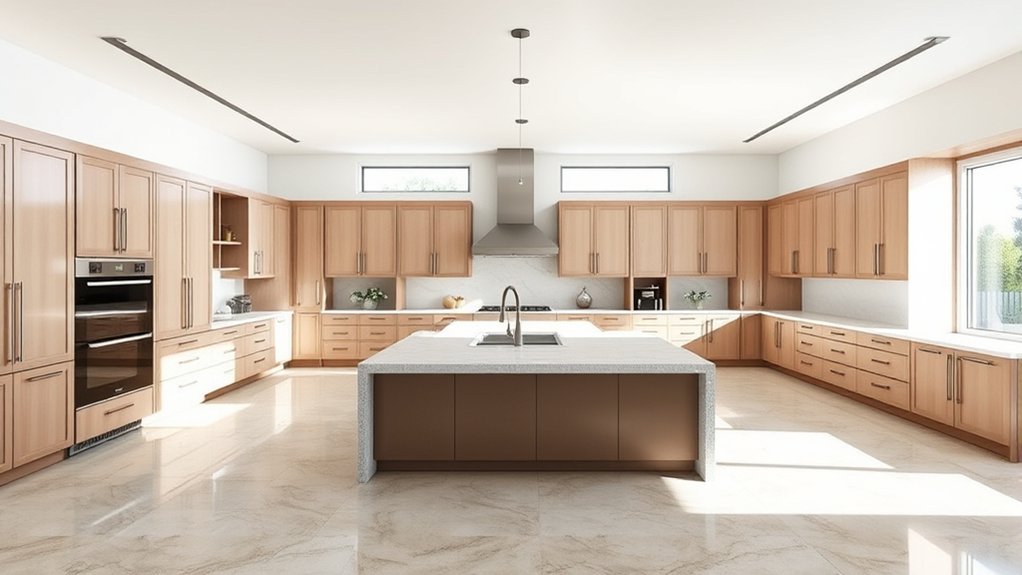
Your choice of cabinet materials sets the foundation for cost, but the size and layout of your kitchen play an equally significant role in shaping your budget. Larger kitchens require more cabinets, which naturally raises expenses. The layout also impacts labor and installation costs, especially when accommodating appliance integration and selecting countertop finishes.
Consider these three factors:
- Kitchen Size – Bigger kitchens demand more cabinetry, increasing material and installation costs.
- Layout Complexity – An open layout or irregular shapes may require custom cuts and extra labor.
- Appliance Integration – Built-in appliances need specialized cabinet designs, influencing price.
Additionally, your choice of countertop finishes affects how cabinets align with surfaces, sometimes requiring adjustments.
How Customizing Your Cabinets Can Change the Price
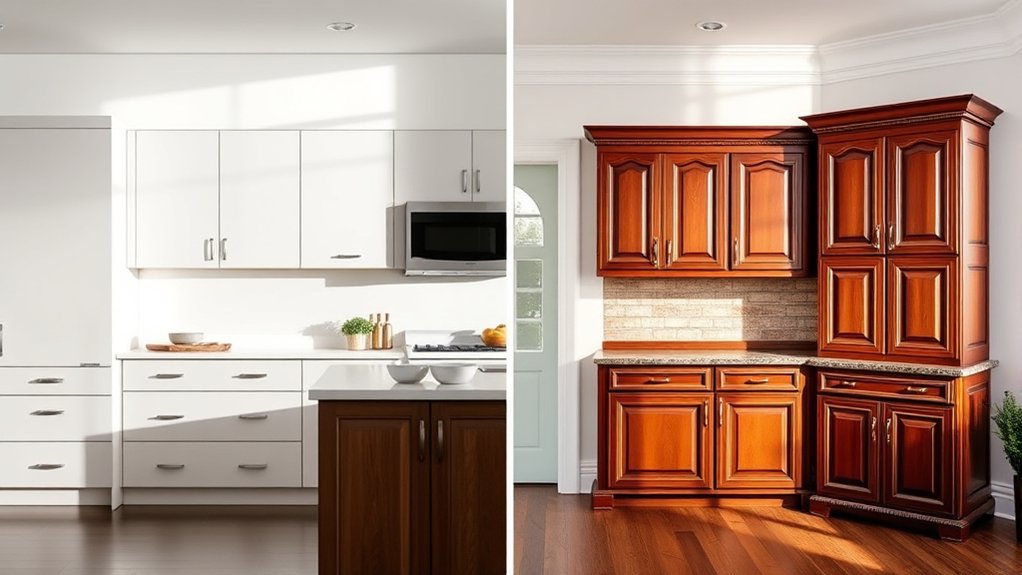
When you decide to customize your cabinets, you’ll see a noticeable impact on the overall price. Cabinet design plays a huge role here. Choosing unique shapes, intricate details, or specialized materials all adds to the cost.
The more personalized your cabinets are, the more labor and craftsmanship they require, which naturally raises the price.
Customization options range widely, from upgrading hardware and finishes to adding built-in organizers or glass doors. Each choice can increase expenses, but it also enhances functionality and style tailored to your needs.
Keep in mind that custom cabinets often take longer to produce, potentially adding to labor costs.
If you want a one-of-a-kind kitchen, customization is the way to go, but it’s important to balance your desires with your budget.
Understanding how cabinet design and customization options affect pricing helps you make informed decisions without surprises.
Frequently Asked Questions
How Does Cabinet Hardware Affect Overall Cabinet Costs?
Cabinet hardware directly affects your overall cabinet costs because it adds both style and function. When you choose high-quality hardware, you’re paying for better material durability, which means it lasts longer and looks better over time.
Cheaper hardware might save you money upfront but could wear out fast, leading to replacements. So, investing in durable cabinet hardware helps you balance cost with lasting value and aesthetic appeal in your kitchen.
What Is the Average Lifespan of Kitchen Cabinets?
You can expect your kitchen cabinets to last anywhere from 20 to 50 years, depending on cabinet durability and material longevity. Solid wood cabinets often last longer, while particleboard may wear out sooner.
If you take good care of them and choose high-quality materials, your cabinets will stand up well to daily use. Regular maintenance and avoiding moisture damage can also extend their lifespan considerably.
Are There Financing Options Available for Cabinet Purchases?
Yes, you can find financing options and payment plans for cabinet purchases. Many retailers offer flexible financing options, low-interest payment plans, or credit card promotions to help you manage costs.
You can apply online or in-store and get approved quickly. By choosing the right payment plan, you’ll spread out your expenses without feeling the pinch, making it easier to get the cabinets you want without waiting.
How Do Installation Fees Impact Total Cabinet Expenses?
Installation fees can considerably raise your total cabinet expenses, especially if your chosen design trends require complex fitting or custom adjustments. When you pick materials with higher durability, installation might take longer or need specialized skills, further increasing costs.
You’ll want to factor in these fees early, so you don’t get surprised. Remember, a flawless install improves your cabinets’ look and lifespan, making the extra cost worth it.
Can Reclaimed Wood Cabinets Reduce Remodeling Costs?
Yes, reclaimed wood cabinets can reduce remodeling costs because they often come at a lower price than new materials. You’ll enjoy cost savings by reusing wood that’s already been processed, which cuts down on material expenses.
Plus, reclaimed wood adds unique character to your kitchen. Just make sure the wood is in good condition to avoid costly repairs later.
Conclusion
When planning your kitchen remodel, remember these three factors—they’re the secret sauce to your budget.
Materials can make your costs soar like a rocket or keep them grounded. Your kitchen’s size and layout shape how many cabinets you’ll need and what you’ll pay.
Customization can turn a simple cabinet into a masterpiece or break the bank. Keep these factors in mind, and you’ll master your kitchen cabinet costs like a pro.


