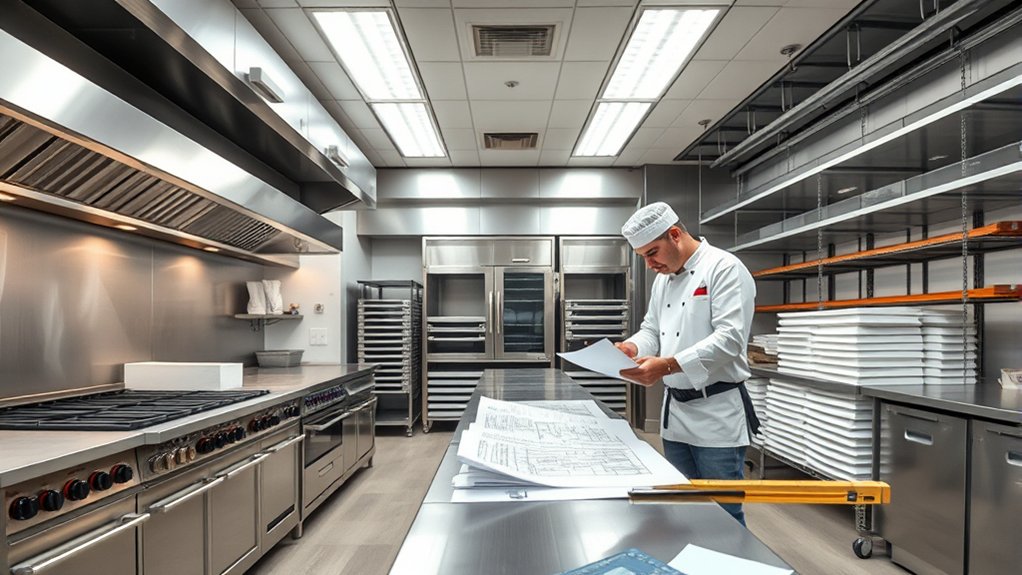
How to Build a Commercial Kitchen in 5 Simple Steps
Building a commercial kitchen can feel overwhelming, especially when you’re balancing costs, tight spaces, safety rules, and demanding service schedules. You’re not alone—many restaurant owners struggle to create a setup that keeps staff moving efficiently while meeting every requirement.
The good news is that learning how to build a commercial kitchen becomes much easier when you break the process into five practical steps.
To build a commercial kitchen in five simple steps, start by planning a smart layout that reduces staff movement and prevents bottlenecks. Next, hire experienced designers and contractors who know commercial kitchen needs.
Then, secure all necessary permits and ensure safety compliance with ventilation and food regulations.
Choose equipment that matches your menu and kitchen size to keep things efficient.
Finally, prepare for inspections by training staff and verifying systems work properly.
Keep going to examine each step in detail.
Key Takeaways
- Plan an efficient kitchen layout by logically arranging stations and maximizing space with compact, multifunctional equipment.
- Hire experienced designers and contractors to ensure functional, aesthetic, and timely kitchen construction.
- Obtain all necessary permits early, focusing on health, safety, ventilation, and local regulatory compliance.
- Select appropriately sized, energy-efficient equipment that matches your menu and supports smooth workflow.
- Prepare for inspections by thorough cleaning, staff training, and verifying ventilation, plumbing, and fire safety systems.
Plan Your Commercial Kitchen Layout for Maximum Efficiency
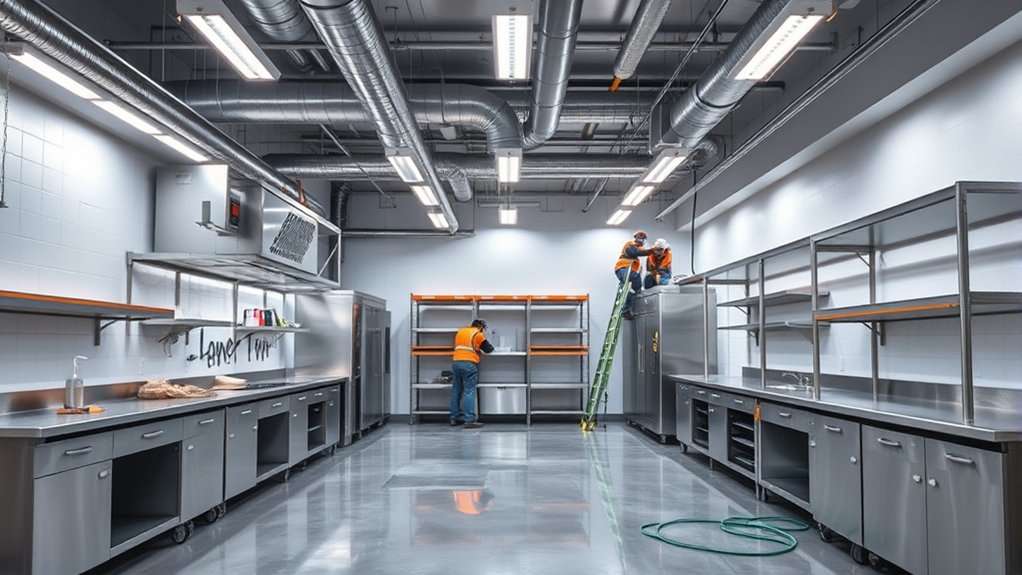
When you plan your commercial kitchen layout, focus on creating a workflow that minimizes unnecessary movement. Efficient workflow optimization guarantees your staff can move seamlessly from prep to cooking to plating without backtracking or crowding.
Start by mapping out stations logically. Keep storage near prep areas, cooking appliances close to plating zones, and dishwashing tucked away but accessible. This organization boosts productivity and reduces fatigue.
Map stations logically—store near prep, cook near plating, and place dishwashing discreetly yet within reach.
Space utilization is just as vital. Maximize every square foot by choosing compact, multifunctional equipment and arranging workstations to avoid bottlenecks.
Consider traffic flow patterns, ensuring aisles are wide enough for multiple staff members to pass comfortably. Don’t forget to leave room for safety and compliance with health regulations.
Hire Designers and Contractors to Guide Your Build
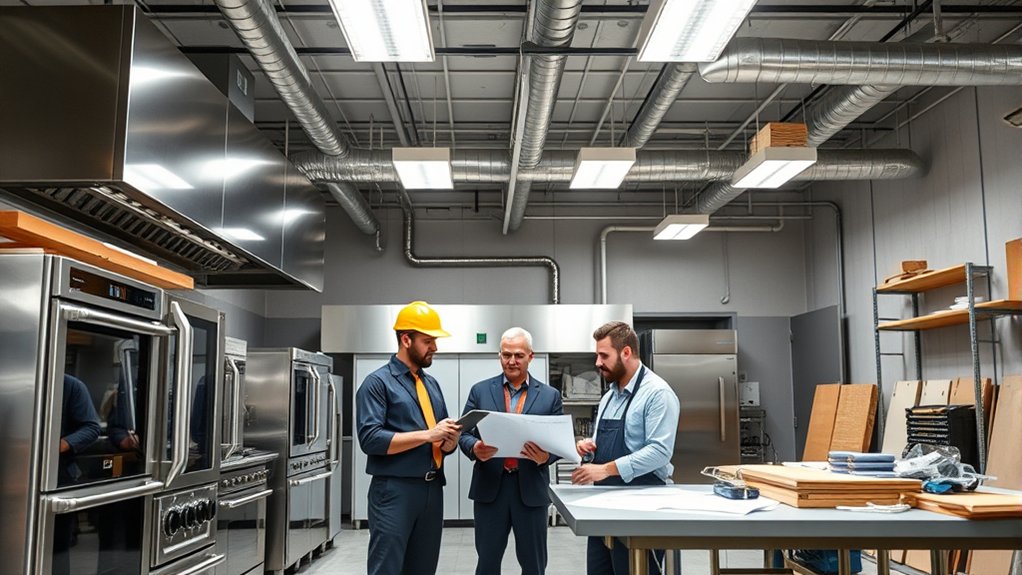
Although you might have a clear vision for your commercial kitchen, hiring experienced designers and contractors helps turn that vision into a functional reality. These professionals optimize workflows, ensure compliance, and enhance interior aesthetics, so your kitchen is both practical and inviting.
When choosing a contractor, consider these key points:
- Verify experience with commercial kitchen projects
- Check references and the quality of past work
- Make sure they understand your interior aesthetic goals
- Confirm their ability to coordinate with designers and suppliers
- Discuss timelines and budget transparency upfront
Working closely with designers helps you refine your layout and choose materials that balance durability and style. Contractors then execute the plan efficiently while handling technical challenges you might overlook.
Get Permits and Meet Commercial Kitchen Safety Codes

Securing the proper permits and adhering to commercial kitchen safety codes guarantees your build meets legal requirements and protects your staff and customers.
You’ll need to apply for health permits, building permits, and fire safety approvals before starting construction. Following food safety regulations is vital to prevent contamination and ensure your kitchen runs smoothly.
Proper ventilation systems are not only required by code but essential to maintaining air quality and controlling heat and odors.
Below is a quick look at key permits and safety priorities:
| Permit Type | Key Focus | Why It Matters |
|---|---|---|
| Health Permit | Food safety | Ensures hygiene standards |
| Building Permit | Structural integrity | Confirms code compliance |
| Fire Safety | Ventilation systems | Prevents fire hazards |
Stay proactive and consult your local authorities early. Meeting these standards saves you costly delays and keeps your kitchen safe and efficient.
Choose Equipment That Fits Your Kitchen’s Size and Menu
After obtaining the necessary permits and ensuring your kitchen meets safety codes, it’s time to focus on selecting the right equipment.
Your appliance selection should align with both your kitchen’s size and the menu you plan to offer. Choosing oversized or unnecessary equipment wastes space and money, while too little limits your efficiency.
Consider these key points when selecting equipment:
- Match appliances to your menu’s cooking methods and volume.
- Opt for compact, multi-functional appliances if space is tight.
- Prioritize energy-efficient models to reduce operating costs.
- Plan storage solutions that keep ingredients and tools accessible but organized.
- Ensure your layout supports smooth workflow between prep, cooking, and plating areas.
Prepare for Inspections and Finalize Your Commercial Kitchen
How do you guarantee your commercial kitchen is ready for inspections and final approval?
Start by thoroughly reviewing local regulations related to food safety and sanitation standards. Make sure every surface, appliance, and utensil meets these requirements to avoid last-minute issues.
Begin with a detailed review of local food safety and sanitation regulations to ensure full compliance.
Conduct a deep cleaning to maintain impeccable sanitation standards. Inspectors look for spotless, well-organized spaces.
Train your staff on proper food handling and safety protocols so everyone understands their role in maintaining compliance.
Schedule a pre-inspection walkthrough to identify and fix potential problems in advance.
Double-check that ventilation, plumbing, and fire safety systems function correctly.
Keep all necessary documentation, including permits and maintenance records, accessible for inspectors.
Frequently Asked Questions
How Do I Train Staff to Use New Commercial Kitchen Equipment?
You train staff to use new commercial kitchen equipment by providing hands-on staff training sessions focused on equipment operation. Start with clear demonstrations, then let them practice under supervision.
Encourage questions and offer step-by-step guides or videos for reference. Regularly check their progress and provide feedback to guarantee they’re comfortable and efficient.
Consistent training helps reduce mistakes and boosts confidence when using new equipment.
What Are the Best Cleaning Practices for a Commercial Kitchen?
You might think fast-paced cooking and spotless kitchen sanitation don’t mix, but they absolutely do. To keep your commercial kitchen safe, stick to strict cleaning schedules, wiping surfaces between tasks and deep-cleaning equipment daily.
Use approved sanitizers and focus on high-touch areas like handles and prep stations. Consistency prevents contamination, so train your team to follow these routines religiously, ensuring your kitchen stays both efficient and hygienic.
How Can I Reduce Energy Costs in a Commercial Kitchen?
You can reduce energy costs by investing in energy efficient appliances that use less electricity without sacrificing performance. Regularly maintaining your equipment guarantees it runs effectively, preventing waste.
Implementing smart scheduling to avoid running multiple high-energy devices simultaneously also helps with utility cost reduction. Moreover, switching to LED lighting and using programmable thermostats will cut down on unnecessary energy use, saving you money while keeping your kitchen running smoothly.
What Software Helps Manage Inventory in a Commercial Kitchen?
When it comes to maintaining order, software like MarketMan and Upserve Inventory help you manage inventory tracking efficiently. These tools offer seamless software integration with your POS systems, giving you real-time data on stock levels and usage.
How Do I Handle Waste Disposal and Recycling in a Commercial Kitchen?
You handle waste disposal and recycling in a commercial kitchen by implementing strict waste segregation to separate organic, recyclable, and non-recyclable materials.
Follow clear recycling protocols to guarantee compliance with local regulations and reduce environmental impact. Set up labeled bins for each waste type, train your staff regularly, and schedule timely pickups with waste management services.
This approach keeps your kitchen clean, efficient, and eco-friendly.
Conclusion
Building your commercial kitchen is like crafting a well-oiled machine. Every part needs to work seamlessly.
By planning your layout efficiently, hiring the right experts, securing permits, choosing the right equipment, and preparing for inspections, you’ll set yourself up for success.
Stick to these five simple steps to create a commercial kitchen that meets regulations while boosting your productivity and creativity. Your dream kitchen is just around the corner, so get started today!