How to Dispose of Old Kitchen Knives Safely
Old kitchen knives can be surprisingly difficult to get rid of safely. If you’re unsure whether to recycle, donate, or throw them away, you’re not alone—many people struggle with handling sharp, unwanted blades.
This guide to how to dispose of old kitchen knives safely will help you avoid injuries and choose the right option.
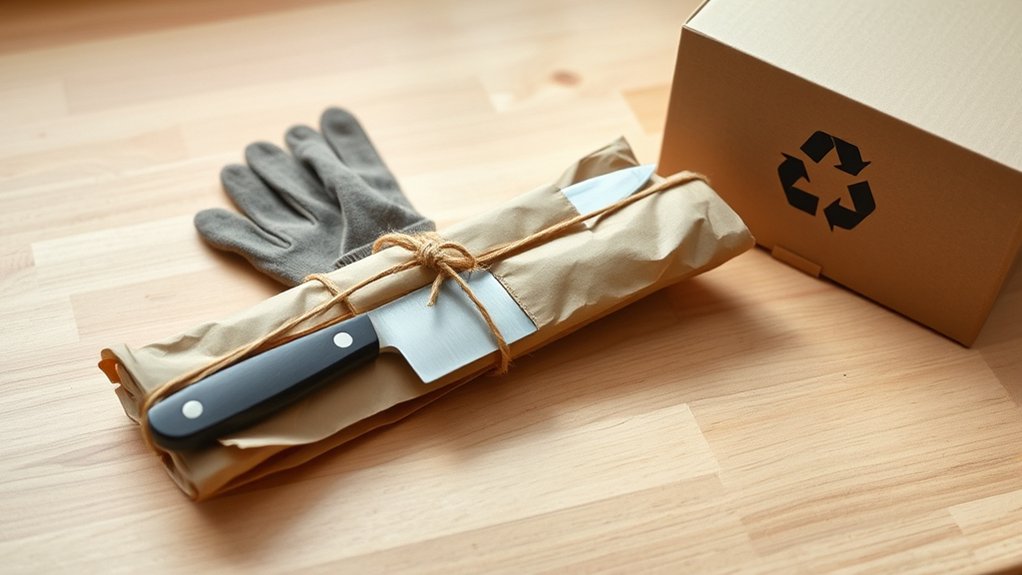
To dispose of old kitchen knives safely, first clean and dry them thoroughly. Remove any handles if possible and wrap the blades securely in thick paper or cardboard, taping tightly and clearly labeling them as sharp.
Always wear cut-resistant gloves when handling knives, and place wrapped blades in sturdy containers to prevent accidents. Follow local recycling or disposal guidelines, never tossing knives loosely in the trash.
If you want to guarantee safety and examine recycling or repurposing options, there’s more to think about.
Key Takeaways
- Clean and dry knives thoroughly before disposal to prevent rust and bacterial growth.
- Wrap blades securely in thick paper or cardboard and label them as “sharp” to ensure safe handling.
- Wear cut-resistant gloves and use sturdy, puncture-proof containers for transporting knives.
- Follow local disposal and recycling guidelines, using designated drop-off centers or specialty services.
- Keep knives out of reach of children and pets, and consider donating or repurposing usable blades.
Here’s Why You Shouldn’t Toss Kitchen Knives
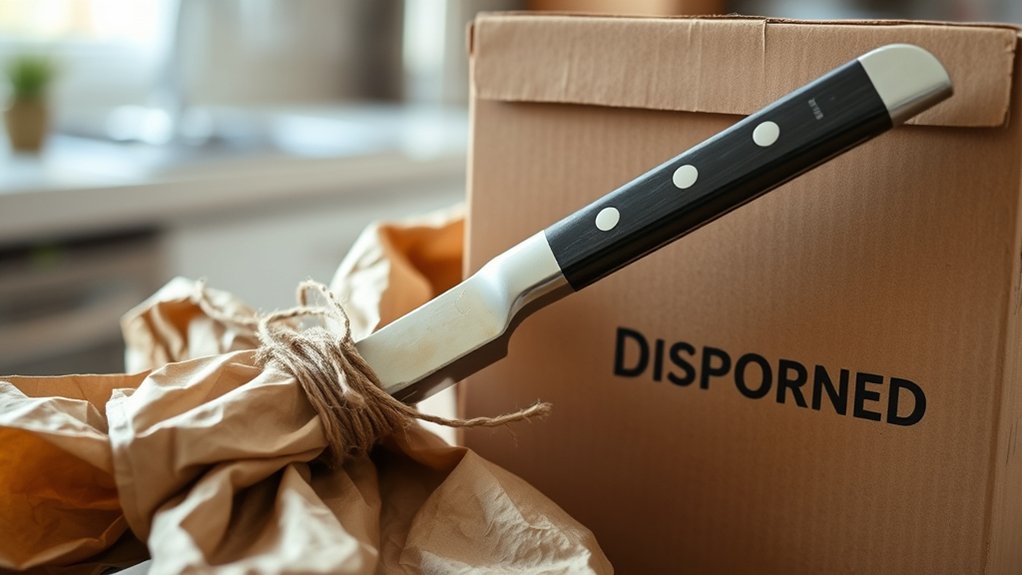
Although it might seem easier to just throw away old kitchen knives, you shouldn’t do it. Many knives, especially those with ergonomic handles, are designed to last and can be restored with proper knife sharpening.
Tossing them wastes valuable materials and craftsmanship. Instead, you can prolong their life by honing the blade regularly, which keeps your cutting efficient and safe.
Ergonomic handles provide comfort and reduce hand fatigue, so preserving these knives makes sense both financially and environmentally. Furthermore, sharp knives are safer than dull ones because they require less force and reduce the risk of slipping.
How To Prepare Old Kitchen Knives For Safe Disposal
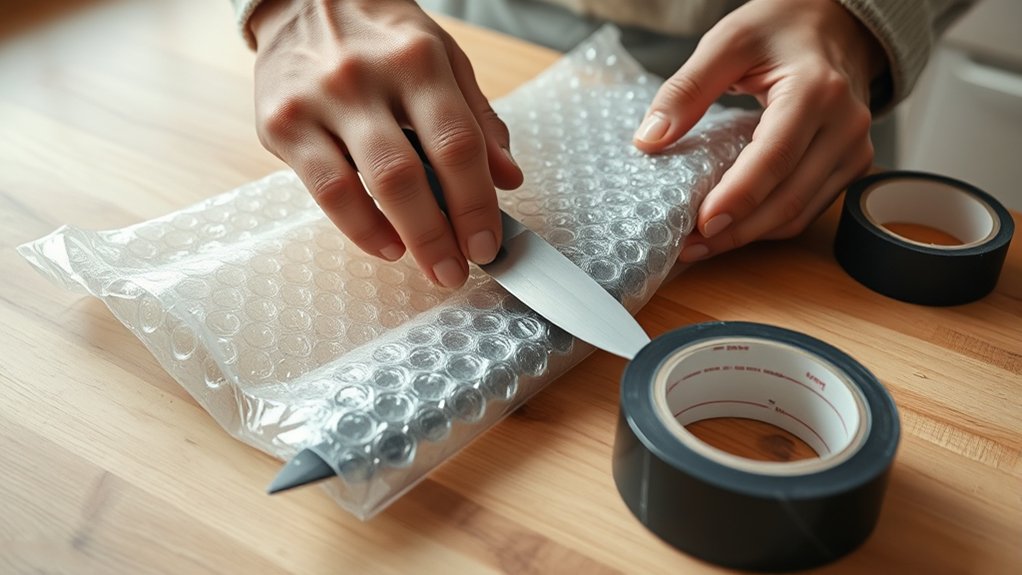
Before disposing of old kitchen knives, clean and dry them thoroughly to remove any food residue and reduce potential hazards.
Then, wrap each blade securely in thick paper or cardboard, and use tape to hold the covering in place. Make sure the sharp edge is completely covered to help prevent injuries.
Finally, if the handle contains separate materials such as wood or plastic, remove and sort them only if it’s safe to do so. Otherwise, dispose of the entire knife according to your local waste guidelines.
Clean And Dry Knives
Since kitchen knives can harbor bacteria and food residue, you should thoroughly clean them before disposal. Start by washing each knife with warm, soapy water, focusing on the blade and handle.
Dry them completely to prevent rust and bacterial growth. Proper cleaning also guarantees safer handling during disposal.
Remember, dull knives from poor knife sharpening or improper cutting techniques can be hazardous even after cleaning.
| Step | Action | Tip |
|---|---|---|
| 1 | Rinse | Use warm water |
| 2 | Apply soap | Mild detergent recommended |
| 3 | Scrub | Focus on blade and handle |
| 4 | Rinse again | Remove all soap residue |
| 5 | Dry thoroughly | Use a clean towel or air dry |
Wrap Blades Securely
After cleaning and drying your knives, the next step is to wrap the blades securely to prevent injuries during disposal. This is essential whether you’re considering knife sharpening or handle replacement, as a wrapped blade ensures safety for everyone handling the waste.
Here’s how to do it effectively:
- Use thick cardboard or heavy-duty paper to cover the blade completely.
- Secure the wrapping with strong tape, focusing on the edges.
- Avoid wrapping knives with loose or torn materials that might expose the blade.
- Label the wrapped knife as “sharp” to alert waste handlers.
Properly wrapping blades reduces the risk of cuts and protects others from harm, making your disposal process safer and more responsible.
Separate Handle Materials
When preparing old kitchen knives for disposal, separating the handle from the blade is a crucial step to guarantee safe and proper recycling or disposal. Different handle materials, such as wood, plastic, or composite, require distinct disposal methods.
Removing the handle helps prevent blade corrosion, which can occur if moisture gets trapped between the blade and handle during storage or disposal. To do this, carefully unscrew or pry apart the handle, using appropriate tools to avoid injury.
Once separated, recycle metal blades according to local guidelines and dispose of handle materials based on their type. Wood handles might be composted or discarded, while plastic ones often belong in the trash or recycling bin.
Separating handle materials keeps the process safe and environmentally responsible.
How To Wrap Kitchen Knives To Prevent Injuries
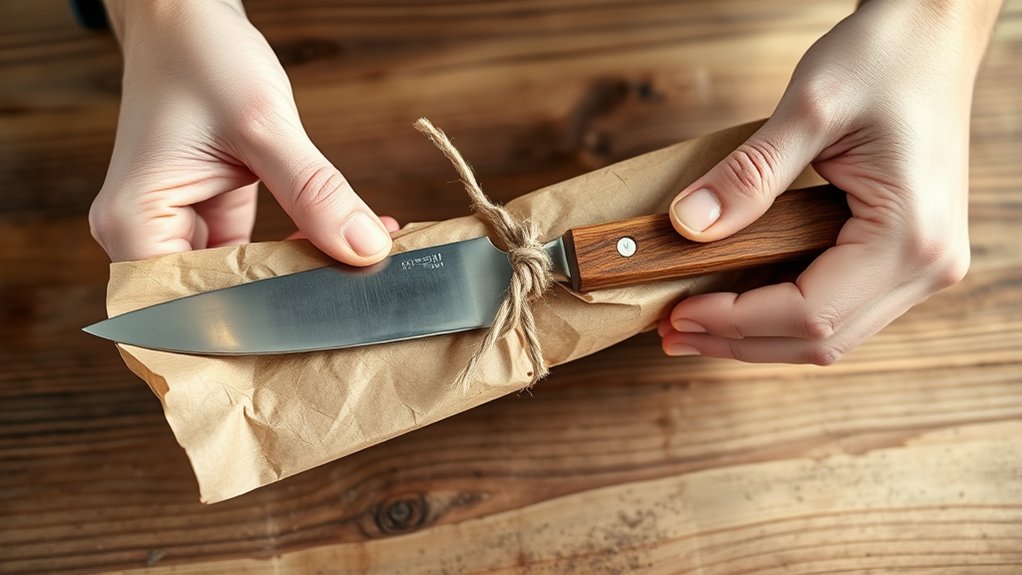
A proper wrapping technique can protect you and others from accidental cuts while handling old kitchen knives. Before wrapping, consider if the knife needs knife sharpening or handle replacement to guarantee safety during disposal.
Once ready, follow these steps to wrap your knives securely:
- Lay the knife flat on a piece of thick cardboard or several layers of newspaper.
- Fold the material over the blade, covering it completely to prevent exposure.
- Secure the wrapping tightly with strong tape, focusing on the blade area.
- Label the package clearly as “Sharp Object” to alert anyone handling it.
This method prevents accidental injuries and keeps the blade contained. Proper wrapping is essential, especially if you’ve recently done handle replacement or sharpening, as the knife may be sharper and more dangerous.
Taking these precautions helps you safely manage old knives until you can dispose of them properly.
Where To Recycle Kitchen Knives Near You
You can often recycle old kitchen knives at local recycling centers that accept metal items. Some areas also offer specialty knife-disposal services that handle sharp tools safely.
Check the options in your area to find the most convenient and secure way to recycle your knives.
Local Recycling Centers
Wondering where to recycle your old kitchen knives safely? Local recycling centers are a great option. They handle metals responsibly, ensuring your blades don’t harm the environment.
Before dropping off your knives, consider these steps:
- Check if the center accepts sharp objects to avoid rejection.
- Wrap knives securely in cardboard or a blade guard for safe handling.
- Ask about recycling programs that focus on metal recovery.
- Inquire if they offer blade maintenance or knife sharpening services to extend knife life before disposal.
Using these centers supports eco-friendly recycling and reduces waste. If your knives still have life in them, explore blade maintenance and knife sharpening options to keep them functional and safe longer.
This way, you recycle responsibly and reduce the need for replacements.
Specialty Knife Disposal Services
Although local recycling centers handle many metal items, specialty knife disposal services offer tailored solutions for safely recycling kitchen knives near you. These services understand the unique challenges posed by different handle materials, such as wood, plastic, or composite, ensuring each part is processed correctly.
They also prioritize ceramic safety, carefully managing ceramic blades that can shatter and pose risks during disposal. When you use a specialty service, you can trust that your knives won’t end up causing injury or environmental harm.
Many services provide drop-off locations or mail-in options, making it easy for you to dispose of your knives responsibly. To find a nearby service, check local listings or online directories focused on knife recycling and disposal.
Kitchen Knife Trade-In And Buyback Programs
How can you turn your old kitchen knives into something valuable? Trade-in and buyback programs offer a smart solution. These programs let you exchange your worn-out knives for discounts on new ones or even get cash back.
Before trading in, consider these tips:
- Assess your knives’ condition, focusing on blade sharpening and overall knife maintenance.
- Clean and sharpen blades to increase their trade-in value.
- Research local stores or online retailers that offer trade-in or buyback options.
- Read program terms to understand what knives qualify and how the process works.
How To Donate Old Kitchen Knives Safely
If you want to give your old kitchen knives a second life, donating them safely is a great option. First, check the donation guidelines of local charities or community centers to verify they accept kitchen knives.
Many organizations have specific rules regarding condition and packaging for safety reasons. Always clean your knives thoroughly and wrap each blade securely in thick cloth or bubble wrap to prevent injury during handling and transport.
Clean knives thoroughly and wrap blades securely to ensure safe handling and transport when donating.
Label the package clearly to alert recipients about the contents. When dropping off your donation, inform staff about the knives and confirm they’ll be stored or used safely.
Remember, practicing proper knife safety throughout the process protects both you and the recipients. By following these steps and respecting donation guidelines, you guarantee your old knives serve a useful purpose without posing any risks.
Donating responsibly helps reduce waste and supports the community while keeping everyone safe.
Creative Ways To Repurpose Old Kitchen Knives
Donating old kitchen knives is a great way to extend their life, but sometimes they’re too worn or damaged to pass on safely. Instead of tossing them, you can explore creative crafts and artistic projects that give these knives a second life.
Here are four inventive ideas to repurpose old kitchen knives:
- Garden Tools – Convert blades into small trowels or weeders for your garden.
- Wall Art – Arrange knives into a unique sculpture or wall hanging for an edgy look.
- Handles for Other Tools – Salvage the handles to craft custom tools or utensils.
- Furniture Accents – Incorporate blades as decorative accents on furniture pieces.
Disposing Of Knives That Can’t Be Recycled Or Donated
When your old kitchen knives are too damaged to recycle or donate, you’ll need to dispose of them safely to prevent injuries and environmental harm. Start by wrapping the blades securely to avoid cuts during handling.
Since knife sharpening isn’t an option here, focus on containment.
Here’s a simple disposal method to follow:
| Step | Action | Tip |
|---|---|---|
| 1 | Wrap knife in thick paper | Use duct tape for extra hold |
| 2 | Place in a rigid container | An old plastic bottle works well |
| 3 | Label container “Sharp Object” | Alert waste handlers |
| 4 | Dispose according to local rules | Check community guidelines |
This approach prioritizes kitchen safety for you and waste personnel. Always check your local disposal policies to avoid environmental harm.
Safely discarding unusable knives protects everyone and keeps your kitchen accident-free.
Safety Tips For Handling Kitchen Knives During Disposal
Handling kitchen knives during disposal requires extra caution to prevent accidental cuts. Sharp safety is vital because disposal hazards like unexpected contact with the blade can cause serious injuries.
To protect yourself, follow these essential tips when handling old knives:
- Always wear cut-resistant gloves to shield your hands from sharp edges.
- Wrap the blade securely in thick materials such as cardboard or bubble wrap to prevent accidental punctures.
- Keep knives separate from other waste to avoid injury to sanitation workers.
- Transport knives carefully, using a sturdy container to minimize movement and potential blade exposure.
Disposing Of Knife Blades And Sharp Parts
Although disposing of knife blades and sharp parts requires care, taking the right steps guarantees your safety and that of others. First, wrap each blade securely in several layers of thick paper or cardboard to prevent accidental cuts. You can also use old cloth or bubble wrap as extra padding.
Next, place the wrapped blades in a sturdy container, like a plastic or metal box, to keep them from piercing through. Clearly label the container as “Sharp Blades” to alert waste collectors.
If you’ve experimented with sharpening techniques, you know how important proper maintenance is, so don’t just toss blades carelessly. Consider donating blades that are still usable or repurposing them in knife storage solutions, such as magnetic strips or blade guards, until you’re ready to dispose of them safely.
Following these steps guarantees that sharp parts don’t pose a hazard during disposal or storage.
Frequently Asked Questions
Can Kitchen Knives Be Safely Disposed of in Regular Trash Bins?
You shouldn’t toss kitchen knives in regular trash bins because they pose cutting safety risks to sanitation workers. Instead, consider knife sharpening if the blades are dull or donate usable ones.
If disposal is necessary, wrap the blades securely in thick material or a knife sheath to prevent injuries. Taking these steps protects others and promotes responsible knife care, whether you’re maintaining sharpness or safely discarding old knives.
Are There Any Environmental Hazards From Disposing of Kitchen Knives?
Don’t throw the baby out with the bathwater—yes, disposing of kitchen knives can pose environmental hazards if done carelessly. The metal and handle materials might leach harmful substances into soil or water.
You should check for recycling programs that accept knives or treat them as hazardous waste to keep toxins out of landfills. By doing this, you protect the environment while safely getting rid of your old blades.
How Long Does It Take for a Kitchen Knife to Decompose?
It takes decades for a kitchen knife to decompose because metals don’t break down quickly. The biodegradation timeline depends on the knife’s material—stainless steel can take 50 to 100 years or more to fully break down.
Unlike organic materials, metal undergoes a slow decomposition process. It may rust over time but can remain intact for many years. So, recycle or repurpose your knives instead of tossing them in the trash.
Can Old Kitchen Knives Be Melted Down for Metal Reuse?
Old kitchen knives can be melted down like a phoenix rising from the ashes through metal recycling. When you send them to a scrap metal facility, they’ll transform into new tools or products, giving them a second life.
Instead of letting them rust away, consider knife sharpening to extend their usefulness. But when they’re truly worn, metal recycling guarantees your knives don’t just fade. They become part of a shiny new story.
What Should I Do if My Knife Breaks During Disposal?
If your knife breaks during disposal, prioritize knife safety by carefully collecting all sharp fragments using thick gloves. Avoid handling pieces with bare hands to prevent injury.
Place the broken parts in a sturdy container, like a puncture-proof box or wrapped in heavy cardboard, before disposal. This method safeguards waste handlers and complies with proper disposal methods.
Always label the container as “sharp objects” to guarantee safe handling throughout the disposal process.
Conclusion
As you wrap your old kitchen knives carefully, imagine the sharp edges safely tucked away like secrets in a velvet pouch. Picture handing them off to a recycling center or a trade-in program, giving them new life instead of risking harm.
By taking these simple steps, you protect yourself and others from injury, turning what once was a danger into a safe, responsible act. Your care creates a safer kitchen and community through the safe disposal of old kitchen knives, one blade at a time.