How to Hang Kitchen Cabinets in 5 Easy Steps
Hanging kitchen cabinets can feel intimidating, especially when you want a secure fit and a polished finish. You’re not alone—many people struggle with finding studs, keeping cabinets level, and getting everything aligned properly.
To hang kitchen cabinets in five easy steps, start by gathering your tools and clearing the wall. Next, use a stud finder to locate and mark the wall studs for secure mounting. Measure and level the space carefully to guarantee proper cabinet placement.
Then, pre-drill and screw the cabinets into the studs, checking their stability. Finally, align the cabinets and add any hardware or trim for a polished look. Keep going to uncover tips for a flawless installation.
Key Takeaways
- Gather tools and clear the wall, considering wall material and cabinet style for proper preparation.
- Locate and mark studs using a stud finder to ensure secure cabinet mounting.
- Measure the wall and use a level to mark a horizontal guideline for cabinet placement.
- Pre-drill holes and fasten cabinets to wall studs with long wood screws for stability.
- Align cabinet doors, install hardware, and add trim for a polished, professional finish.
Gather Tools and Clear the Wall for Installation
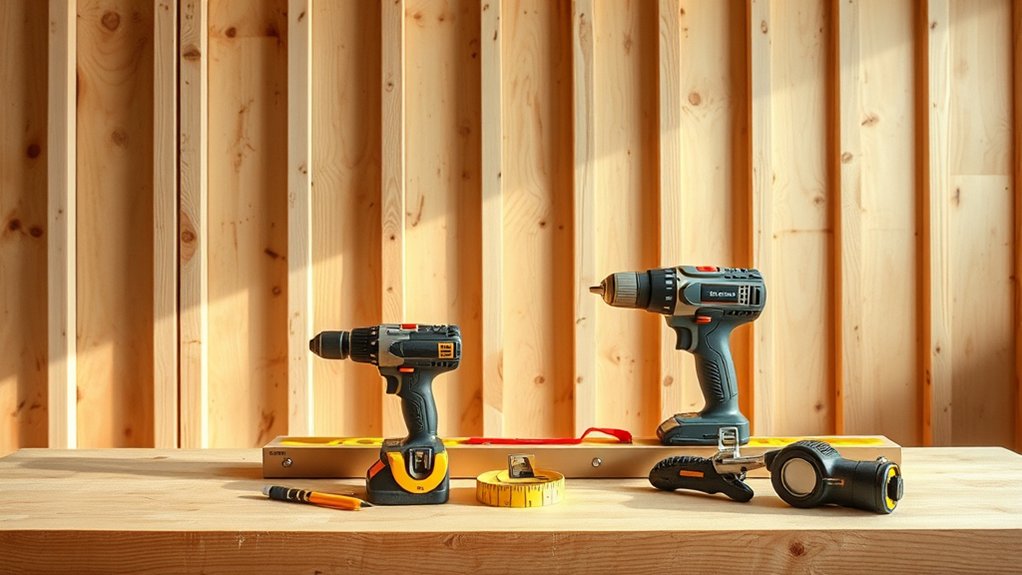
Before you begin hanging your kitchen cabinets, make sure you gather all the necessary tools and clear the wall space to guarantee a smooth installation. Start by selecting the right cabinet style that suits your kitchen’s design and functionality.
This choice affects not only the look but also how you’ll handle the installation. Next, clear the wall thoroughly, removing any appliances, decorations, or obstacles.
Pay attention to the wall material, as drywall, plaster, or tile require different handling techniques and tools. Having appropriate tools like a drill, level, stud finder, screwdriver, and measuring tape ready will save time and prevent frustration.
Organizing your workspace ensures you can focus on precise measurements and secure mounting. Clearing the wall also allows you to inspect it for damage or uneven surfaces, which could impact cabinet alignment.
Find and Mark Wall Studs for Hanging Kitchen Cabinets
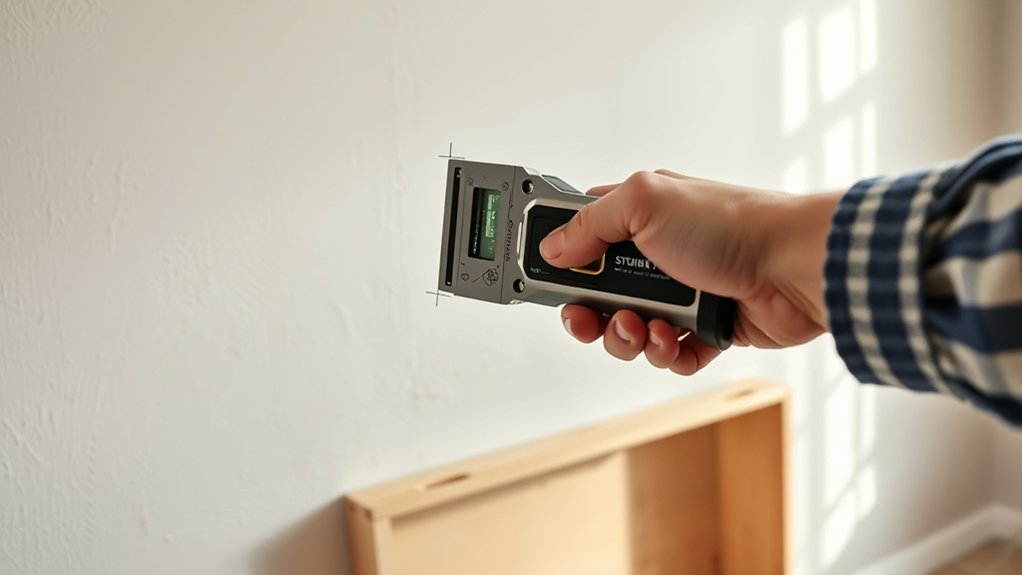
Once your wall is clear and your tools are ready, the next step is to locate the wall studs that will support your kitchen cabinets. Cabinets need to be securely fastened to studs for safety and stability. Here’s how to find and mark them effectively:
Clear your wall and tools, then locate studs to securely fasten your kitchen cabinets for safety and stability.
- Use a stud finder: Turn it on and slowly move it across the wall. When it beeps or lights up, you’ve found a stud.
- Mark the stud location: Use a pencil to make a clear vertical line on the wall where the stud is detected. This wall marking will guide your cabinet installation.
- Confirm stud spacing: Studs are typically 16 or 24 inches apart. Check for a pattern by scanning adjacent areas.
- Double-check for accuracy: Tap the wall or use a small nail to verify your marks align with the stud’s solid backing.
Measure and Level the Wall for Cabinet Placement
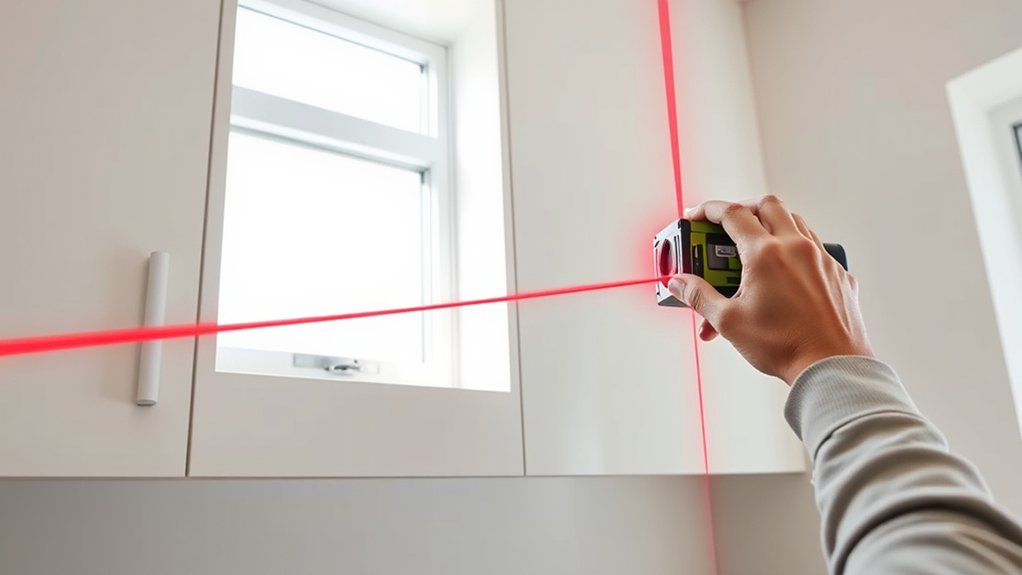
Although finding studs is essential, you’ll need to measure and level the wall next to make certain your cabinets hang straight and align properly. Start by measuring the width and height of the wall, noting any irregularities in the wall material, like bumps or dips, which can affect cabinet placement.
Different cabinet styles may require specific clearances, so factor those into your measurements.
Use a level to draw a horizontal guideline where the bottom or top of your cabinets will sit. This line ensures all units align perfectly, regardless of wall imperfections.
| Step | Action |
|---|---|
| 1. Measure wall width | Determine total length for cabinet runs |
| 2. Check wall height | Account for uneven surfaces |
| 3. Mark level line | Use a level to draw installation guide |
| 4. Consider cabinet style | Adjust for design and clearance needs |
Following these steps guarantees a smooth installation and a professional look for your kitchen cabinets.
Secure Kitchen Cabinets to the Wall
How do you guarantee your kitchen cabinets stay securely in place? Start by firmly attaching them to the wall studs to ensure stability and safety. Here’s how you can secure your cabinets effectively:
- Locate Wall Studs: Use a stud finder to mark the studs where your cabinets will hang.
- Drill Pilot Holes: Pre-drill holes through the cabinet’s back panel aligning with the studs to prevent wood splitting.
- Use Strong Screws: Fasten the cabinet with long wood screws driven into the studs for a solid hold.
- Check for Stability: After securing, gently shake the cabinet to ensure it’s firmly attached.
Once secured, you can focus on installing cabinet hardware and adding decorative accents to enhance your kitchen’s style. Properly mounted cabinets not only support your storage needs but also provide a sturdy foundation for any decorative touches you choose to add.
Align Kitchen Cabinets and Add Finishing Touches
After securing your kitchen cabinets, you’ll want to align them carefully to guarantee a seamless look and proper function. Start by checking that all cabinet doors are flush and level with one another, adjusting the hinges if needed.
Use a level to ensure horizontal and vertical alignment, especially where cabinets meet. This step is vital for maintaining the integrity of your cabinet styles, whether you chose shaker, flat-panel, or another design.
Next, install any finishing hardware like handles and knobs. Make sure to position them consistently across all cabinets for a polished appearance.
Don’t forget to add trim or molding if your cabinet styles call for it. This improves both aesthetics and coverage of any gaps.
Taking the time to perfect these finishing touches guarantees your kitchen looks professionally done and functions smoothly. With everything aligned and hardware in place, your cabinets will not only look great but also stand the test of time.
Frequently Asked Questions
What Type of Wood Is Best for Kitchen Cabinets?
You’ll want to choose hardwoods like maple, oak, or cherry for kitchen cabinets because their wood grain adds a beautiful texture while ensuring cabinet durability.
Maple offers a smooth, subtle grain and resists dents, making it ideal if you want sturdy cabinets. Oak has a more pronounced grain, giving your kitchen character, and it’s tough enough to last years.
Cherry’s rich color and fine grain also boost durability and style, perfect for lasting quality.
How Do I Choose the Right Cabinet Style for My Kitchen?
You choose the right cabinet style by considering your kitchen’s overall design and your personal taste. Think about how cabinet hardware complements the style—sleek handles suit modern cabinets, while ornate knobs fit traditional ones.
Also, plan for cabinet lighting to highlight your cabinets and improve functionality. Balancing aesthetics with practicality guarantees your kitchen feels cohesive and inviting, making your cabinet style a perfect fit for your space.
Can I Install Kitchen Cabinets Without Studs?
Imagine building a ship without a sturdy mast—it won’t sail far. You can’t install kitchen cabinets without studs because they’re your mast’s stronghold.
Without them, your cabinet hardware won’t hold, and cabinet painting won’t cover the damage caused by sagging.
Instead, use a plywood backer or toggle bolts for extra support. This way, your cabinets stay secure, looking flawless and ready to withstand daily use.
What Is the Average Cost of Kitchen Cabinet Installation?
The average cost of kitchen cabinet installation typically ranges from $300 to $1,200, depending on the cabinet size and complexity. When you’re doing cost estimation, factor in labor, materials, and any additional hardware.
For effective budget planning, always add a 10-20% buffer for unexpected expenses. Getting multiple quotes helps you stay within your budget while ensuring quality work. This way, you won’t get caught off guard by surprises.
How Do I Maintain and Clean Kitchen Cabinets?
Did you know regular cabinet cleaning can extend your kitchen cabinets’ life by up to 10 years? To maintain your cabinets, you should wipe them down weekly with a mild detergent and warm water. Avoid harsh chemicals to protect finishes.
Use a soft cloth for drying, and check hinges and handles monthly to tighten or lubricate as needed. Following these maintenance tips keeps your cabinets looking fresh and functioning well for years.
Conclusion
Now that you’ve nailed each step, your kitchen cabinets will stand like sturdy sentinels, ready to hold your culinary treasures. Think of your wall as a canvas, and your cabinets as the bold strokes that bring the room to life.
With tools in hand and a clear plan, you’ve transformed an empty space into a functional masterpiece. So step back, admire your handiwork, and get ready to cook up some magic in your beautifully hung kitchen cabinets.