10 Steps to Increase Water Pressure in Your Kitchen Sink
10 Steps to Increase Water Pressure in Your Kitchen Sink
Low water pressure can make simple kitchen tasks frustrating, from rinsing dishes to filling a pot. You’re not alone—many people struggle with weak water flow and aren’t sure where to start. The good news is that these practical solutions can help you increase water pressure in your kitchen sink and get your faucet flowing more efficiently.
To boost your kitchen sink’s water pressure, first make sure the main water valve is fully open.
Check and clean clogged aerators by removing mineral deposits.
Inspect supply lines for blockages or damage, then flush or replace them.
Adjust your water pressure regulator if needed, and consider replacing faucet cartridges.
Installing a high-pressure aerator or upgrading to a high-flow faucet can help, too.
Adding a booster pump gives an extra push.
If issues persist, knowing when to call a plumber can save you time.
Delve into these steps further to improve your water flow efficiently.
Key Takeaways
- Fully open the main water valve and check that water pressure is within the ideal 40-60 psi range using a pressure gauge.
- Remove and clean the faucet aerator to eliminate mineral deposits, soaking it in vinegar and scrubbing away buildup.
- Inspect supply lines for blockages or damage, flush or replace them, and add insulation to maintain consistent pressure.
- Adjust the water pressure regulator by turning its screw clockwise after loosening the lock nut to increase flow.
- Consider installing a booster pump or upgrading to high-flow faucets and aerators to enhance water pressure and efficiency.
Ensure the Main Water Valve Is Fully Open for Water Pressure
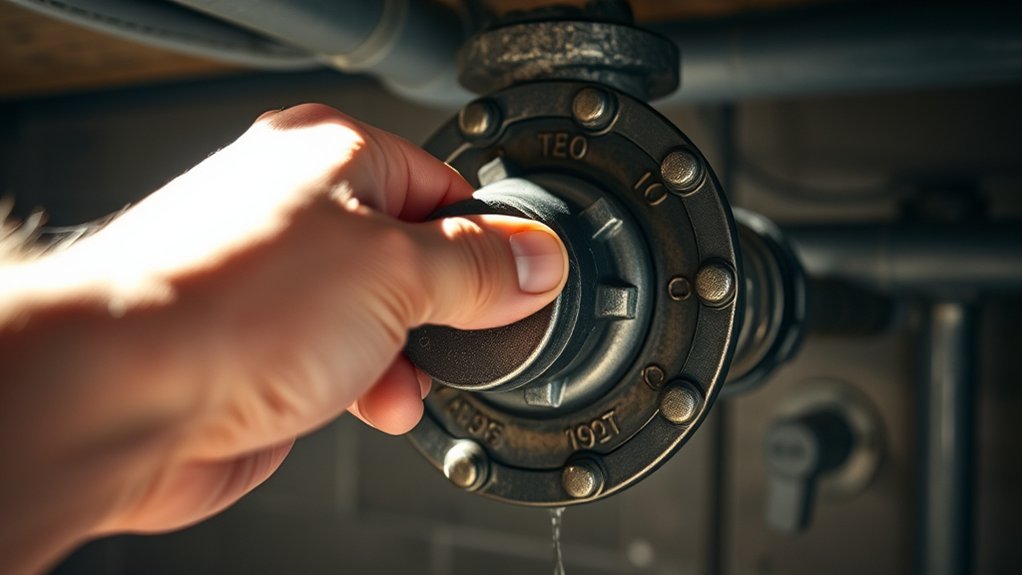
Before you troubleshoot any other issues, make sure the main water valve is fully open. This valve controls the flow from your main water supply to your entire home, including your kitchen sink.
Always check that the main water valve is fully open before troubleshooting water flow issues.
If it’s partially closed, your water pressure will drop considerably. Locate the main valve—usually near the water meter or where the main line enters your home—and turn it counterclockwise until it stops.
Next, check your pressure gauge if you have one installed. It provides a clear reading of your home’s water pressure and helps you confirm whether opening the valve made a difference.
Ideal water pressure typically ranges between 40 and 60 psi. If the pressure remains low despite the main valve being fully open, it signals an issue elsewhere in your plumbing system.
Ensuring that your main water valve is completely open is a simple but vital first step to restoring strong water flow to your kitchen sink.
Check and Clean Clogged Faucet Aerators to Improve Water Pressure
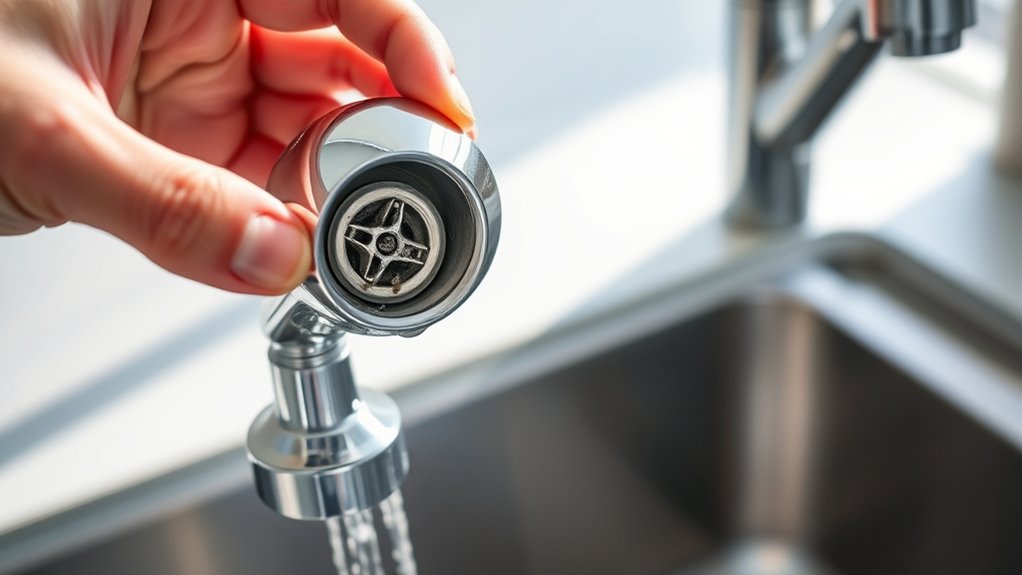
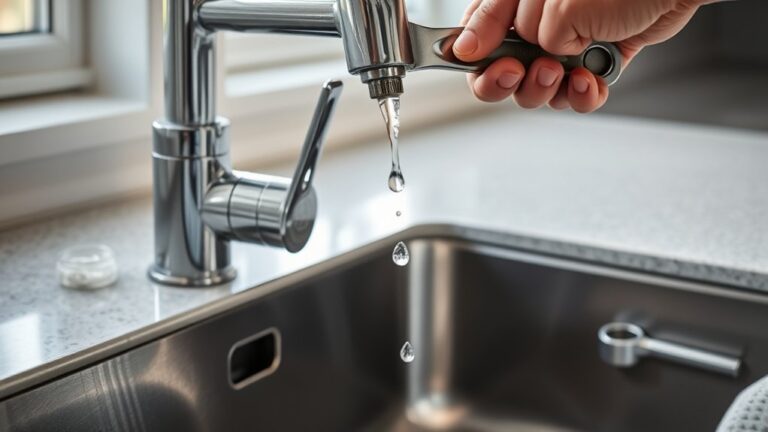
If your main water valve is fully open but your kitchen sink still has low water pressure, the problem might lie closer to the faucet itself. Faucet aerators, small screens attached to the faucet tip, can get clogged with mineral deposits and debris, restricting water flow. Cleaning them can often restore pressure quickly.
Here’s how to check and clean your faucet aerator:
- Unscrew the aerator from the faucet tip carefully.
- Inspect for buildup or debris blocking the screen.
- Soak the aerator parts in vinegar for 30 minutes to dissolve mineral deposits.
- Use a small brush or toothpick to remove stubborn particles.
- Rinse thoroughly and reinstall, ensuring it fits securely.
Aerators are designed not only to improve water pressure but also to promote water conservation by mixing air with water. Keeping them clean ensures your faucet design works efficiently, maintaining good flow without wasting water.
Inspect and Clear Kitchen Sink Supply Lines for Water Pressure
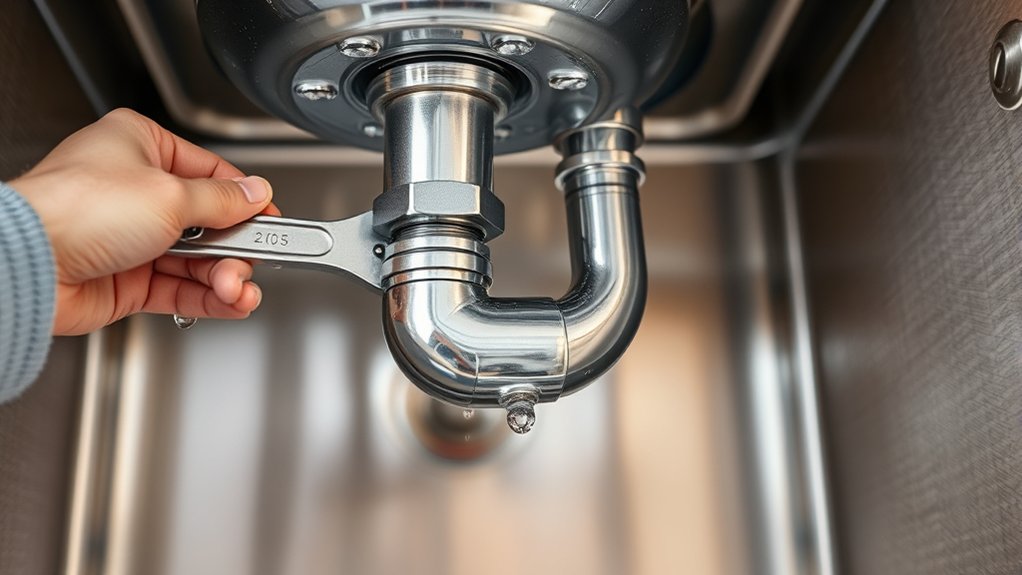
Since clogged or kinked supply lines can restrict water flow, you should inspect them to confirm they’re clear and in good condition. Begin by turning off the water supply under your kitchen sink.
Detach the supply lines carefully and check for visible blockages or bends that could impede water pressure. If you notice mineral buildup or debris, flush the lines with water or replace them if damage is evident.
Using water pressure gauges, you can measure the pressure before and after clearing the lines to verify improvement. Also, consider adding pipe insulation to exposed supply lines to prevent temperature fluctuations that might cause condensation and corrosion inside the pipes.
These issues can reduce water flow over time. Proper insulation helps maintain consistent water pressure and extends the lifespan of your plumbing.
Adjust Your Water Pressure Regulator Valve
Although many homeowners overlook it, your water pressure regulator valve plays a crucial role in maintaining consistent water pressure throughout your kitchen sink. If your water feels weak, adjusting this valve can help boost it without wasting water.
Before you begin, locate the valve, usually near your main water line.
To adjust your water pressure regulator valve:
- Turn off the main water supply to avoid sudden surges.
- Use a wrench to slightly loosen the lock nut on the valve.
- Turn the adjustment screw clockwise to increase pressure or counterclockwise to decrease it.
- Check your kitchen sink’s water flow after each adjustment.
- Tighten the lock nut once you reach the desired pressure.
Replace Faucet Cartridges to Restore Water Pressure
If your water pressure is low, faulty faucet cartridges could be the culprit. The good news is that replacing them is usually simple, and you’ll only need a few basic tools. Follow these steps to remove the old cartridges and install new ones, helping restore proper water pressure in your kitchen sink.
Identifying Faulty Faucet Cartridges
How can you tell if your faucet cartridge is causing low water pressure? Since faucet design varies, the cartridge plays a key role in regulating water flow. If it’s faulty, you’ll notice a significant drop in pressure.
Look for these signs to identify a problematic cartridge:
- Water flow is uneven or sputtering
- Difficulty adjusting water temperature or flow
- Visible leaks around the faucet base
- Stiff or loose handle movement
- Water pressure improves temporarily when you jiggle the handle
If you spot any of these issues, the cartridge might be clogged or worn out. Replacing it can restore proper water flow and improve overall faucet performance.
Keep these indicators in mind as you troubleshoot your kitchen sink’s water pressure problems.
Tools Needed For Replacement
You’ll need a handful of essential tools to replace your faucet cartridge effectively and restore water pressure. Using the right tools simplifies the task and supports water conservation by preventing leaks and wastage.
It also reduces your environmental impact by prolonging your faucet’s life instead of replacing it entirely.
| Tool | Purpose |
|---|---|
| Adjustable Wrench | Loosen and tighten nuts |
| Screwdriver | Remove handle screws |
| Cartridge Puller | Extract the old cartridge safely |
| Plumber’s Grease | Lubricate the new cartridge for smooth operation |
Having these tools ready ensures a smooth replacement and helps maintain your kitchen’s water efficiency.
Step-by-Step Cartridge Installation
Begin by turning off the water supply valves under your sink to prevent leaks during the cartridge replacement. Proper cartridge maintenance is essential to restore water pressure and avoid future faucet troubleshooting.
Follow these steps for a smooth cartridge installation:
- Remove the faucet handle using a screwdriver or Allen wrench.
- Take out the retaining nut and pull the old cartridge straight up.
- Clean the cartridge housing to remove debris and buildup.
- Insert the new cartridge, aligning it correctly with the faucet body.
- Secure the retaining nut and reattach the handle.
Once installed, turn the water supply back on and test your faucet for improved pressure. Regular cartridge maintenance helps keep your kitchen sink running efficiently and prevents common faucet issues.
Remove Mineral Deposits Blocking Water Flow
Since mineral deposits can build up over time and restrict water flow, removing them is essential for restoring strong pressure in your kitchen sink. Mineral buildup often occurs in the faucet aerator, cartridge, or pipes, narrowing the water passage and reducing flow.
To tackle this, start by turning off the water supply and removing the aerator or faucet parts where buildup is common. Soak these components in white vinegar for about an hour to dissolve the mineral deposits.
Use a small brush or toothpick to gently scrub away any remaining residue. Rinse everything thoroughly before reassembling the parts.
If mineral buildup is deep inside the pipes, consider using a descaling solution designed for plumbing systems or call a professional if the problem persists.
Removing these blockages will improve water flow and boost your sink’s pressure effectively, giving you the strong water stream you need for everyday tasks.
Install a High-Pressure Kitchen Faucet Aerator
Although your current faucet aerator might seem fine, installing a high-pressure kitchen faucet aerator can considerably boost your water flow without increasing your water usage. These eco friendly fixtures are designed to optimize water pressure while promoting water conservation, making them a smart choice for your kitchen.
Upgrade to a high-pressure kitchen faucet aerator for better flow and water savings without extra usage.
Here’s why you should consider upgrading:
- Improves water flow for improved sink performance
- Reduces water waste by maintaining efficient pressure
- Fits easily onto most standard kitchen faucets
- Saves money on utility bills through water conservation
- Supports sustainable living with eco friendly fixtures
Upgrade to a High-Flow or Single-Handle Kitchen Faucet
Upgrading to a high-flow kitchen faucet can improve your sink’s water flow, giving you a stronger and more consistent stream. A single-handle faucet also makes it easy to adjust the temperature and flow with one smooth motion.
Before making the switch, check that the faucet is compatible with your existing plumbing and consider whether you’ll need professional installation.
Benefits of High-Flow Faucets
When you upgrade to a high-flow or single-handle kitchen faucet, you’ll notice a significant boost in water pressure and ease of use. High-flow faucets deliver water quickly, making everyday tasks more efficient.
Plus, many models are designed with water conservation in mind, helping you save resources without sacrificing performance. You’ll also appreciate the sleek, modern aesthetic design that elevates your kitchen’s look.
Here are some key benefits you’ll enjoy:
- Faster filling of pots, pans, and containers
- Improved rinsing and cleaning power
- Water conservation features to reduce waste
- Durable construction for long-lasting performance
- Stylish appearance that complements your kitchen décor
Switching to a high-flow faucet is a smart way to boost pressure while elevating function and style.
Single-Handle Faucet Advantages
Since single-handle faucets combine temperature and flow control into one lever, they make adjusting water pressure quicker and more intuitive. You can easily find the perfect balance between hot and cold water while controlling flow with a simple motion.
This streamlined faucet design not only improves convenience but also supports water conservation by minimizing wasted water during adjustment. Because you adjust both temperature and pressure at once, you avoid prolonged water flow while tweaking settings.
Moreover, many single-handle models offer sleek, modern styles that complement your kitchen’s look while improving functionality. Upgrading to a single-handle faucet lets you enjoy better control over water pressure and temperature, making your kitchen sink more efficient and user-friendly without sacrificing style or conservation goals.
Installation Considerations
Upgrading to a high-flow or single-handle kitchen faucet can considerably boost your water pressure and overall sink performance. When installing, keep these key considerations in mind:
- Make certain compatibility with your existing plumbing to avoid leaks or pressure drops.
- Prioritize faucets designed for higher flow rates to maximize water pressure.
- Maintain your water filter regularly, as clogged filters can reduce flow and pressure.
- Consider pipe insulation to prevent temperature-related pressure fluctuations and protect pipes from freezing.
- Use proper tools and follow manufacturer instructions to secure tight connections and avoid damage.
Use a Booster Pump to Increase Kitchen Sink Water Pressure
If your kitchen sink suffers from weak water flow despite other fixes, installing a booster pump can provide the extra pressure you need. A booster pump actively increases water pressure, ensuring a stronger, more consistent flow at your kitchen faucet.
When choosing a booster pump, look for models designed with water conservation in mind. They help maintain efficient water use while boosting pressure.
Opting for an eco-friendly solution not only improves performance but also aligns with sustainable living goals. These pumps are typically compact, easy to install, and compatible with most plumbing systems.
By using a booster pump, you avoid wasting water caused by inefficient flow and enjoy better functionality at your sink. Just be sure to select a pump that matches your home’s water pressure needs to maximize energy efficiency.
This way, you improve your kitchen experience while supporting responsible water management.
Call a Professional Plumber When Needed
While installing a booster pump can considerably improve your kitchen sink’s water pressure, some issues might require expert attention beyond DIY fixes.
When you encounter persistent problems or complex plumbing systems, calling a professional plumber guarantees the job is done safely and correctly.
You should call a plumber when you face:
- Emergency repairs, like sudden leaks or burst pipes
- Unidentified causes of low water pressure
- Difficulty accessing or diagnosing plumbing components
- Complicated installations of pressure-boosting devices
- Concerns about cost considerations and potential damage
A professional plumber has the tools and experience to assess your system thoroughly, preventing costly mistakes.
They can also advise on the most cost-effective solutions tailored to your home’s plumbing.
Don’t hesitate to seek help when water pressure issues persist or emergencies arise. Getting expert support saves time, money, and stress in the long run.
Frequently Asked Questions
How Does Water Pressure Affect My Dishwasher’s Performance?
Water pressure directly affects your dishwasher’s performance by controlling the water flow needed for effective cleaning. If the water flow is weak, your dishes might not get properly washed or rinsed.
A smaller pipe diameter can restrict water flow, reducing pressure and causing longer wash cycles or poor results. Ensuring adequate water pressure helps your dishwasher work efficiently, saving time and energy while giving you cleaner dishes every cycle.
Can Water Softeners Improve Kitchen Sink Water Pressure?
Think of your kitchen water flow like a river, sometimes slowed by rocky buildup. A water softener benefits you by smoothing that flow, reducing the effects of hard water that can clog pipes and fixtures.
While it doesn’t directly boost pressure, it prevents mineral deposits from building up, which can improve your water pressure over time. So, yes, water softeners indirectly help by keeping the pathway clear and your sink flowing strong.
What Is the Average Water Pressure in Residential Kitchens?
You’ll find the average water pressure in residential kitchens usually ranges between 40 to 60 psi. This pressure affects water flow, so if it drops, your flow weakens.
Pipe diameter plays a big role too—smaller pipes restrict flow and lower pressure, while larger ones help maintain steady flow. If you notice low pressure, checking pipe size and flow can help you diagnose the issue and improve your kitchen sink’s performance.
How Do Seasonal Changes Impact Water Pressure at Home?
Seasonal fluctuations can impact your home’s water pressure by causing temperature variations that affect your plumbing system. In colder months, water can thicken slightly, reducing flow and pressure.
Frozen pipes or increased demand during winter can also lower pressure. Conversely, warmer temperatures usually improve flow.
Understanding these seasonal changes helps you anticipate and address pressure issues, ensuring your kitchen sink performs well year-round despite temperature variations.
Are There Any Health Risks With High Water Pressure in Sinks?
Yes, high water pressure in your sink can pose health risks. When pressure’s too high, it can cause plumbing damage, leading to leaks where waterborne bacteria might grow and contaminate your water supply.
You don’t want to risk infections from these bacteria. Plus, damaged pipes can result in costly repairs. It’s smart to monitor and regulate your water pressure to keep both your plumbing and your health safe.
Conclusion
So, if your kitchen sink’s water pressure is more of a gentle whisper than a roaring river, don’t just stand there and cry over your soggy dishes. Follow these steps, and you’ll have water gushing like you’re starring in a shampoo commercial.
If all else fails, calling a plumber might save your sanity and your kitchen. After all, who wants to live with a faucet that’s more drama queen than hardworking hero? These tips can help you increase water pressure in your kitchen sink.