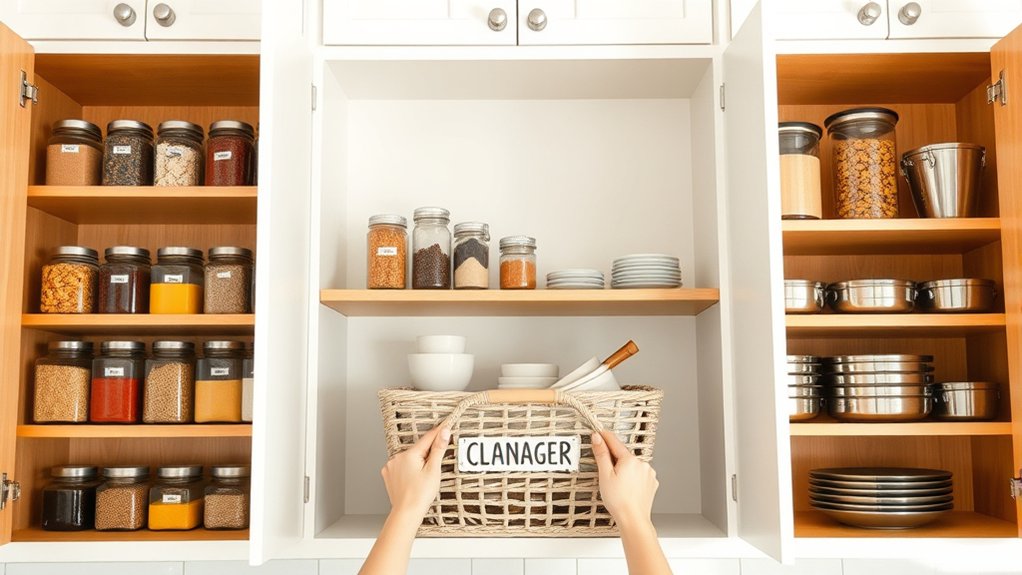
7 Steps to Organize Kitchen Cabinets Efficiently
Cluttered cabinets can make cooking feel harder than it should. You’re not alone—many people struggle to find what they need in crowded, disorganized spaces. The right kitchen cabinet organization products can help create a smoother, more efficient routine.
Start by clearing out and decluttering your cabinets, tossing expired or unused items. Group similar things like spices or baking ingredients together for easy access. Use bins, racks, and adjustable shelves to maximize your space.
Arrange items based on how often you use them, keeping essentials within reach. Label containers and shelves for quick finds, and maintain organization with simple weekly habits.
Tailor your setup to fit your cooking style and habits—you’ll find smarter, smoother kitchen flow ahead.
Key Takeaways
- Empty cabinets, discard expired items, and declutter to create a clean, fresh starting point.
- Group and categorize items by type and usage frequency for easy access and an efficient workflow.
- Use adjustable shelves, pull-out racks, and bins to maximize space and organize small items.
- Place frequently used items within easy reach, and label containers for quick identification.
- Maintain organization with weekly inventory checks, returning items to their designated spots promptly.
Clear Out and Declutter Your Kitchen Cabinets
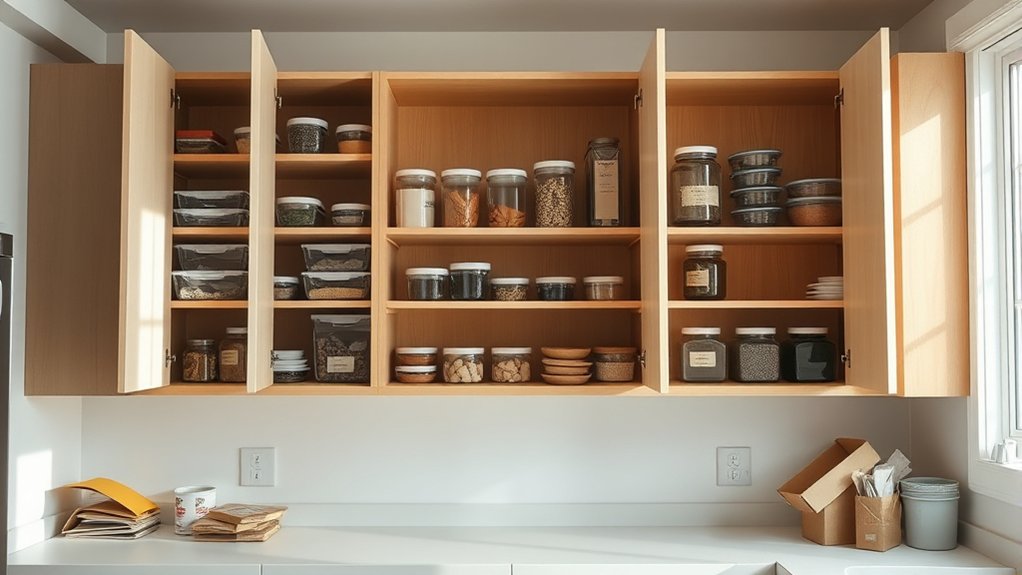
Before you plunge into organizing, clear out and declutter your kitchen cabinets to create a fresh start. Empty every cabinet and countertop, giving yourself a blank slate to work with.
Start by emptying all cabinets and countertops to create a clean, clutter-free foundation for organizing.
Check expiration dates on spices, canned goods, and other pantry staples, tossing anything expired or stale. This simple step not only frees up space but also supports better pantry organization down the line.
As you sort through items, consider how often you use each one. Keep your everyday cooking essentials within easy reach, and set aside rarely used gadgets or ingredients for storage elsewhere.
Decluttering helps you spot duplicates and unnecessary clutter, making meal prep smoother. Incorporating these cooking tips ensures your kitchen stays functional and enjoyable.
Group Similar Items for Easier Access
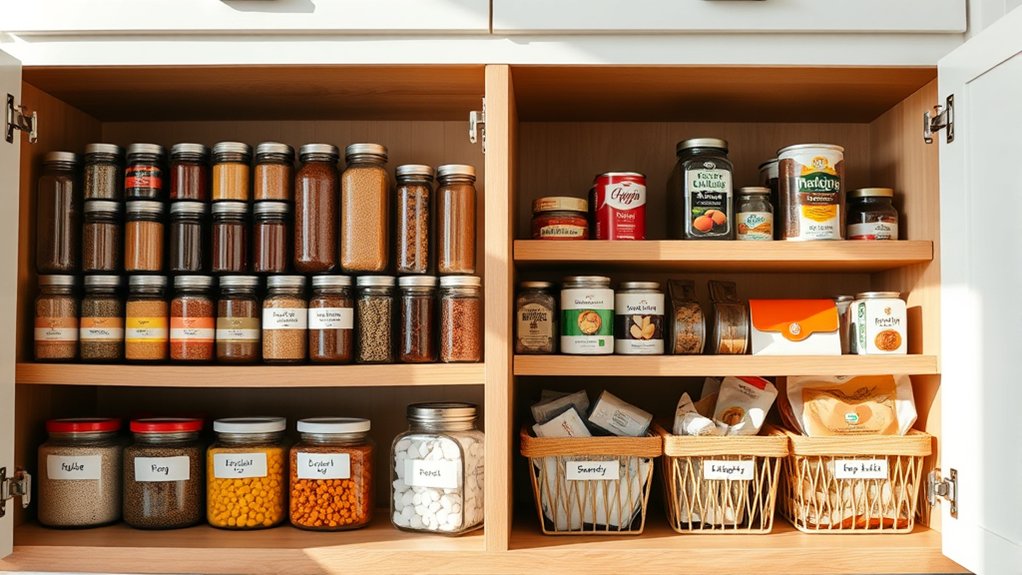
Once you’ve cleared out and decluttered your cabinets, it’s easier to see how items naturally belong together. Group similar items to streamline your kitchen routine and speed up meal planning.
For example, keep baking ingredients like flour, sugar, and baking powder in one section, while storing canned goods and spices in another. This ingredient categorization helps you find what you need quickly and reduces the time spent searching during cooking.
When you organize by category, you also make inventory checks simpler. You’ll know exactly when you’re running low on essentials, preventing last-minute trips to the store.
Grouping similar items supports a logical flow in your kitchen, so prepping meals becomes smoother. Remember, the goal is to create zones that make sense to you, whether that’s by meal type, frequency of use, or ingredient type.
This approach not only improves accessibility but also keeps your kitchen feeling orderly and efficient.
Use Storage Solutions Like Bins and Racks to Maximize Kitchen Cabinet Space
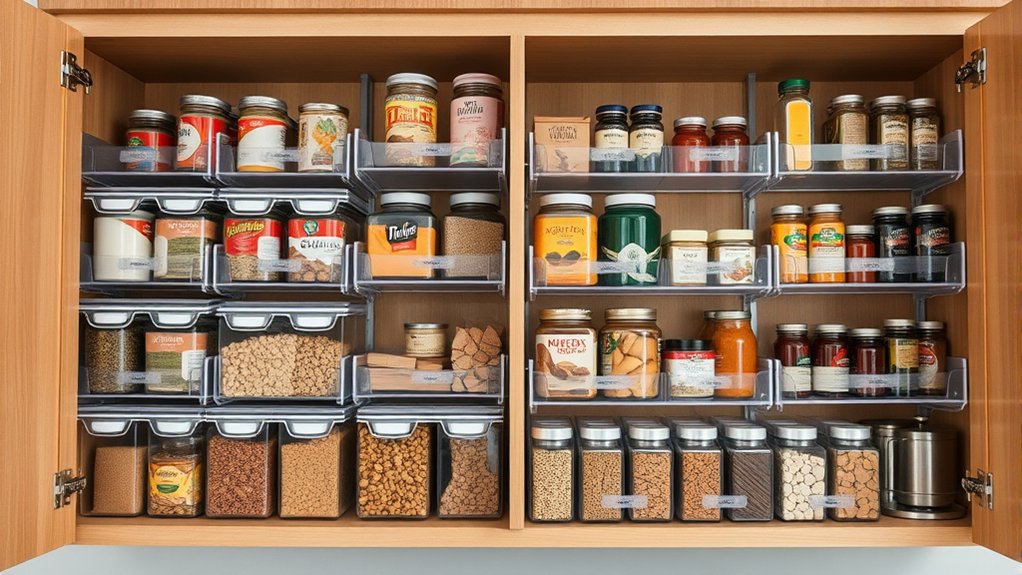
Although organizing by category helps, you’ll maximize your cabinet space even more by adding storage solutions like bins and racks.
Decorative storage bins can keep smaller items contained and visually appealing, making your cabinets look tidy while protecting contents from dust or spills. You can choose bins that match your kitchen’s style to add a personal touch.
Functional racks, like tiered shelves or pull-out wire racks, let you use vertical space efficiently, giving easy access to items stored in the back.
By installing racks, you create layers within your cabinets, preventing stacking messes and saving room. Use adjustable racks to fit different-sized items, from plates to canned goods.
Combining decorative storage with functional racks transforms your cabinets into organized, accessible spaces. With these solutions, you’ll reduce clutter, find items quickly, and enjoy a streamlined kitchen experience.
Don’t hesitate to mix and match bins and racks to suit your storage needs perfectly.
Arrange Kitchen Cabinet Items by Frequency of Use
When you arrange kitchen cabinet items by how often you use them, you’ll save time and reduce frustration during meal prep. Start by placing pantry staples like flour, sugar, and cooking oils within easy reach since you grab these daily.
Organize kitchen essentials by usage frequency to save time and ease frustration during meal preparation.
Keep these essentials on lower shelves or eye-level cabinets for quick access. Next, group rarely used items like rare utensils or specialty bakeware higher up or in less accessible spots, freeing prime space for frequently needed tools.
This method not only streamlines your workflow but also keeps your kitchen tidy. You’ll avoid digging through clutter when you need something quickly.
Regularly reassess your setup as your cooking habits change, ensuring your most-used items remain easy to find. By prioritizing access based on frequency, your kitchen cabinet organization becomes practical, efficient, and tailored to your routine.
This simple strategy turns your cooking space into a functional zone where everything has its place.
Label Kitchen Cabinet Shelves and Containers for Easy Finds
You’ll find it much easier to grab what you need when your kitchen cabinet shelves and containers have clear labels. Choosing durable materials and placing labels where they’re easy to see can make a big difference.
Let’s look at a few simple tips for creating labels that stay in place and help you find items quickly.
Benefits of Clear Labels
Since kitchen cabinets can quickly become cluttered, clear labels help you find items without rummaging through every container. When you use clear labels, you improve product differentiation, making it easier to spot exactly what you need at a glance.
This saves time and reduces frustration during meal prep. Clear labels also improve visual clarity by providing consistent, easy-to-read information, so you won’t mistake one spice for another or confuse baking ingredients.
By labeling shelves and containers precisely, you create an organized system that guides you effortlessly through your kitchen. This simple step boosts efficiency and keeps your cabinets looking tidy, so you can focus on cooking rather than searching.
Clear labels truly transform your kitchen into a streamlined, user-friendly space.
Labeling Materials Options
Although choosing the right labeling materials might seem minor, it plays a crucial role in keeping your kitchen cabinets organized and easy to navigate. When exploring labeling materials options, focus on durability and visibility.
Adhesive label types vary widely, so pick ones that suit your cabinet surfaces and container materials.
Here’s a quick comparison of popular adhesive label types:
| Label Type | Durability | Best For |
|---|---|---|
| Paper Labels | Low | Temporary labeling |
| Vinyl Labels | High | Moisture-prone areas |
| Chalkboard Labels | Medium | Reusable, writable |
Choosing the right adhesive label type ensures your kitchen stays neat and helps you find items effortlessly every time.
Placement Tips for Labels
When labeling your kitchen cabinet shelves and containers, placing labels where you can easily see them saves you time and frustration. Use label placement strategies that focus on visibility—front-facing containers and shelf edges work best.
Avoid placing labels where they’re hidden behind other items or too low to notice quickly. Decorative label designs not only brighten your space but also help you distinguish categories at a glance.
Consider using clear fonts and contrasting colors for easy reading. For shelves, place labels at eye level or just below to ensure they catch your attention.
On containers, position labels on the front or lid, depending on how you access them most. With thoughtful label placement strategies, you’ll streamline your kitchen routine and keep everything organized effortlessly.
Keep Your Cabinets Organized With Simple Weekly Habits
Keeping your kitchen cabinets tidy doesn’t have to be overwhelming if you commit to simple weekly habits. Start by dedicating a few minutes each week to meal planning—this helps you use ingredients efficiently and prevents unnecessary clutter.
Maintaining tidy kitchen cabinets becomes easy with simple weekly habits like dedicated meal planning.
While planning, check your ingredient inventory to see what you already have, so you avoid buying duplicates. This habit keeps your cabinets stocked with essentials without overcrowding them.
Each week, take a quick inventory and reorganize any misplaced items. Return things to their designated spots right after use to maintain order effortlessly.
Wiping shelves during this time also keeps your cabinets clean, making your kitchen more inviting. By making these actions part of your routine, you’ll enjoy a well-organized space that supports your cooking flow without stress.
Small, consistent efforts are key to keeping your kitchen cabinets functional and clutter-free.
Customize Your Kitchen Cabinets to Fit Your Cooking Style
Since every cook has unique habits and preferences, customizing your kitchen cabinets can make a big difference in how efficiently you work. Start by evaluating your cooking style—do you bake often, or do you focus more on quick meals?
Use that insight to design a personalized layout that places your most-used items within easy reach. Incorporate custom storage solutions like adjustable shelves, pull-out drawers, or spice racks tailored to your needs.
These features help you keep ingredients and tools organized without wasting time hunting for them. Don’t forget to allocate space for specialty gadgets or bulk ingredients if you use them regularly.
By creating a personalized layout, you’ll minimize clutter and maximize functionality. Custom storage isn’t just about aesthetics; it’s about streamlining your workflow so you can enjoy cooking more.
Tailoring your cabinets to your unique habits turns your kitchen into a space that truly works for you.
Frequently Asked Questions
What Materials Are Best for Kitchen Cabinet Construction?
You’ll want to choose materials like solid wood or plywood for kitchen cabinet construction because they offer excellent cabinet durability. These materials resist warping and handle daily use well.
If you prefer something budget-friendly, MDF with a good finish works but requires more material maintenance to avoid damage.
Avoid particleboard if you want long-lasting cabinets. Ultimately, picking the right material helps you maintain your kitchen’s look and function effortlessly.
How Can I Childproof My Kitchen Cabinets?
Think of childproofing your kitchen cabinets like building a fortress for child safety. You can install cabinet locks that are both sturdy and easy for adults to open but tricky for little hands.
Magnetic locks or adhesive latch locks work well without harming your cabinets. Keep sharp objects and cleaning supplies out of reach, and regularly check the locks to make certain they’re secure.
This way, your kitchen stays safe without sacrificing convenience.
What Are the Best Lighting Options for Inside Cabinets?
The best cabinet lighting options for interior illumination include LED strip lights, puck lights, and battery-operated tap lights. You’ll love LED strips because they provide even, energy-efficient light and fit neatly inside cabinets.
Puck lights create focused spots of brightness, perfect for highlighting specific areas. Battery-operated tap lights are great if you want an easy, wire-free solution.
These choices help you find what you need quickly and make your cabinets look great.
How Do I Prevent Mold and Mildew in Cabinets?
To prevent mold and mildew in your cabinets, focus on mold prevention by keeping moisture control a priority. You’ll want to guarantee your cabinets stay dry: use a dehumidifier if needed, fix any leaks quickly, and avoid storing damp items inside.
Ventilate the area well to reduce humidity, and regularly clean surfaces with mold-inhibiting solutions. Taking these steps helps you keep your cabinets mold-free and your kitchen healthier.
Can I Install Soft-Close Hinges Myself?
You can absolutely install soft-close hinges yourself—it’s not rocket science! With a little patience, your cabinet hinge installation will go smoothly.
First, remove your old hinges carefully, then align the new ones precisely to guarantee the soft-close mechanism works perfectly. Just follow the instructions, use a screwdriver or drill, and double-check the fit.
You’ll have whisper-quiet cabinets in no time, and your kitchen will feel like a five-star restaurant!
Conclusion
Now that you’ve bravely tackled the chaos of your kitchen cabinets, you’re basically a domestic superhero. With bins, labels, and a weekly habit that’s less “chore” and more “mission accomplished,” you’ll find your spatulas without an archaeological dig.
Just remember, customizing your space isn’t about creating a museum exhibit. It’s about making cooking less like a treasure hunt and more like the smooth operation you deserve. With these tips for organizing kitchen cabinets, your kitchen’s chaos doesn’t stand a chance!


