How to Remove Smell From Kitchen Sink Quickly
Kitchen sink odors can be frustrating, especially when they linger no matter how often you clean. You’re not alone—many people struggle with finding a quick, reliable way to remove smell from a kitchen sink.
To quickly remove kitchen sink smells, start by flushing the drain with hot water to loosen grime and kill bacteria. Then, sprinkle baking soda down the drain, pour vinegar over it to fizz and neutralize odors, and rinse again with hot water.
Toss some lemon or citrus peels into the disposal to freshen the scent naturally. These simple steps clear away odors fast and can set your sink up for longer-lasting freshness. Keep going to uncover even more effective solutions.
Key Takeaways
- Remove visible debris and flush the sink with hot water for at least one minute to clear odor-causing residues quickly.
- Pour baking soda followed by vinegar into the drain, wait 5–10 minutes, then rinse with hot water to neutralize odors.
- Grind citrus peels like lemon or orange in the garbage disposal to freshen and break down grease-causing smells.
- Clean and deodorize the sink drain trap by removing, scrubbing with baking soda-vinegar mix, rinsing with hot water, and reassembling.
- Ensure proper ventilation and avoid leaving food scraps in the drain to prevent rapid odor buildup.
Why Does Your Kitchen Sink Smell Bad?
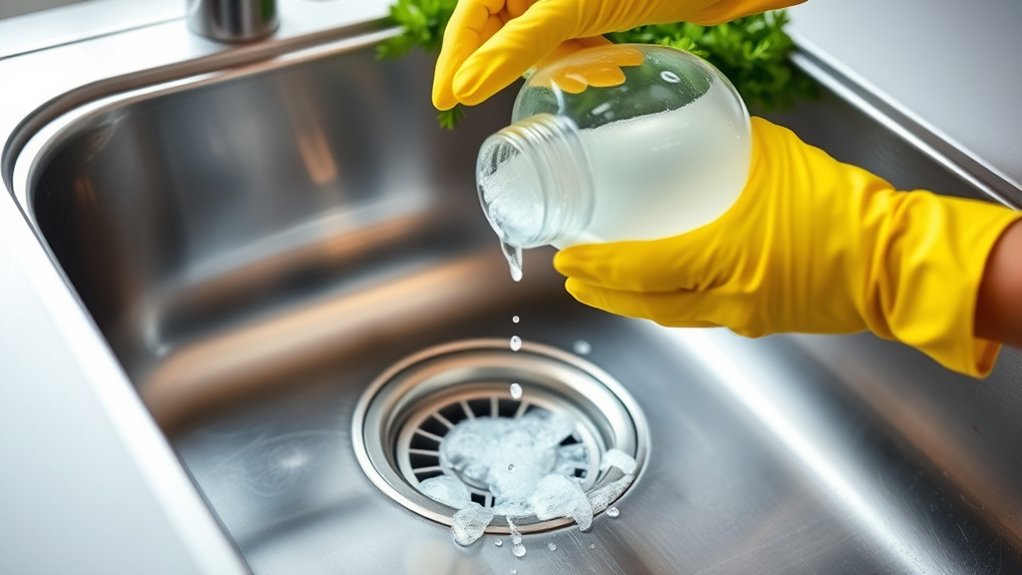
Although your kitchen sink seems clean, it can still develop unpleasant odors because food particles, grease, and bacteria build up in the drain and pipes. The kitchen sink design plays a big role in how easily these residues accumulate.
Even a clean kitchen sink can harbor odors from trapped food, grease, and bacteria in its design and pipes.
For example, sinks with complex pipe layouts or traps that don’t allow proper water flow can trap debris, creating a perfect environment for odor-causing bacteria. If your sink has a garbage disposal, food scraps might get stuck if not flushed properly, adding to the smell problem.
Regular plumbing maintenance is essential to keep your kitchen sink smelling fresh. You’ll want to clean the drain and pipes routinely to prevent buildup.
Ignoring simple maintenance tasks allows grease and food residues to solidify, leading to persistent odors. By understanding how your kitchen sink design affects drainage and committing to plumbing maintenance, you can avoid that unpleasant smell and keep your kitchen environment hygienic and inviting.
How to Identify Kitchen Sink Odors
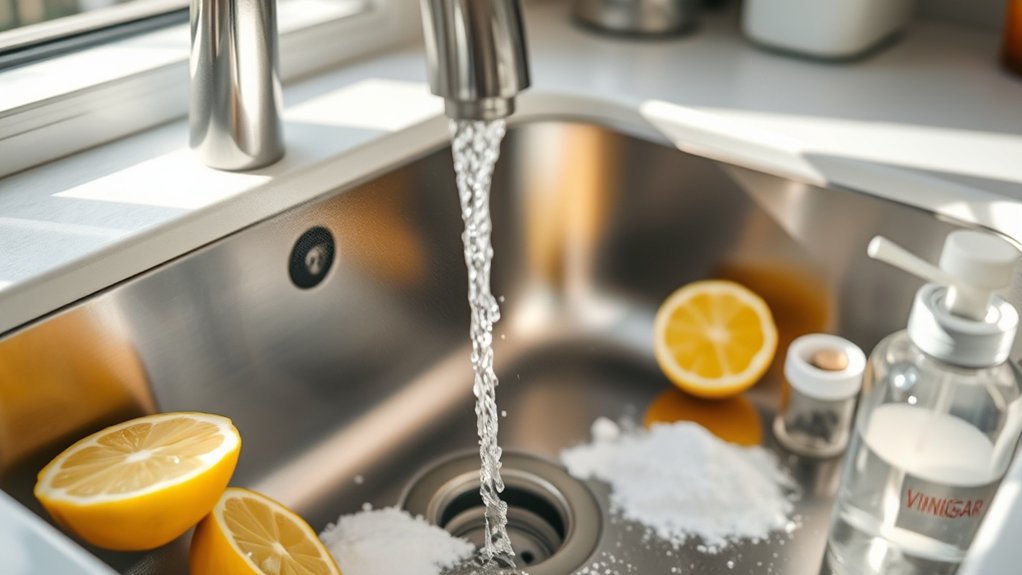
Understanding the source of your kitchen sink’s odor can help you tackle the problem more effectively. Different sink materials, like stainless steel or porcelain, may retain smells differently, so knowing your sink type is a great first step.
Next, identify common odor sources to pinpoint the root cause.
Here’s how you can identify kitchen sink odors:
- Sniff test near the drain: Check if the smell is stronger around the drain, which often traps food particles and bacteria.
- Inspect the garbage disposal: If your sink has one, odors can come from trapped debris or buildup inside it.
- Examine the pipes and traps: Leaks or buildup in these areas can cause persistent smells, especially if your sink materials encourage bacterial growth.
How to Quickly Remove Sink Odors
When you notice unpleasant smells coming from your kitchen sink, acting quickly can prevent the odor from spreading and becoming harder to eliminate. Start by clearing any visible debris from the drain and running hot water for a minute to flush out trapped particles.
Act promptly to clear debris and flush your kitchen sink with hot water to stop odors from spreading.
Next, check your plumbing for leaks or blockages, since faulty plumbing repairs often cause persistent odors. If you spot issues, address them promptly or call a professional to avoid further complications.
Remember, maintaining your kitchen decor includes keeping your sink area clean and odor-free, as bad smells can spoil the overall ambiance.
Avoid leaving food scraps in the drain or garbage disposal for long periods. Wiping down the sink regularly and ensuring proper ventilation can also help prevent odors.
Freshen Your Sink With Baking Soda and Vinegar
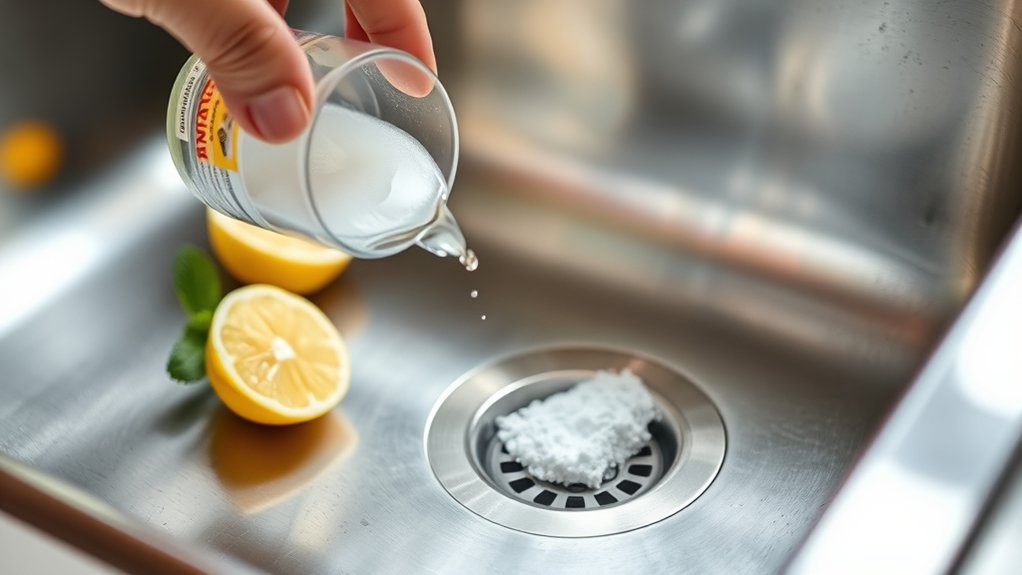
You can quickly freshen your sink with baking soda and vinegar. The baking soda helps neutralize odors, while the vinegar breaks down grime and helps kill bacteria. Together, they make a powerful, natural cleaning duo that leaves your sink smelling fresh.
Baking Soda Benefits
Although kitchen sinks can quickly develop unpleasant odors, you can freshen yours effortlessly with baking soda and vinegar. Baking soda offers several key benefits that make it ideal for tackling sink smells.
First, its natural deodorizing power neutralizes odors without harsh chemicals. Second, it gently scrubs away grime and buildup, improving drainage and cleanliness. Third, it’s safe and eco-friendly, so you won’t harm your pipes or the environment.
To get the most from baking soda uses, follow these tips:
- Store baking soda in an airtight container to keep it fresh and effective.
- Sprinkle a generous amount down the drain before rinsing with water.
- Combine with vinegar to boost odor-fighting power (more on this next).
With proper baking soda storage and use, your sink stays fresh longer.
Vinegar Cleaning Process
How exactly does vinegar improve the cleaning power of baking soda in your kitchen sink? When vinegar meets baking soda, a chemical reaction creates fizzing bubbles that break down grime and odors faster.
This process unclogs drains and neutralizes smells, making it a top cooking tip for any kitchen design.
Here’s a quick guide to freshening your sink:
| Step | Action |
|---|---|
| 1. Sprinkle | Baking soda evenly in the sink |
| 2. Pour | Vinegar slowly over the baking soda |
| 3. Wait | Let fizz work for 5-10 minutes |
| 4. Rinse | Flush with hot water thoroughly |
Use this simple method regularly to keep your sink smelling fresh and your kitchen inviting.
Freshen Your Sink With Lemon and Citrus Peels
Freshen your kitchen sink with lemon and citrus peels. They naturally help neutralize odors and leave behind a clean, refreshing scent.
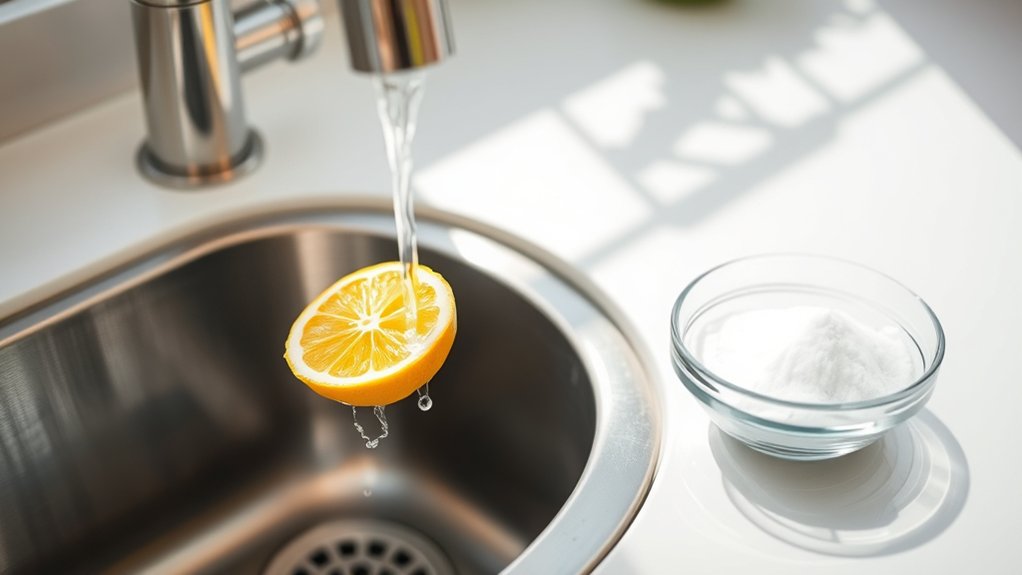
Just toss a few peels into the drain and run the water, or grind them gently in the disposal. For an extra boost, add a handful of ice cubes. They can help scrub away buildup while the citrus fills your sink with a zesty aroma.
Benefits of Lemon Peels
When you toss lemon peels into your kitchen sink disposal, they work quickly to neutralize odors and leave a fresh, citrus scent behind. The lemon benefits go beyond just masking bad smells. They actually break down grease and grime, making your sink cleaner and fresher.
Citrus freshness brightens your kitchen atmosphere naturally, without harsh chemicals.
Here are three key benefits of using lemon peels:
- Odor neutralizer: Lemon peels eliminate foul odors instead of just covering them up.
- Natural cleaner: The acidic nature helps dissolve leftover food particles and grease.
- Eco-friendly freshness: Using lemon peels is safe for your plumbing and the environment, avoiding chemical use.
Incorporate lemon peels regularly to enjoy these lemon benefits and keep your sink smelling great.
How to Use Citrus Peels
Lemon peels offer a natural way to keep your kitchen sink fresh, but using a variety of citrus peels can boost that effect even more. You can collect peels from oranges, limes, and grapefruits to maximize citrus peel benefits.
Simply chop the peels into small pieces and toss them down the drain. Then, run hot water to help wash away grime and release a natural fragrance that brightens your kitchen instantly.
The oils in these peels break down buildup and neutralize odors without harsh chemicals. For a quick refresh, grind the peels in a garbage disposal if you have one, or soak them in vinegar before rinsing.
This method is an easy, eco-friendly way to keep your sink smelling clean and inviting.
Additional Freshening Tips
Although citrus peels work wonders on their own, combining them with a few simple tricks can boost your kitchen sink’s freshness even more. To improve your kitchen aesthetics while freshening up, try these easy tips:
- Freeze citrus peels in water and run them through the garbage disposal to break down odors and add a fresh scent.
- Add a few drops of lemon essential oil to your sink accessories, like the sponge holder or soap dispenser, to keep the area smelling clean.
- Use lemon juice mixed with baking soda to scrub your sink surface, removing grime and neutralizing smells without harming your sink’s finish.
These methods not only freshen your sink but also complement your kitchen aesthetics effortlessly.
How Hot Water Quickly Clears Kitchen Sink Odors
How exactly does hot water clear kitchen sink odors so quickly? When you pour hot water down your drain, it helps break down grease, food particles, and soap scum that trap odor-causing bacteria.
This process supports odor neutralization by flushing away buildup before it emits unpleasant smells.
Here’s a quick look at how hot water works to clear odors:
| Action | Effect | Result |
|---|---|---|
| Hot water heats grime | Loosens sticky residues | Easier to wash away |
| Warm temperature | Kills some bacteria | Reduces odor sources |
| Rapid flow | Flushes debris | Clears drain quickly |
Clean and Deodorize Your Sink Drain Trap
After flushing your drain with hot water to break down grime and reduce bacteria, the next step is to clean and deodorize the sink drain trap. This part often traps food particles and debris, causing clogs and unpleasant odors. Here’s how you can tackle it:
- Remove the Trap Carefully: Place a bucket underneath to catch water, then unscrew the trap. This lets you inspect and clear any trapped gunk.
- Scrub the Trap Thoroughly: Use an old toothbrush and a mix of baking soda and vinegar to scrub away buildup. This combination deodorizes the trap and breaks down residue that can slow water flow.
- Rinse and Reassemble: Flush the trap with hot water to wash away loosened debris, then reattach it securely. Run water afterward to ensure everything flows smoothly and odors don’t linger.
Prevent Kitchen Sink Odors With Simple Maintenance
You can prevent kitchen sink odors with a few simple maintenance habits. Clean your sink regularly, dispose of food scraps properly, and use natural deodorizers to keep it smelling fresh. These small steps can make a big difference by stopping unpleasant odors before they start.
Regular Sink Cleaning
Because food particles and grease can quickly build up, regular cleaning keeps your kitchen sink fresh and odor-free. Staying on top of this simple maintenance is one of the best cooking tips you can follow to avoid unwanted smells.
Here’s how to do it effectively:
- Scrub daily: Use a mild dish soap and sponge to clean the sink basin and faucet. This removes residue before it causes odors.
- Disinfect weekly: Apply a solution of equal parts water and vinegar or a gentle disinfectant, then rinse well. It kills bacteria that cause smells.
- Maintain appliances: Clean your garbage disposal and dishwasher regularly as part of appliance maintenance. These can harbor trapped food that leads to odors.
Proper Food Disposal
Although disposing of food waste might seem straightforward, improper practices can quickly lead to unpleasant kitchen sink odors. Avoid pouring grease, coffee grounds, or large food scraps down the drain, as these can cause blockages and trap odor-causing bacteria.
Instead, scrape plates into the trash or compost bin before rinsing dishes. If you have a garbage disposal, run cold water while operating it to flush food particles through the pipes effectively.
Regularly check your drain for buildup and clear it promptly to prevent blockages that contribute to bad smells. By managing food waste carefully and maintaining clear drains, you can stop odors before they start and keep your kitchen smelling fresh with minimal effort.
Use Natural Deodorizers
When kitchen sink odors start to linger, using natural deodorizers can quickly neutralize smells without harsh chemicals. You can maintain fresh plumbing fixtures and improve kitchen organization with simple, natural solutions. Try these three effective methods:
- Baking Soda and Vinegar: Pour half a cup of baking soda down the drain, followed by half a cup of white vinegar. Let it fizz for 15 minutes, then flush with hot water to eliminate odors and clean pipes.
- Lemon Peels: Grind lemon peels in the garbage disposal or place them near the drain. Their natural oils freshen the area and reduce bad smells.
- Coffee Grounds: Sprinkle used coffee grounds down the sink and rinse with warm water. They absorb odors and help keep your kitchen organized and fresh.
These natural deodorizers keep your kitchen smelling clean while protecting plumbing fixtures.
How Enzyme Cleaners Help With Stubborn Sink Odors
If stubborn odors linger in your kitchen sink despite regular cleaning, enzyme cleaners can offer an effective solution. These cleaners use natural enzymes that target the root cause of the smell: organic waste trapped in your pipes.
The enzyme efficiency lies in their ability to break down proteins, fats, and other odor-causing residues that traditional cleaners might miss. When you apply an enzyme cleaner, it accelerates odor breakdown by digesting the grime and bacteria feeding the smell.
This process not only eliminates the foul odor but also prevents it from returning quickly. You’ll find enzyme cleaners especially useful for sinks with persistent, hard-to-remove smells.
Just follow the product instructions, usually letting it sit for a while to maximize enzyme action. By choosing enzyme cleaners, you address odors at their source, ensuring a fresher kitchen sink without harsh chemicals or repeated scrubbing.
Easy Habits to Keep Your Kitchen Sink Fresh
To keep your kitchen sink smelling fresh, develop a few simple daily habits. These improve appliance maintenance and complement your kitchen decor by keeping the area clean and inviting.
Here’s what you can do:
1. Rinse Thoroughly After Use
Make it a habit to rinse your sink and drain with hot water after every use. This prevents food particles from sticking and reduces odor buildup.
2. Wipe Down Daily
Use a mild cleaner or a mixture of vinegar and water to wipe the sink surface daily. It keeps stains away and preserves your kitchen decor’s appeal.
3. Clean the Drain Weekly
Pour baking soda followed by vinegar down the drain once a week. Let it fizz, then flush with hot water. This simple maintenance step keeps your sink smelling fresh and your appliances running smoothly.
Frequently Asked Questions
Can Kitchen Sink Smells Affect Indoor Air Quality?
Yes, kitchen sink smells can affect indoor air quality by releasing unpleasant odors and potentially harmful bacteria into the air. If you don’t address these smells quickly, they can linger and reduce air circulation in your home.
To improve air quality, you should use proper ventilation methods like opening windows or running exhaust fans. These steps help remove odors and keep the air fresh, making your kitchen a healthier space.
Are There Any Health Risks From Sink Odors?
Yes, you can face health risks from sink odors. Odor-causing bacteria and mold can thrive in your kitchen sink, releasing unpleasant smells and potentially harmful allergens.
When you breathe in these contaminants, you might experience respiratory issues, headaches, or allergic reactions.
It’s important to clean your sink regularly and address any trapped food or moisture to stop bacteria and mold from multiplying. This helps keep your kitchen safer and fresher for you and your family.
How Often Should Sink Plumbing Be Professionally Cleaned?
You should schedule plumbing maintenance every 1 to 2 years to keep your sink fresh and functional. Regular cleaning prevents buildup, stops clogs, and guarantees odor prevention.
Don’t wait until you smell something unpleasant; proactive care saves you time and money. By staying consistent with professional cleanings, you protect your plumbing and maintain a healthy, odor-free kitchen.
Can Certain Foods Cause Persistent Sink Odors?
Yes, certain foods can cause persistent sink odors, especially if food residues get stuck in your garbage disposal or pipes. Items like onion peels, coffee grounds, and greasy leftovers tend to cling and rot, creating bad smells.
You should regularly clean out those residues and run cold water while using the disposal. This helps prevent buildup and keeps your kitchen smelling fresh. Don’t let food residues linger too long!
Is It Safe to Use Commercial Deodorizers in Sinks?
Think of using a commercial deodorizer like applying perfume over a spill—it might mask the smell but won’t fix the root cause. You can use them safely if you follow instructions, because their chemical reactions target odor molecules effectively.
However, some deodorizers contain harsh chemicals that can harm your pipes or skin. For best deodorizer effectiveness, choose eco-friendly options and avoid overuse to keep your sink fresh without damage.
Conclusion
Keeping your kitchen sink smelling fresh is easier than you think. Just like a cool breeze clears away stale air, simple steps like using baking soda, lemon peels, or enzyme cleaners can quickly banish odors.
Stay on top of regular cleaning and maintenance, and your sink will stay inviting and odor-free. With these easy habits, you’ll never have to dread that unpleasant smell again. Your kitchen will feel clean and welcoming every day.
Knowing how to remove smell from a kitchen sink quickly can help you maintain a fresher, more inviting kitchen.