
How to Use a Kitchen Scale in 10 Easy Steps
Struggling to measure ingredients accurately or control portions without making a mess? You’re not alone—many home cooks find kitchen scales confusing or unreliable. The right scale can make baking, meal prep, and everyday cooking much easier.
Choose a kitchen scale that fits your cooking needs and has precise units. Set it on a stable, flat surface away from moisture or heat. Switch units as needed, then use the tare function to subtract container weight. Calibrate regularly for accuracy.
Measure ingredients or portion snacks by weighing directly. Clean with a damp cloth, avoid water exposure, and store it properly. If problems occur, troubleshoot by checking batteries and resetting the scale.
Keep following these tips to master precise and easy kitchen weighing.
Key Takeaways
- Place the kitchen scale on a flat, stable surface away from heat and moisture before use.
- Turn on the scale and select the desired measurement unit (grams, ounces, etc.).
- Use the tare function by placing a container on the scale and resetting the display to zero.
- Add ingredients slowly until the desired weight appears. Use tare to measure multiple items in one container.
- Clean the scale after use and store it in a dry, clutter-free area to maintain accuracy and longevity.
Choose the Right Kitchen Scale for Your Needs

When choosing the right kitchen scale for your needs, consider how you’ll use it most often. If you bake frequently, you’ll want a scale with excellent measurement accuracy, so your recipes turn out perfectly every time.
Look for one that measures in small increments, like grams or ounces, to guarantee precise results. Scale durability is also essential, especially if you plan to use it daily or in a busy kitchen.
Choose a scale with fine measurement increments and durable build for daily, precise kitchen use.
Pick a model made from sturdy materials, such as stainless steel or tempered glass, to withstand regular use and accidental drops. Also, consider the scale’s size and capacity to match your typical ingredients.
Compact scales suit smaller kitchens, while larger ones handle bigger batches. By focusing on measurement accuracy and scale durability, you’ll find a kitchen scale that’s reliable and perfectly tailored to your cooking style.
This will make your cooking and baking experience smoother and more enjoyable.
Set Up Your Kitchen Scale on a Stable Surface
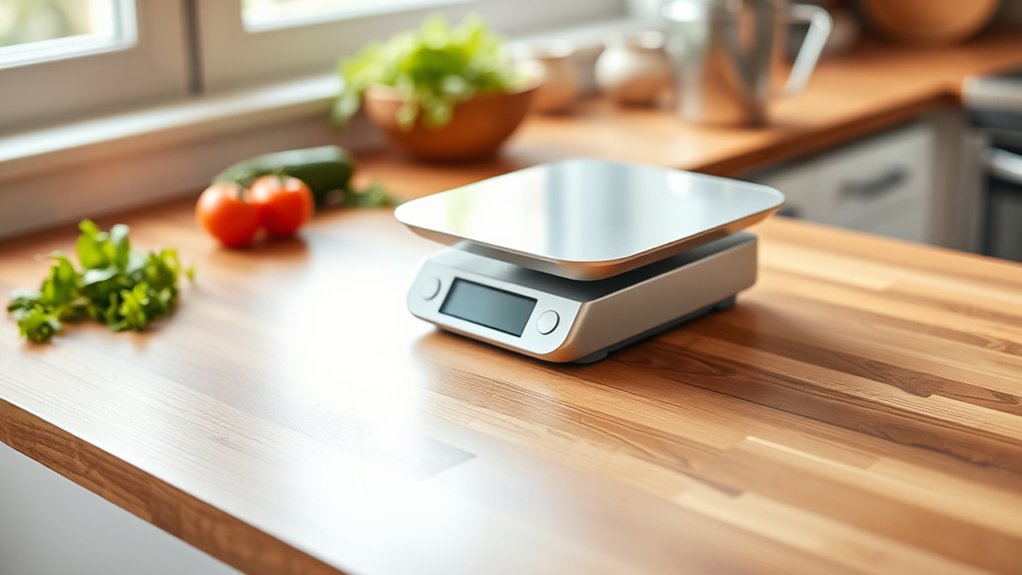
Although setting up your kitchen scale might seem simple, placing it on a stable surface guarantees accurate measurements every time. Start by choosing a flat kitchen surface free from vibrations or movement, such as a countertop or sturdy table. Avoid placing your scale near the stove or sink, where heat or moisture could affect its performance.
Use stability techniques like wiping the surface clean to prevent slipping and ensuring the scale’s feet sit evenly. If your kitchen surface isn’t perfectly level, place a small, firm mat beneath the scale to improve stability. Don’t position the scale near heavy appliances that might cause vibrations when operating.
Switch Between Units on Your Kitchen Scale

Your kitchen scale usually offers common units like grams, ounces, and pounds. To switch between them, look for a “Unit” button or a similar toggle. Press it until the unit you need appears on the display.
Common Unit Options
How do you switch between different measurement units on a kitchen scale? Most kitchen scales offer common unit options like grams, ounces, pounds, and milliliters to handle various ingredients.
These units cover both weight and volume, making measurement conversions straightforward when you follow your recipe closely. You’ll find that selecting the right unit affects unit precision, especially for baking where exact amounts matter.
For instance, grams provide more precise measurements than ounces, which helps achieve consistent results. Liquids often use milliliters, while dry ingredients might require grams or ounces.
Knowing these common unit options helps you avoid guesswork and guarantee your dish turns out just right. Your kitchen scale simplifies measurement conversions, giving you confidence in every step of your cooking or baking process.
How To Change Units
Because switching units is a common task when using a kitchen scale, you’ll want to know the simple steps to do it quickly. Most scales have a dedicated button labeled “Unit” or “Mode” that lets you cycle through available units.
Press it until your desired unit appears on the display. This quick unit conversion guarantees measurement accuracy and keeps your recipes precise.
Here’s a quick reference for common units and their uses:
| Unit | Common Use | Approximate Equivalent |
|---|---|---|
| g | Baking, dry goods | 1 g = 0.035 oz |
| oz | Cooking, portions | 1 oz = 28.35 g |
| ml | Liquids | 1 ml = 1 g (water) |
Switch units as needed to match your recipe’s requirements effortlessly.
Use the Tare Function on Your Kitchen Scale
Although weighing ingredients might seem straightforward, using the tare function on a kitchen scale can make the process much easier and more accurate. The tare function lets you reset the scale to zero after placing a container or bowl on it.
Using the tare function on your kitchen scale simplifies weighing by zeroing out the container’s weight.
This way, you only measure the weight of the ingredients, not the container. To use it, first place your empty container on the scale, then press the tare button.
The display will reset to zero, indicating that the scale is ready to weigh your ingredients. Add your ingredient, and the scale will show only its weight.
This function is especially useful when you need to measure multiple ingredients in the same container, allowing you to tare after adding each one.
While the tare function streamlines weighing, remember it’s different from weight calibration, which ensures your scale measures accurately.
Using the tare function properly helps you get precise measurements every time you cook or bake.
Calibrate Your Kitchen Scale for Best Accuracy
Mastering the tare function is a great step toward accurate measurements, but ensuring your kitchen scale is properly calibrated will take your precision to the next level.
Calibration techniques help you adjust your scale to reflect true weights, preventing costly mistakes in your recipes. Start by checking your scale’s manual for specific calibration steps; many models include a calibration mode.
Here’s how you can perform accuracy verification:
- Use a known weight, like a calibration weight or an item with a specified mass.
- Place the weight on the scale and note the reading.
- If the reading is off, follow your scale’s calibration instructions to adjust.
- Repeat the process until the scale displays the correct weight consistently.
Regularly calibrating your kitchen scale assures you get reliable results every time, making cooking and baking more precise and stress-free.
Weigh Dry Ingredients With Your Kitchen Scale
When you weigh dry ingredients with your kitchen scale, you’ll get more consistent results than using measuring cups. It’s especially handy for measuring spices and weighing herbs, where precision makes a big difference in flavor.
Start by placing a bowl or container on the scale and press the tare button to zero it out. Then, add your dry ingredient until you reach the exact weight your recipe calls for.
This method eliminates guesswork and packing differences that come with traditional measuring tools. Whether you’re adding flour, sugar, or tiny amounts of spices, using a scale guarantees accuracy.
For measuring spices, a small digital scale can handle tiny weights, giving you control over potent ingredients. When weighing herbs, you’ll avoid crushing delicate leaves and ensure the right amount without waste.
Using your kitchen scale for dry ingredients simplifies your prep and improves your cooking consistency every time.
Measure Liquids Using Your Kitchen Scale
Since liquid measurements can vary between volume and weight, using your kitchen scale guarantees you get the exact amount needed for your recipe. Measuring liquids with your kitchen scale is simple and guarantees accuracy, especially when recipes call for grams or ounces instead of cups or milliliters.
Here’s how to master accurate pouring:
- Place a container on the scale and press the tare button to zero it out.
- Slowly pour the liquid into the container, watching the display to stop at the precise weight.
- Use units that match your recipe, like grams or fluid ounces, by switching your scale’s unit settings.
- Clean any spills immediately to keep your scale functioning properly.
Portion Food and Snacks With Your Kitchen Scale
Although it might seem tedious, using your kitchen scale to portion food and snacks helps you control serving sizes and avoid overeating. When you weigh your snacks, you get an accurate idea of how much you’re actually consuming.
This is especially useful for snack portioning because pre-packaged serving sizes can be misleading. By measuring your food, you can stick to recommended portions or tailor amounts to your dietary needs.
Start by placing your container on the scale and taring it to zero. Then add your snack or food until you reach the desired weight.
This precise food measurement keeps your intake in check and supports healthier eating habits. Plus, it prevents mindless munching, helping you stay aware of your portions.
Using your kitchen scale for snack portioning is a simple, effective way to maintain balance in your diet. Give it a try; it makes portion control straightforward and manageable.
Clean and Maintain Your Kitchen Scale
To keep your kitchen scale accurate, clean it regularly with a damp cloth and mild detergent. Make sure you don’t expose it to water or excessive moisture, and store it in a dry, safe place when you’re not using it. These simple steps will help your scale last longer and work better.
Regular Cleaning Tips
Whenever you finish using your kitchen scale, it’s important to clean it promptly to prevent buildup and guarantee accurate measurements. Regular cleaning also supports food safety by avoiding contamination. Use eco friendly cleaning methods to protect both your health and the environment. Here are some tips to keep your scale in top shape:
- Wipe the surface with a damp cloth and mild soap; avoid harsh chemicals.
- Clean spills immediately to prevent sticky residue.
- Use a soft brush to remove crumbs from crevices.
- Dry thoroughly before storing to prevent moisture damage.
Proper Storage Methods
Since proper storage directly affects your kitchen scale’s accuracy and lifespan, you should store it in a clean, dry place away from extreme temperatures and moisture.
Find a dedicated spot within your kitchen organization system, preferably near your food storage area, to keep the scale accessible but protected. Avoid stacking heavy items on top of it to prevent damage.
Use a protective cover or case if available to help keep dust and debris off the scale’s surface. Regularly check that your storage space remains clutter-free so you can quickly retrieve your scale when needed.
Avoiding Water Damage
One of the easiest ways to keep your kitchen scale working accurately is by avoiding water damage during cleaning and maintenance. Even if your scale has some water resistance, you shouldn’t rely on it to handle spills. Here’s how to protect your scale effectively:
- Wipe spills immediately with a dry cloth to prevent moisture seeping into sensitive parts.
- Use a slightly damp cloth for cleaning, avoiding direct water contact or submerging the scale.
- Remove batteries before cleaning to prevent short circuits caused by moisture.
- Store your scale in a dry area to minimize exposure to humidity and accidental spills.
Troubleshoot Common Kitchen Scale Problems
If your kitchen scale isn’t giving accurate readings or won’t turn on, don’t worry. You can usually fix common issues quickly.
First, check the battery. A weak or dead battery often causes power problems, so try replacing it. Make sure you insert the batteries correctly, matching the positive and negative ends.
Next, verify that your scale is on a flat, stable surface. Uneven placement can affect accuracy. Clean the weighing platform to remove any debris or moisture that might interfere with measurements.
If your scale has a tare function, reset it before weighing. This helps ensure that only the ingredient’s weight is measured.
If the display is dim or flickering, the battery likely needs replacing. For persistent errors, consult your scale’s manual for error codes or calibration instructions.
Frequently Asked Questions
Can I Use a Kitchen Scale for Non-Food Items?
Yes, you can definitely use a kitchen scale for non-food measurements. It’s great for household weighing tasks like measuring small packages, craft supplies, or even mail.
Just make sure the items aren’t too heavy for the scale’s capacity. Using your kitchen scale this way helps you get precise measurements beyond cooking, making it a handy tool for various everyday needs around your home.
How Does a Kitchen Scale Differ From a Food Scale?
Think of a kitchen scale like a Swiss Army knife: versatile and precise. While both kitchen and food scales offer precision measurement, a food scale often specializes in weight conversion for common cooking units like ounces, grams, or cups.
You’ll find kitchen scales sometimes include features for non-food items and broader measurement units. So, a food scale narrows its focus to culinary precision, while a kitchen scale can handle diverse tasks with equal accuracy.
Are Digital Kitchen Scales Better Than Mechanical Ones?
Yes, digital kitchen scales are generally better than mechanical ones because they offer greater precision and easier readability. You’ll want to follow calibration tips regularly to keep your digital scale accurate.
Plus, don’t forget battery replacement when the display dims or stops working. Mechanical scales don’t need batteries but can be less precise and harder to calibrate.
Can a Kitchen Scale Help With Meal Planning?
Yes, a kitchen scale can definitely help with meal planning. By using it, you’ll nail portion control, making sure you’re neither overeating nor under-eating.
It also boosts recipe accuracy, so your meals turn out just right every time. You’ll save money by reducing food waste and keep your nutrition on track, making it easier to stick to your goals.
It’s a simple tool that makes meal prep smarter and more efficient.
What Are Common Brands of Reliable Kitchen Scales?
You’ll find reliable kitchen scales from brands like Ozeri, Etekcity, and Escali. They offer good weight capacity, usually up to 11 pounds or more, which suits most cooking needs.
These brands also incorporate easy calibration techniques, ensuring accuracy over time. When choosing a scale, consider one that lets you recalibrate it yourself to maintain precision.
This way, you’ll always get consistent results for your recipes.
Conclusion
Using your kitchen scale is like having a trusted compass in the kitchen. It guides you toward precise measurements and better recipes every time.
By choosing the right scale, setting it up properly, using the tare function, and calibrating it, you’ll make cooking and baking easier and more accurate. Keep it clean and troubleshoot any issues to ensure it stays reliable.
With these steps, you’re ready to use your kitchen scale with confidence and weigh your way to culinary success!


