7 Easy Tips to Organize Your Kitchen
A cluttered kitchen can make even simple meals feel stressful, and you’re not alone in struggling to keep everything organized. These practical kitchen organization tips can help you create a tidier, more efficient space without a major renovation.
Start by decluttering—keep only daily essentials and stash away rarely used items. Create zones for cooking, baking, and cleaning to speed up your workflow.
Organize cabinets by how often you use items, and store ingredients in clear, labeled containers for quick identification. Maximize pantry space with adjustable shelves, and save counter space by tucking away small appliances.
Consistent, easy-to-update labels help maintain order. Keep these tips in mind, and you’ll find even more ways to streamline your kitchen.
Key Takeaways
- Declutter by keeping daily essentials and storing or donating rarely used items to clear kitchen surfaces and enhance openness.
- Organize cabinets by placing frequently used items at eye level and storing seasonal items in higher or lower spaces.
- Use clear, labeled containers for ingredients to improve visibility and maintain pantry organization.
- Track expiration dates on perishable items with reusable labels to reduce waste and ensure freshness.
- Maximize counter space by storing small appliances inside cabinets and using tiered shelves or appliance garages.
Declutter Your Kitchen to Maximize Space

How often do you find your kitchen counters cluttered with items you rarely use? Decluttering is the first step to maximize space and improve kitchen aesthetics.
Start by sorting through your utensils, gadgets, and containers. Keep only what you use daily, and store or donate the rest. This clears surfaces, making your kitchen feel open and inviting.
Sort through utensils and gadgets, keep daily essentials, and clear clutter for an open, inviting kitchen space.
Next, choose storage solutions made from eco friendly materials like bamboo or recycled plastic. They not only reduce environmental impact but also add a natural, warm touch to your kitchen’s look.
Use stackable containers and drawer organizers to keep essentials neatly arranged and easily accessible.
Create Kitchen Zones for Cooking, Baking, and Cleaning
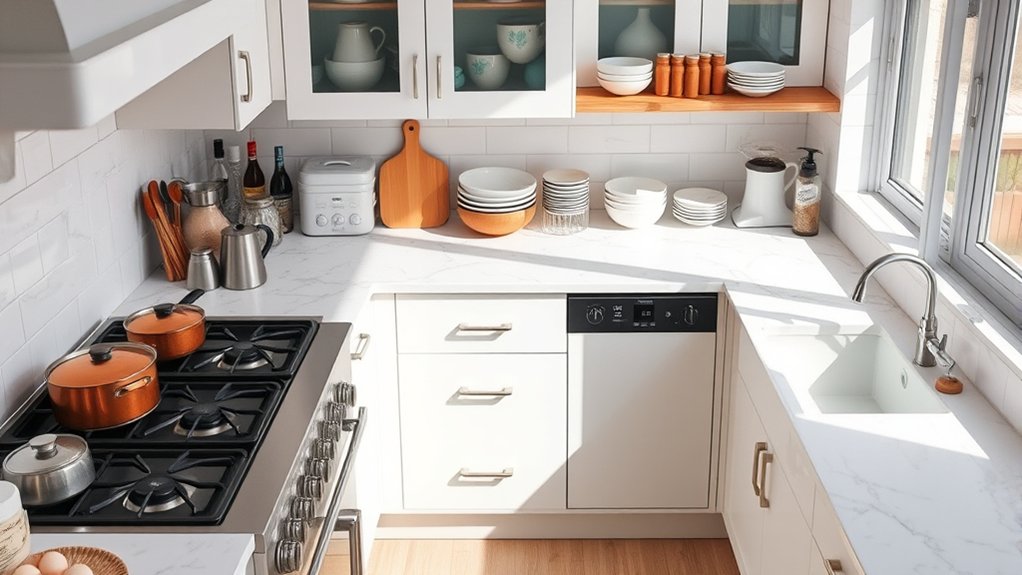
Once you’ve cleared the clutter and arranged your storage, it’s easier to assign specific areas for different tasks. Creating kitchen zones for cooking, baking, and cleaning helps streamline your workflow and keeps everything within reach.
For meal prep, designate a spot near your cutting boards and knives to save time. Your baking zone should include mixing bowls, measuring cups, and baking sheets. The cleaning area needs easy access to the sink, dishwasher, and trash.
To set up your zones:
- Place utensil storage close to where you cook and bake for quick access
- Keep commonly used ingredients near your meal prep space
- Store cleaning supplies under the sink or in a nearby cabinet
- Use clear containers to separate baking essentials
Organizing by zones reduces clutter and makes your kitchen more efficient, letting you focus on enjoying your cooking and baking.
Organize Kitchen Cabinets by Frequency of Use

Three key cabinet areas should reflect how often you use their contents to maximize convenience. Place everyday items like plates, glasses, and frequently used spices in the most accessible cabinets, ideally at eye level. This way, you’ll save time and effort during meal prep.
Less frequently used items, such as seasonal cookware or specialty appliances, can go in higher or lower cabinets. This setup keeps your kitchen lighting focused on workspaces and main storage, so you don’t waste energy illuminating rarely accessed spots.
Don’t forget to weigh the importance of appliance maintenance when organizing. Keep small appliances you use regularly, like blenders or coffee makers, close to power outlets to avoid unplugging and replugging constantly.
Store their manuals and accessories nearby to maintain efficiency. By organizing your cabinets based on how often you use items, you’ll create a smoother workflow and a tidier, more functional kitchen.
Use Clear Containers to Easily Identify Ingredients
Organizing your cabinets by usage frequency helps you find items quickly, but identifying ingredients inside those cabinets can still slow you down. Using clear containers boosts ingredient visibility, letting you spot what you need at a glance without rummaging.
Choosing the right container types, like airtight jars, stackable bins, or labeled canisters, keeps your ingredients fresh and your kitchen neat.
Here are a few tips to maximize ingredient visibility with clear containers:
- Opt for uniform container types to stack efficiently and save space.
- Label containers with contents and expiration dates for quick reference.
- Use wide-mouth containers for easy scooping and refilling.
- Store dry goods like flour, sugar, and pasta in clear containers to spot when you’re running low.
Optimize Pantry and Cabinet Storage With Adjustable Shelves
You can make the most of every inch in your pantry and cabinets with adjustable shelves. Since you can change the shelf heights, it’s easy to create space for tall bottles or neatly stack smaller items. This flexible setup helps you use vertical space efficiently while keeping everything within easy reach.
Benefits Of Adjustable Shelves
Adjustable shelves give you the flexibility to customize your pantry and cabinets to fit items of all shapes and sizes. With adjustable shelves, you gain flexible storage that adapts to your changing needs, making it easier to keep your kitchen organized.
You can rearrange the shelves anytime, so larger pots or tall cereal boxes fit perfectly without wasting space. Plus, adjustable shelves help you avoid clutter by allowing you to separate items efficiently.
Here are some benefits you’ll enjoy with adjustable shelves:
- Maximize storage by tailoring shelf heights
- Easily accommodate oddly shaped or tall items
- Simplify cleaning and maintenance by removing shelves
- Create dedicated zones for different kitchen essentials
Maximizing Vertical Storage
How can you make the most of every inch in your pantry and cabinets? Focus on maximizing vertical storage to keep your kitchen organized and efficient.
Install wall mounted racks inside pantry doors or on empty walls to store spices, jars, or utensils, freeing up shelf space.
Hanging baskets are perfect for fruits, vegetables, or snacks, utilizing unused vertical areas without cluttering counters.
These solutions help you see everything at a glance and access items quickly.
By combining adjustable shelves with vertical storage options like wall mounted racks and hanging baskets, you’ll optimize every corner of your kitchen.
This approach not only increases storage capacity but also keeps your space tidy and functional, making meal prep easier and more enjoyable.
Customizing Shelf Heights
Three simple tweaks to your shelf heights can transform your pantry and cabinets into highly efficient storage spaces. By customizing shelf heights with adjustable shelf brackets, you create flexible storage that fits your needs perfectly.
This flexibility helps you avoid wasted space and clutter. Plus, adding custom shelf labels keeps everything easy to find and maintain.
Try these tips to optimize your shelves:
- Use adjustable shelf brackets to change heights as your storage needs evolve
- Store taller items like cereal boxes by increasing shelf space
- Group smaller items on shorter shelves for better organization
- Apply custom shelf labels to quickly identify contents and encourage tidiness
With these adjustments, your kitchen storage becomes more functional and visually organized.
Save Counter Space by Storing Small Appliances Wisely
Although small appliances make cooking easier, they can quickly clutter your countertops if you leave them out all the time. To save counter space, focus on smart appliance placement.
Store items you use less frequently inside cabinets or pantry shelves, while keeping daily essentials within easy reach. Use countertop accessories like tiered shelves or appliance garages to neatly group gadgets without sacrificing workspace.
These accessories help you stack or hide appliances, maximizing vertical space and keeping surfaces clear. Also, consider storing appliances by category: blend your blenders together and keep toasters in one spot to streamline your workflow.
Label Everything for Easy Access and Maintenance
When you label your kitchen items, you’ll find everything faster and keep your space orderly with less effort. Using effective labeling techniques, you can easily identify containers, shelves, and drawers, saving time during cooking and cleaning.
Labeling your kitchen items helps you find everything quickly and maintain an organized, efficient space with ease.
Labels also help you maintain consistency in your maintenance routines by reminding you where everything belongs and when items need replenishing or cleaning.
Try these simple labeling techniques to improve your kitchen organization:
- Use waterproof labels for pantry jars to avoid smudging.
- Color-code labels by category, like spices or baking supplies.
- Include expiration dates on perishable items for easy tracking.
- Apply chalkboard labels for reusable, customizable options.
Frequently Asked Questions
How Often Should I Clean My Kitchen for Optimal Hygiene?
You should clean your kitchen daily to maintain ideal hygiene. A solid kitchen cleaning schedule includes wiping down counters, washing dishes, and sweeping floors every day.
Deep clean appliances and cabinets weekly to prevent buildup. Follow hygiene maintenance tips like sanitizing cutting boards and regularly emptying the trash.
Sticking to this routine helps keep your kitchen safe and germ-free, making meal prep healthier and more pleasant for you.
What Are the Best Materials for Durable Kitchen Storage Containers?
For the best material durability, choose glass or stainless steel storage containers. Glass resists stains and odors, plus it’s microwave-safe, while stainless steel is super durable and rust-resistant.
You’ll also find BPA-free plastic containers handy for lightweight storage, but they may wear out faster. Consider different storage container types like stackable sets or airtight containers to keep your kitchen organized and your food fresh longer.
How Can I Organize My Kitchen if I Have Limited Natural Light?
You might think limited natural light dooms your kitchen, but it doesn’t have to! Start by investing in smart lighting solutions like under-cabinet LEDs and bright overhead fixtures to brighten dark corners.
Then, maximize storage optimization by using clear containers and vertical shelving to keep everything visible and accessible. These tweaks transform your space into a well-lit, organized haven, no matter how little sun it gets. You’ll love the difference!
What Are Eco-Friendly Options for Disposing of Kitchen Waste?
You can choose composting options like a backyard compost bin or a worm composting system to dispose of biodegradable waste efficiently. These methods turn your kitchen scraps into nutrient-rich soil, reducing landfill waste.
If outdoor space is limited, consider a countertop compost container with biodegradable liners. Also, check if your local waste program accepts biodegradable waste separately for eco-friendly pickup.
These steps help you minimize your environmental impact while managing kitchen waste responsibly.
How Do I Maintain Sharp Knives Safely and Efficiently?
To keep your blades in tip-top shape, adopt the art of knife sharpening regularly. You’ll want to use a sharpening stone or honing rod, but always remember safety precautions: keep your fingers at a respectful distance and work slowly.
Store knives in a designated block or magnetic strip to avoid accidents. With these gentle practices, you’ll maintain sharp knives safely and efficiently, making your kitchen tasks smoother and more enjoyable every time.
Conclusion
Organizing your kitchen is like tuning a well-loved instrument. It makes everything run smoothly and brings harmony to your daily routine.
By decluttering, creating zones, and using clear containers, you’ll find cooking and cleaning easier than ever. Adjust shelves, store appliances smartly, and label everything to keep your space efficient and stress-free.
With these simple tips to organize your kitchen, your space will feel inviting and perfectly in tune with your needs.