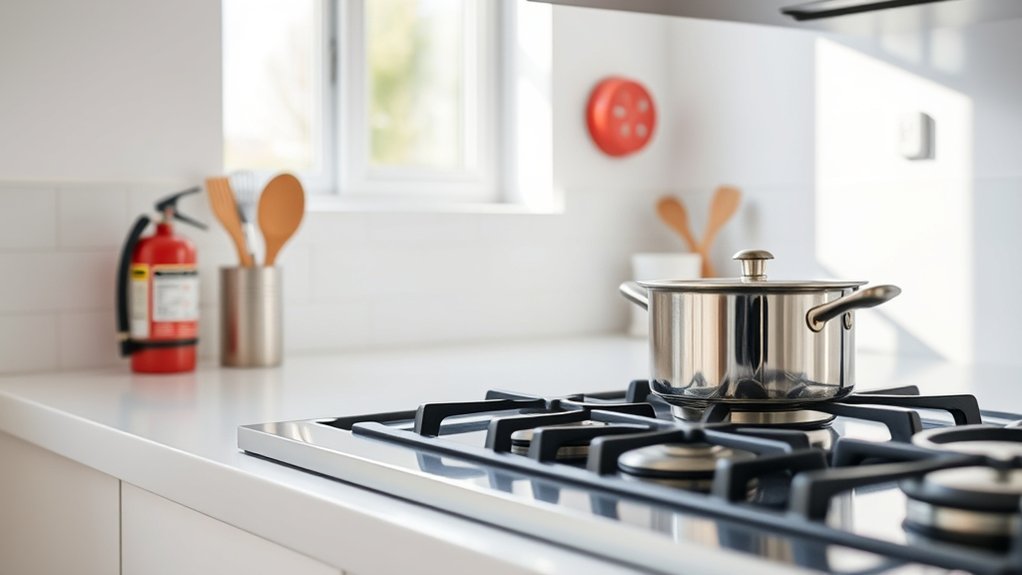
10 Essential Tips to Prevent Kitchen Fires
Kitchen fires can happen in seconds, turning everyday cooking into a stressful emergency. If you worry about grease splatters, unattended pans, or whether your home is properly protected, you’re not alone—many people struggle to keep their kitchens safe while preparing meals.
To prevent kitchen fires, keep flammable items like towels and oils away from heat sources. Never leave cooking unattended, especially when using hot oil, and always match your cookware to burner size for stability.
Avoid loose clothing and clean grease buildup regularly. Check smoke detectors often and keep a fire extinguisher handy, knowing how to use it.
Create a family fire safety plan to stay prepared. You can also consider more strategies to keep your kitchen safe and secure.
Key Takeaways
- Keep flammable items like towels and cleaning supplies away from heat sources to prevent accidental ignition.
- Never leave cooking unattended and use timers to avoid overheating or burning food.
- Use properly sized, stable cookware and avoid loose clothing near open flames for safer cooking.
- Regularly clean grease buildup on stoves, exhaust fans, and surfaces to reduce fire hazards.
- Install and maintain smoke detectors and have a suitable fire extinguisher accessible for emergencies.
Keep Flammable Items Away From the Stove to Prevent Kitchen Fires
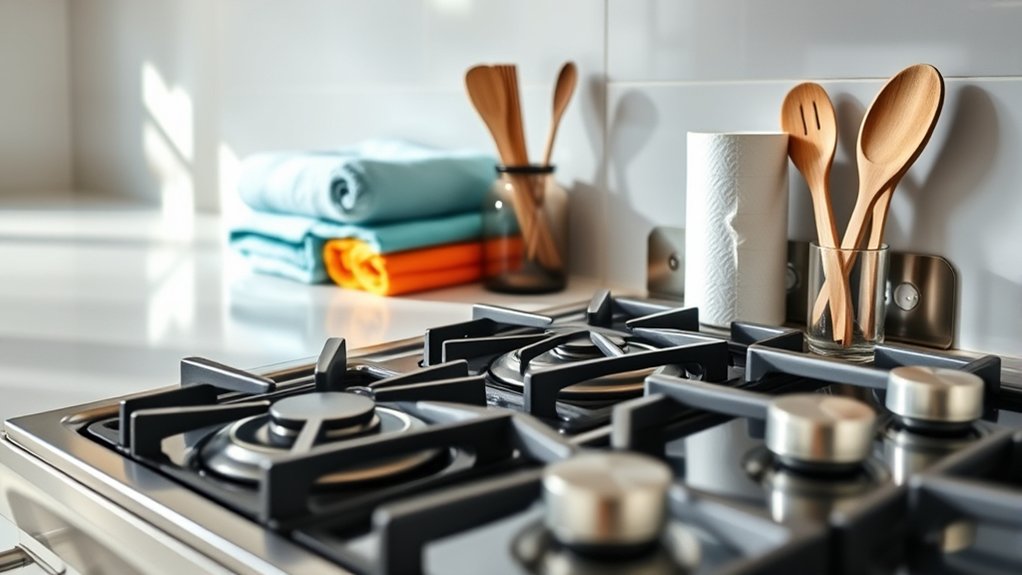
Because flammable items can ignite quickly, you should always keep things like dish towels, paper towels, and plastic utensils away from your stove. These common kitchen items can catch fire in seconds if they come into contact with open flames or hot burners.
You also need to store flammable liquids, such as cooking oils and cleaning solvents, well away from the cooking area to prevent accidental ignition.
When you’re doing oven cleaning, be extra cautious. Many oven cleaners contain chemicals that are highly flammable. Make sure the oven is cool before applying any cleaning agent, and keep all cleaning supplies far from heat sources.
Never Leave Cooking Unattended to Avoid Kitchen Fires
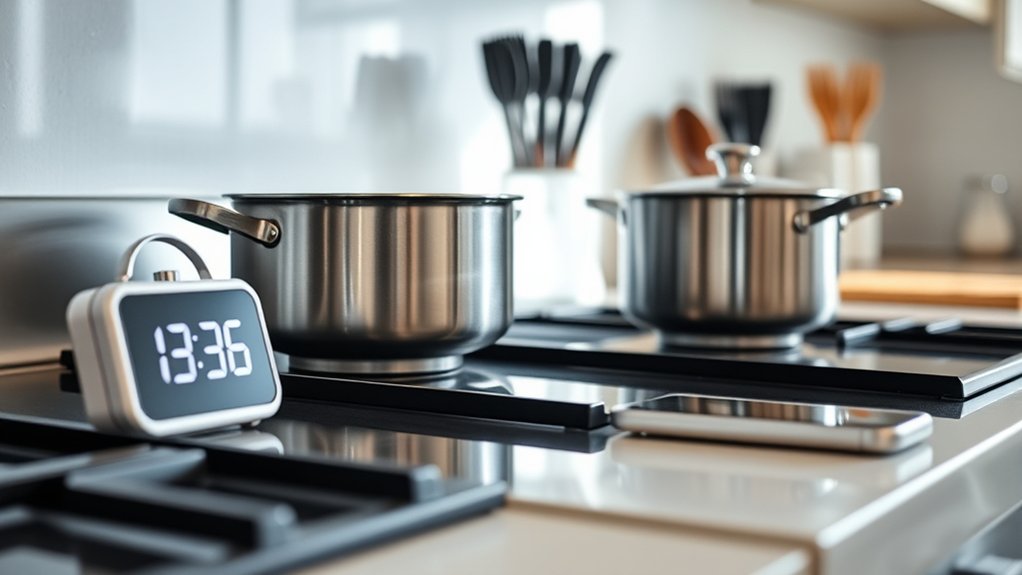
You shouldn’t leave cooking unattended because it greatly increases the risk of a kitchen fire. Staying nearby helps you spot hazards early and respond quickly. By keeping an eye on your food and following simple safety tips, you can help keep your kitchen safe every time you cook.
Risks of Unattended Cooking
One of the biggest risks in the kitchen comes from leaving cooking unattended. When you step away from your stove or oven, even briefly, you increase the chance of grease or food catching fire.
Unattended cooking is a leading cause of kitchen fires because it allows heat to build up unnoticed. Without your immediate attention, small sparks can quickly escalate into dangerous flames.
Prioritizing cooking safety means staying present and alert while preparing meals. Fire prevention depends heavily on your vigilance, since distractions can lead to disastrous consequences.
Safe Cooking Practices
Following a few simple safe cooking practices can considerably reduce your risk of kitchen fires. Always stay in the kitchen while cooking, especially when using high heat or frying.
Your constant kitchen awareness helps you spot potential hazards, like overheating oil or unattended pots, before they escalate. Avoid distractions like phones or TV, which can pull your attention away from cooking safety.
Keep flammable items such as towels or paper away from the stove to prevent accidental ignition. Use timers as reminders to check on your food regularly.
If you must leave the kitchen briefly, turn off the heat to eliminate risks. By maintaining focus and practicing mindful cooking habits, you’ll create a safer cooking environment and considerably reduce the chances of a kitchen fire.
Effective Supervision Tips
Although it might seem harmless to step away for a moment, leaving cooking unattended greatly increases the risk of a kitchen fire. To keep your kitchen safe, use effective supervision techniques like setting a timer and staying within sight of your cooking.
Avoid distractions such as phone calls or TV that can pull your attention away. If children are in the kitchen, prioritize child safety by keeping them at a safe distance and explaining the dangers of hot surfaces.
Never leave pots or pans unattended, especially when using oil or high heat. Always stay alert and focused while cooking to catch any issues early before they escalate.
Choose the Right Cookware for Your Burner
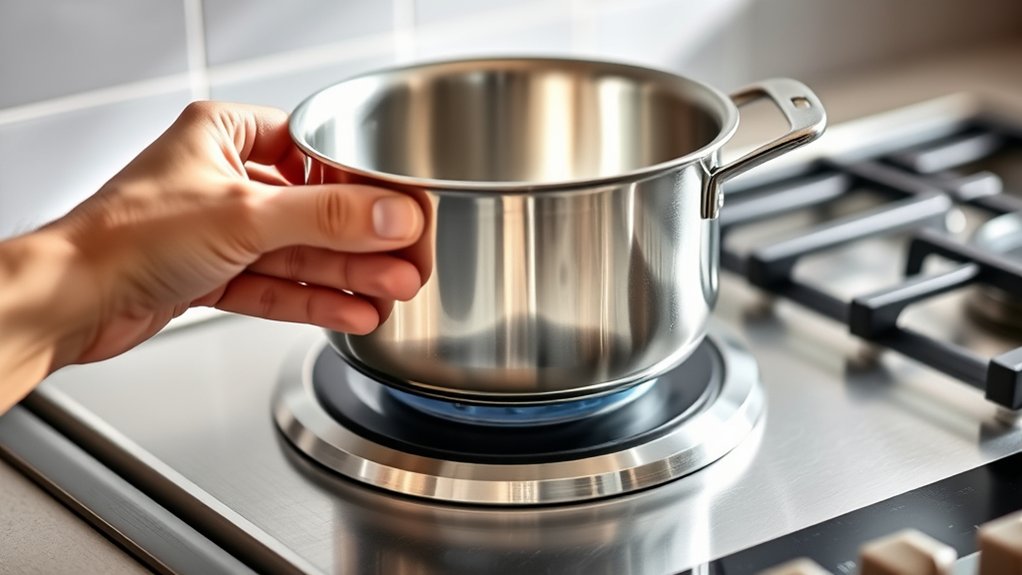
Match your cookware size to the burner for even heating and safer cooking. Heavy-bottomed pans are especially helpful because they stay stable while you cook. Choosing the right cookware also reduces the risk of spills and kitchen fires.
Match Cookware Size
One key step to prevent kitchen fires is matching your cookware size to the burner. When you use a pot or pan that’s too small for the burner, heat escapes around the edges, increasing the risk of ignition.
Conversely, oversized cookware on a small burner wastes energy and can cause uneven heating, leading to hotspots that might start a fire. For cookware safety, always choose vessels that fit snugly on your burners.
Furthermore, proper storage of cookware ensures you have the right sizes handy, reducing the temptation to use unsuitable pans. By matching cookware to burners, you maintain efficient heat distribution and minimize fire hazards, creating a safer cooking environment every time you step into your kitchen.
Use Stable Materials
Since unstable cookware can easily tip or slip, it’s essential to choose pots and pans made from sturdy materials that sit securely on your burner.
When selecting cookware, focus on material durability to guarantee your pots and pans withstand daily use without warping or becoming unbalanced.
Heavy-bottomed stainless steel or cast iron cookware offers excellent stability and heat distribution, reducing the risk of accidents.
Besides safety, consider kitchen aesthetics. Choose cookware that complements your kitchen’s style without compromising function.
Avoid lightweight or flimsy materials that can easily shift, causing spills and potential fires.
Avoid Loose Clothing While Cooking
How easily could a loose sleeve catch fire while you’re stirring a hot pan? Loose clothing poses a significant risk in the kitchen, especially near open flames or hot surfaces.
For cooking safety, it’s essential to avoid wearing baggy shirts, flowing sleeves, or scarves that can accidentally brush against burners or spill hot food. Instead, opt for fitted clothing or roll up your sleeves securely before you start cooking.
Not only does this reduce the chance of fabric catching fire, but it also prevents accidents caused by clothes getting caught on handles or kitchen tools.
Remember, cooking safety isn’t just about handling heat carefully; it’s also about what you wear. Your clothing choices can protect you from sudden flare-ups and keep you focused on preparing meals safely.
Taking this simple precaution can make a big difference in preventing kitchen fires and keeping you safe every time you cook.
Handle Hot Oil With Extra Care to Prevent Fires
Just as your clothing can pose a fire risk in the kitchen, so can the way you handle hot oil. When cooking with oil, always prioritize oil safety to prevent unexpected flare-ups.
Never leave hot oil unattended, as it can quickly overheat and ignite. Use a deep, heavy pan to reduce splashing, and avoid overcrowding the pan to keep the temperature stable.
Never leave hot oil unattended; use a deep pan and avoid overcrowding to maintain safe cooking temperatures.
If oil starts to smoke, it’s a warning sign: it’s too hot and could catch fire. Keep a lid nearby to smother flames if a fire starts; never use water on an oil fire.
Also, turn pot handles inward to prevent accidental spills. By handling hot oil carefully and following these fire prevention tips, you reduce the risk of dangerous kitchen fires.
Staying vigilant and respecting oil’s hazards helps ensure your cooking stays safe and enjoyable every time.
Use a Timer to Prevent Food From Burning and Starting Fires
You can help prevent kitchen fires by setting a timer to keep track of cooking times and avoid burning food. Use whatever works best for you—a digital timer, a smartphone app, or a simple mechanical timer. Set it according to the recipe, and you’ll be reminded to check the food before it overcooks or gets forgotten.
Benefits of Using Timers
Although it’s easy to get distracted while cooking, using a timer helps you keep track of cooking times and prevents food from burning. When you set a timer, you improve your cooking precision by ensuring each dish cooks for the right amount of time.
This not only elevates flavor and texture but also reduces the risk of fires caused by overcooked or forgotten food. Timers boost your time management skills in the kitchen, allowing you to multitask confidently without constantly checking the stove or oven.
Types of Kitchen Timers
Several types of kitchen timers can help you prevent food from burning and reduce fire risks. You can choose between mechanical timers, which are simple and reliable, or digital alarms that offer precise timing and extra features.
Mechanical timers don’t require batteries and are easy to operate, while digital alarms often come with louder sounds and multiple settings to fit your cooking style. Using any of these timers keeps you aware of cooking times, so you won’t leave food unattended.
| Timer Type | Features | Best For |
|---|---|---|
| Mechanical Timer | No batteries, simple dial | Quick, straightforward use |
| Digital Alarm | Loud sounds, multiple modes | Precision and versatility |
| App Timer | Smartphone integration | Tech-savvy users |
Setting Timers Effectively
When cooking, setting timers effectively guarantees you stay alert to your food’s progress and helps prevent burning or fires. To maximize cooking safety, always set a timer as soon as you start cooking or baking.
Choose a timer with a loud, clear alarm so you won’t miss it, even if you’re busy with other tasks. Incorporate timers into your kitchen organization by placing them where you can see and hear them easily.
Avoid relying solely on memory, as distractions happen. If you’re multitasking, set multiple timers for different dishes to keep everything on track.
Clean Grease Buildup Regularly to Reduce Fire Risk
Because grease can ignite quickly, you should clean buildup on your stove, exhaust fan, and nearby surfaces regularly. Grease fires start when accumulated oil or fat heats up and suddenly bursts into flames, so staying on top of cleaning routines is essential.
Don’t wait for grease to become sticky or dark; wipe spills immediately after cooking. Use degreasing agents or warm soapy water to tackle tougher residues without damaging your appliances.
Pay special attention to your exhaust fan filters, as grease collects there and reduces ventilation efficiency, increasing fire risk. Incorporate grease cleaning into your weekly kitchen chores to maintain a safer cooking environment.
By keeping these areas free from grease buildup, you reduce the chances of a sudden grease fire. Regular cleaning routines not only help prevent fires but also keep your kitchen smelling fresh and running smoothly.
Taking these simple steps protects your home and keeps your cooking space safe.
Keep and Know How to Use a Fire Extinguisher in Your Kitchen
Keeping your kitchen free of grease buildup lowers the chance of a fire, but having a fire extinguisher nearby adds an extra layer of protection. Choose the right type for your kitchen: Class K extinguishers are designed for grease and oil fires, while multipurpose ABC extinguishers can handle various fire types. Make sure the extinguisher is easily accessible and regularly check its pressure and expiration.
Knowing how to use an extinguisher properly is just as important as having one. Remember the PASS technique: Pull the pin, Aim at the fire’s base, Squeeze the handle, and Sweep from side to side.
Don’t turn your back on the fire, and keep a clear exit path. Using the extinguisher promptly can stop a small fire from spreading and causing major damage. By choosing the right extinguisher and learning how to use it, you’ll be prepared to act quickly and keep your kitchen safe.
Check Smoke Detectors Regularly Near Your Kitchen
Although you might focus on fire extinguishers, checking smoke detectors near your kitchen is just as essential for early fire detection. Smoke detection can alert you quickly to a fire starting, giving you critical extra seconds to act.
To keep your smoke detectors reliable, establish consistent maintenance routines. Here’s what you should do:
- Test detectors monthly by pressing the test button
- Replace batteries at least once a year or when low battery chirps sound
- Clean detectors regularly to remove dust and grease buildup
- Replace smoke detectors every 10 years to guarantee proper function
- Position detectors at a safe distance from cooking appliances to avoid false alarms
Make a Family Fire Safety Plan Together for Kitchen Emergencies
When a kitchen fire breaks out, having a clear family fire safety plan can save precious time and lives. Gather your family to create this plan together so everyone understands their role.
Start by discussing escape routes, a meeting point outside the home, and how to safely exit the kitchen. Emphasize staying low to avoid smoke inhalation and never trying to retrieve belongings.
Discuss escape routes, a safe meeting spot, and staying low to avoid smoke during a kitchen fire emergency.
Practice these steps regularly to build confidence and reinforce emergency preparedness.
Effective family communication is key. Make sure each family member knows how to call emergency services and understands the difference between a small fire they can safely extinguish and one requiring immediate evacuation.
Assign responsibilities, such as helping young children or pets. By working together and keeping communication open, you’ll be ready to act quickly and calmly if a kitchen fire happens.
This proactive approach strengthens your family’s safety and peace of mind.
Frequently Asked Questions
What Type of Fire Extinguisher Is Best for Kitchen Fires?
You should use a Class K fire extinguisher for kitchen fires since it’s specifically designed to handle grease and oil fires. Among fire extinguisher types, Class K is your best bet for kitchen safety equipment because it effectively cools and smothers flames without spreading them. Make sure you have one nearby in your kitchen, and familiarize yourself with how to operate it so you’re ready if a fire breaks out.
How Often Should Kitchen Electrical Appliances Be Inspected for Fire Risks?
You might think checking appliances often is a hassle, but picture a kitchen fire’s chaos—it’s worth the effort. You should inspect kitchen electrical appliances for fire risks at least every six months.
Regular electrical safety checks and appliance maintenance catch worn cords, frayed wires, or overheating early, preventing fires. Don’t wait for a problem; keeping your devices in top shape protects your home and family from dangerous hazards before they start.
Can Certain Kitchen Materials Increase Fire Hazards?
Yes, certain kitchen materials can increase fire hazards. You should be cautious with kitchen material hazards like wooden countertops or paper towels near heat sources.
Flammable surface risks, such as plastic cutting boards left too close to stovetops, can ignite easily. Always keep flammable items away from open flames or hot appliances to reduce your chances of a kitchen fire.
Choosing fire-resistant materials can also help keep you safer.
What Should I Do if a Kitchen Fire Spreads Beyond the Stove?
If flames roar like a dragon gone wild beyond your stove, don’t freeze—act fast! Your priority is fire spread prevention: grab a fire extinguisher or smother the fire with a damp cloth if safe.
Shut doors to contain the blaze, cutting oxygen flow. If the fire grows uncontrollable, evacuate immediately and call 911. Using these fire containment strategies can save your home and keep you safe.
Are There Specific Cooking Oils That Are Safer to Use to Prevent Fires?
Yes, you should choose cooking oils with higher smoke points for better cooking oil safety. Oils like avocado, peanut, and refined olive oil have high smoke points, meaning they’re less likely to catch fire or produce harmful smoke when heated.
Avoid using oils with low smoke points, like unrefined walnut or flaxseed oil, since they can ignite more easily. Paying attention to oil smoke points helps you reduce fire risks and cook more safely.
Conclusion
By keeping flammable items away and never leaving cooking unattended, you’re already a step ahead. Remember, “an ounce of prevention is worth a pound of cure.”
Choosing the right cookware, avoiding loose clothing, and handling hot oil carefully will keep you safe. Clean grease often, check smoke detectors, and always have a fire extinguisher ready.
Finally, make a family fire safety plan together. When it comes to preventing kitchen fires, preparation is your best defense.